Women’s Banking And Gender Finance Gap Statistics (2026)

Updated · Jan 12, 2026


Table of Contents
Introduction
Women’s Banking And Gender Finance Gap Statistics: The year 2026 presents a global financial scene where technological innovations of unparalleled magnitude, digital banking adoption at a much faster pace, and new entrepreneurs in record numbers coexist. However, behind the veneer of progress, there remains a stark, enduring gap: the gender gap in finance. The latter prevents women and their accompaniments from accessing basic banking services, obtaining loans, and accessing financial resources to grow their businesses.
Despite widespread efforts to make financial services accessible to all, women remain the first victims of financial exclusion imposed by financial institutions. They have to struggle against a myriad of obstacles that act as barriers—regulatory constraints, societal stereotypes, and the very structure of the finance system that does not recognize them as capable credit, savings, and investment candidates.
This article presents statistics on the Women’s Banking and Gender Finance Gap and their trends.
Editor’s Choice
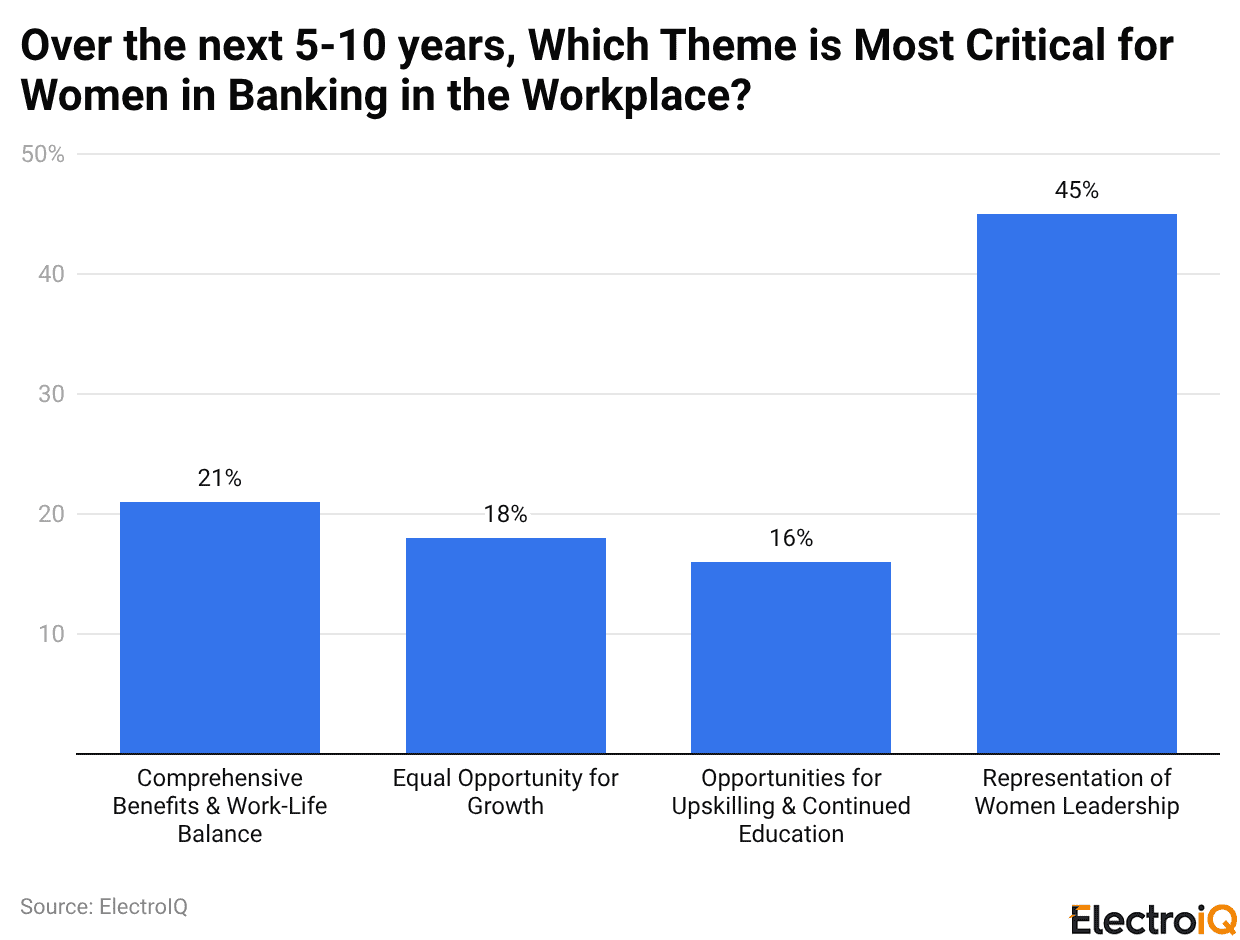
- 45% of the interviewees identified women’s presence in upper management as the most critical issue over the next 10 years.
- Work-life balance and comprehensive benefits (21%), equal opportunities for growth (18%), and access to upskilling and continuing education (16%) remain the primary factors affecting women’s career progression in banking.
- The situation of women’s use of accounts in low- and middle-income countries has improved, with formal savings increasing from 22% in 2021 to 36% in 2024 and digital payment usage rising from 50% to 58%.
- Approximately 700 million women worldwide still lack access to banking services, a major obstacle to their financial security and economic resilience.
- The majority (about 60%) of women in low- and middle-income countries who opened their first financial account did so to receive digital payments from the government or employers.
- In 2025, women accounted for 16% of the highest levels in banking, indicating that women’s representation in top banking leadership had reached a record high; however, progress at the top remained very slow.
- The share of women among deputy governors and C-suite executives rose to 28%, and the share of women in the senior staff was 32%, indicating slow but steady growth in leadership pipelines.
- Commercial banks were reenergized in 2025, with the proportion of women in C-suite roles increasing to 19% and their presence on the executive committee rising to 29%.
- Only 26% of women hold such positions that directly affect the company’s revenue generation and are also the main routes to the CEO chairs.
Global Gender Pay Gap
(Reference: statista.com)
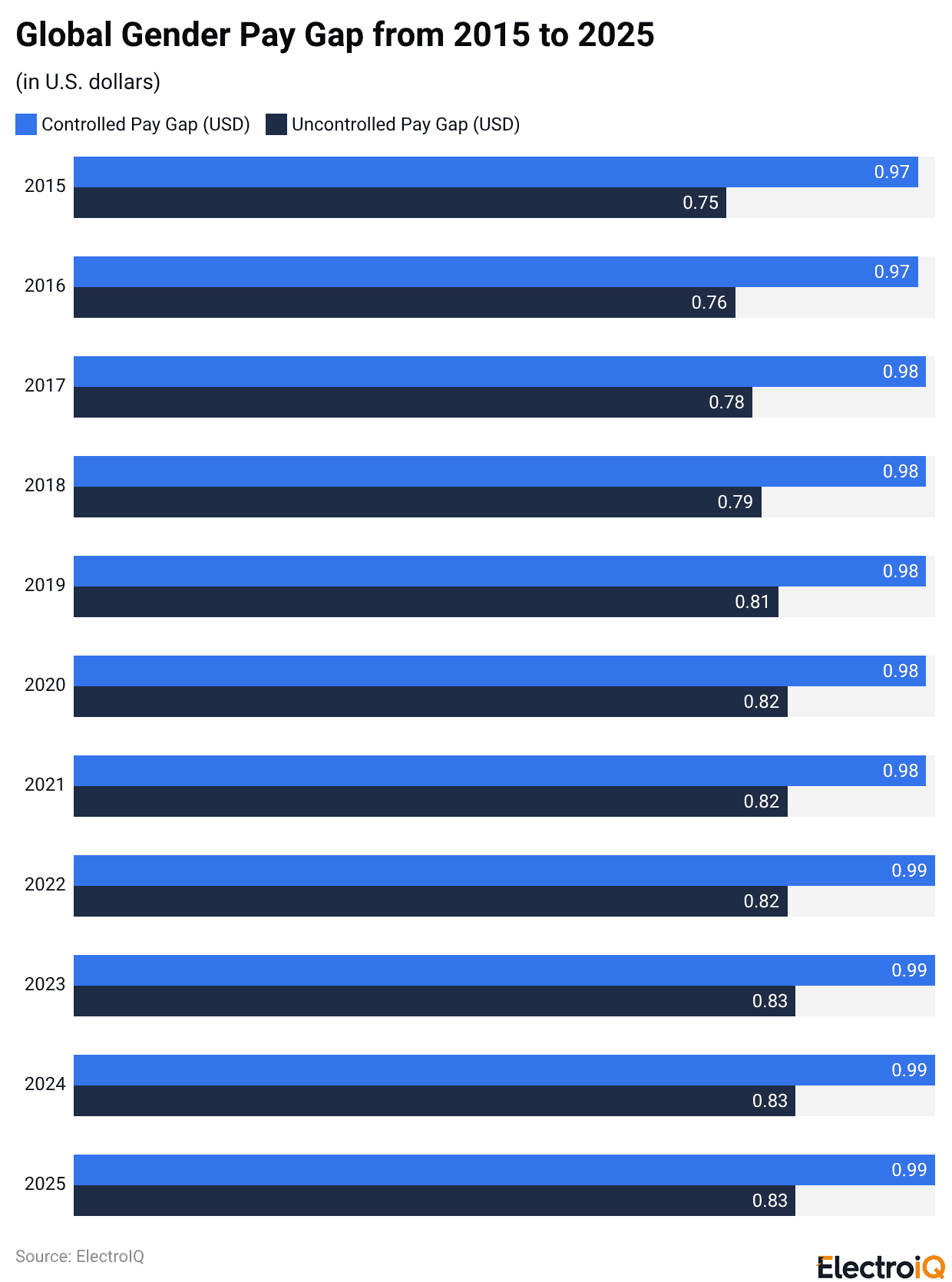
- The data reveal that there have been some steps forward in the fight against the gender earnings gap, but still, substantial inequalities are present.
- The controlled gender pay gap, which compares men and women in the same jobs with equal qualifications, indicates only a very small difference, with women paid just one U.S. cent less than men.
- That is, the situation regarding pay equity across identical jobs has improved considerably over the past years.
- Nevertheless, the broader context changes when this issue is viewed from the perspective of all job positions, industries, locations, and qualification levels combined.
- The uncontrolled gender pay gap reflects inequities within the labor market, which are due to factors like occupational segregation and lack of access to higher-paying jobs.
- According to 2025 data, women worldwide earned US$0.83 for every dollar earned by men; this clearly indicates that the income gap is driven more by systemic factors than by direct pay discrimination alone.
Most Critical Theme For Women In Banking In The Workplace
(Reference: alkami.com)
- Women in the banking sector are expected to undergo significant transformation over the next five to ten years.
- These changes will be revealed through the themes that are considered most relevant in the workplace.
- The representation of women in leadership is emphasized the most, as it is chosen by 45% of the participants, which means that the promotion of women to higher and decision-making positions is regarded as the most urgent concern for long-lasting change in the industry.
- This indicates that although women’s participation at the entry level may be increasing, the leadership gap remains a major issue.
- Comprehensive benefits and work-life balance rank second at 21%, reflecting the importance of flexible working hours, good policies, and benefits that support women’s dual responsibilities in personal and professional life.
- Equal opportunity for growth trails by only 18%, indicating that fair promotion pathways, unbiased performance evaluations, and access to career-accelerating roles remain major problems that need to be addressed.
- The percentage of opportunities for upskilling and further education is reported as 16%, indicating that although skills development is necessary, it is considered less urgent than leadership representation and structural workplace support.
- Generally, the graphical presentation indicates that the first focus area is the systemic promotion to leadership, supported by equal growth opportunities and work-life balance initiatives.
Women And Men Account Ownership
(Source: worldbank.org)
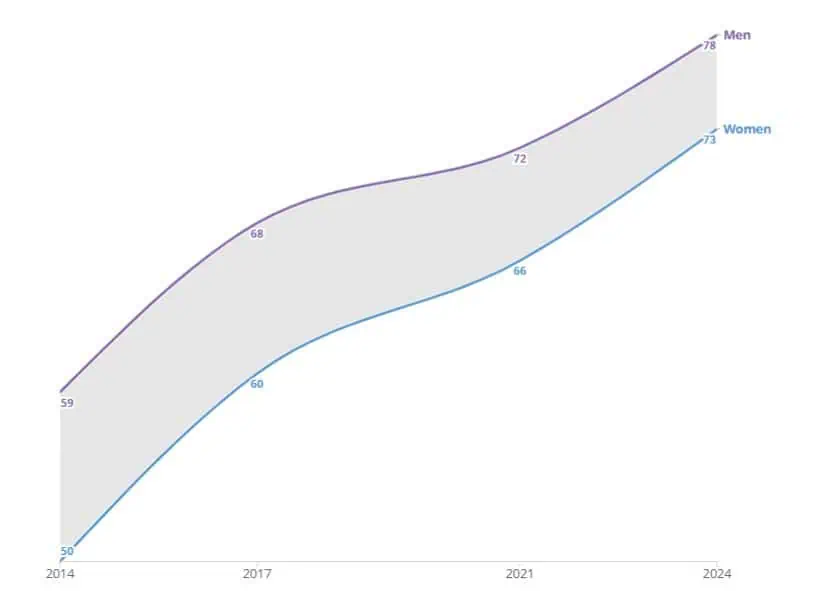
- The possession of a bank account is the factor that most facilitates access to savings, making and receiving payments, plus other banking services.
- In addition, the most recent statistics indicate substantial improvements for women in low- and middle-income countries.
- From 2021 to 2024, the number of women who used banking accounts for saving rose from 22% to 36%. Besides, the share of women making or receiving digital payments also increased from 50% to 58%.
- Digital merchant payments recorded an 8% increase, alongside the wider use of digital financial tools.
- Even with these positive changes, the situation remains unfavourable for many women, as approximately 700 million still lack access to financial services and are unable to fully participate in the financial system.
- The requirements to bridge this gap are improving women’s financial security, building up their resilience, and enhancing their overall economic inclusion.
Mobile Money Is Driving Women’s Financial Inclusion, With Regional Differences
(Source: worldbank.org)
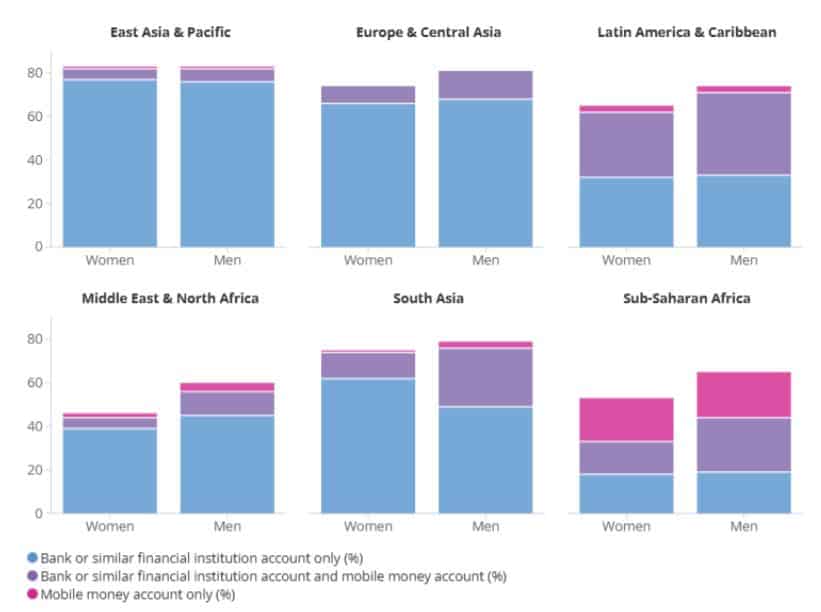
- The close link between women’s digital access, mobile phone ownership, and financial inclusion.
- The rise of digitally enabled accounts is a clear indication that mobile phones can help women open and use financial accounts, but this potential is limited in areas where phone ownership is still low.
- In Sub-Saharan Africa, nearly 50% of women remain unbanked, and only about 50% of them own a mobile phone, suggesting that account ownership must be accompanied by improved access to mobile devices and connectivity.
- Approximately 60% of women in low- and middle-income nations opened their first bank account to receive payments from the government or their employer.
- Given that 10% of unbanked women already receive wages or government transfers, there is a significant opportunity to route these payments into accounts and thus draw more women into the formal financial system.
Women’s Leadership Progress And Persistent Gaps In Global Banking
- The post continues to state that the slow but steady progress of 2025 toward better gender representation in upper banking floors has not been smooth.
- Bankers who oversee money and heads of central banks scored up to 40 and 42 on diversity, respectively, and the number of women leading central banks reached an all-time high, with a temporary dip to 30 due to one resignation.
- Overall, the share of top positions held by women stands at 16%, the highest ever, but it is only a small increase over 2024, indicating that progress at the very peak has been sluggish.
- The situation is somewhat better in the lower levels of management, where there are small but encouraging changes.
- The proportion of women among deputy governors and in C-suite positions 28%, while the percentage of women in senior staff is 32%.
- Commercial banks had the largest share of women in C-suite positions (19%) and on executive committees (29%) after the 2024 setbacks.
- Nevertheless, the justification points out a significant structural problem: women only account for 26% of the revenue-generating, profit-and-loss roles in financial institutions.
- Because these roles are the primary pathways to becoming a CEO, this lack of representation restricts the long-term diversity of leadership.
- As we move through 2025, banks and financial institutions are at a turning point, having to decide either to scale back diversity initiatives or to strengthen them, a decision that will have a profound impact on future gender equality in the finance industry.
Conclusion
Women’s Banking and Gender Finance Gap Statistics: By the end of 2025, women’s banking and financial inclusion have made significant progress, but deep-rooted issues persist. When it comes to the fair gender pay gap, it can be said that it is almost closed; however, women’s economic potential is still constrained because of the income inequality that is not fully addressed, limited access to accounts, and a lack of women in decision-making positions.
Digital banking, together with mobile money, has democratised access to banking; that is, account holders have access, but millions of women remain unbanked, particularly in areas with poor mobile coverage. Financial leadership among women in the industry is commendable, but mixed results persist, as women still lack access to sales roles.
The gender finance gap will result from ongoing efforts and strategies to ensure equitable long-term financial participation for all.
Sources
FAQ.
In 2025, the controlled gender pay gap is almost negligible, with women receiving only one U.S. cent less than men for their job and qualifications. At the same time, the uncontrolled gender pay gap is still large, meaning that women in the world earn around US$0.83 for every dollar paid to men, which indicates that there are still deep-rooted inequalities in the labor market.
The biggest challenge is the very low number of women in senior management positions. Almost half of those surveyed (45%) believe that promoting women into senior and decision-making roles should be the main focus, thus indicating that despite the progress made in recruitment and mid-ranking roles, the disparity in leadership positions is still there.
Women have become more financially included, especially in the low- and middle-income countries. Women’s formal savings went up from 22% to 36%, and the use of digital payments surged from 50% to 58% during the period from 2021 to 2024.
Mobile money stands as a wonderful financial inclusion agent; it permits women to both open and operate digital accounts. However, in places like Sub-Saharan Africa, the poor ownership of mobile phones is still a barrier to access.
In the year 2025, the representation of women in banking leadership has reached unprecedented levels, with women’s share of top leadership roles amounting to 16% and the presence in C-suite and senior positions being increased. Nevertheless, women still hold only 26% of the roles that generate revenue, which restricts their promotion to CEO positions over time and indicates the need for more robust leadership pipelines.

I hold an MBA in Finance and Marketing, bringing a unique blend of business acumen and creative communication skills. With experience as a content in crafting statistical and research-backed content across multiple domains, including education, technology, product reviews, and company website analytics, I specialize in producing engaging, informative, and SEO-optimized content tailored to diverse audiences. My work bridges technical accuracy with compelling storytelling, helping brands educate, inform, and connect with their target markets.