5G Network Infrastructure Deployment: Addressing Connectivity and Security Challenges

Updated · Jan 07, 2026


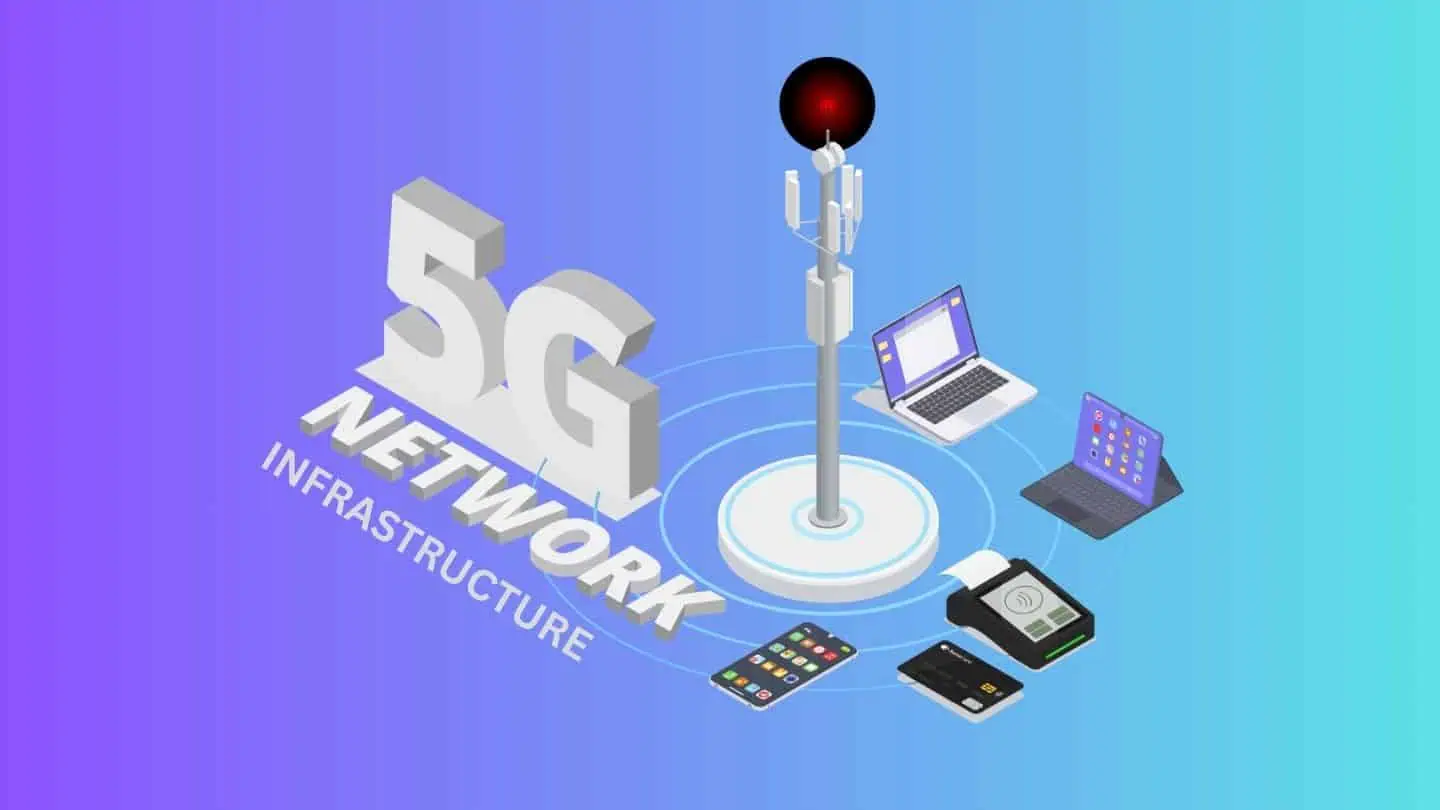
Table of Contents
5G network infrastructure is the backbone that makes ultra-fast, low‑delay wireless communication possible, but rolling it out at scale comes with serious connectivity and security challenges that operators must solve carefully. When done well, 5G can support smart cities, remote work, and billions of devices, while strong protection keeps users’ data and privacy safe.
What 5G Network Infrastructure Means
5G infrastructure is the full system that carries signals from devices to the internet and back. It includes radio sites, antennas, core networks, fiber links, and software tools that manage traffic and services.
- Radio access uses macro towers and many small cells to give fast coverage in cities and along roads.
- The core network handles routing, security, and services like network slicing and quality of service.
- Backhaul and transport use fiber and sometimes microwave links to connect radio sites to the core.
Key Connectivity Challenges
5G promises much higher speeds and lower delay than 4G, but real‑world deployment is hard. Operators must solve issues in density, spectrum, and transport to deliver stable performance.
Site density and coverage
5G, especially mmWave, has more small cells than high-band 5G because its signal range is shorter and can be blocked by walls, trees and even rain. Finding places, obtaining permits, and sharing poles or rooftops with utilities can slow rollout and add to costs.
Backhaul limits
Traditional backhaul routes may struggle with a 5G traffic surge that will result in congestion and latency. Fiber and specialized wireless backhaul also need to be upgraded to prevent the core from becoming a bottleneck.
Legacy integration
In many regions, 5G and 4G should work nicely, but handovers, roaming, and policy control are complex.
Security Risks in 5G Designs
5G dramatically increases the attack surface as it connects more devices, supports critical services, and uses softwareized, cloud-native architectures. New features like network slicing and virtualization can provide gains but also pose new security risks.
Network slicing exposure
Slices are virtual networks for multiple use cases such as IoT, emergency services, or industry automation. A lack of isolation can cause the attacks to move from slice to slice, resulting in data leakage or service disruption.
IoT and massive scale
Billions of sensors and smart devices are often inexpensive with low-cost chips and weak security, making them easy targets for botnets and data theft.
Virtualization and orchestration
5G uses software-defined networking and NFV, which add control planes, APIs and management tools that can be attacked if not fully controlled and monitored by access control.
Strategies to Improve Connectivity
To meet user expectations for fast, stable 5G, operators and enterprises can take several practical steps.
Smarter site planning
Combining macro cells with dense small‑cell grids, plus using shared sites and neutral‑host models, helps close coverage gaps without wasting capital.
Stronger backhaul and core
Investing in fiber, high‑capacity microwave, and optimized routing inside the LAN ensures that the internal network can keep up with 5G radio speeds.
Cloud‑native scaling
Moving key functions to cloud‑native platforms allows dynamic scaling during traffic peaks, reducing congestion and delay.
Strategies to Strengthen Security
Security in 5G must be built in from the start, not added later. This means protecting every layer, from devices and radio access to slices and orchestration tools.
Layered defenses
Robust authentication, encryption, and access control should protect both user traffic and management interfaces, with strict role‑based access.
Slice isolation
Clear policies, careful resource separation, and advanced segmentation help keep problems in one slice from spreading to others.
Real‑time monitoring
AI‑driven analytics and continuous monitoring can quickly spot anomalies and attacks, which is vital in large, dynamic 5G environments.
Role of VPNs
VPN technology will remain important as 5G becomes more common. Faster networks also mean data can be collected and tracked more quickly if it is not fully encrypted. Many experts say that using 5G together with a trusted VPN helps protect privacy and limits unwanted data tracking. According to VPNpro, this approach is especially useful for safe browsing and secure remote work, where privacy risks are often higher.
- VPNs add an extra layer of encryption to 5G. This helps protect browsing data, location, and app traffic from snooping and profiling.
- Businesses can use site‑to‑site and remote‑access VPNs over 5G. Why? To secure links between branches, cloud services, and mobile staff, while still enjoying high speeds.
By facing connectivity and security challenges directly with smart design, careful deployment, and strong privacy tools, 5G networks can deliver the reliable, safe experiences that modern users, cities, and industries need.

I hold an MBA in Finance and Marketing, bringing a unique blend of business acumen and creative communication skills. With experience as a content in crafting statistical and research-backed content across multiple domains, including education, technology, product reviews, and company website analytics, I specialize in producing engaging, informative, and SEO-optimized content tailored to diverse audiences. My work bridges technical accuracy with compelling storytelling, helping brands educate, inform, and connect with their target markets.