How Google’s Algorithm Updates and AI SERPs Are Rewriting Who Wins in Search

Updated · Mar 14, 2026

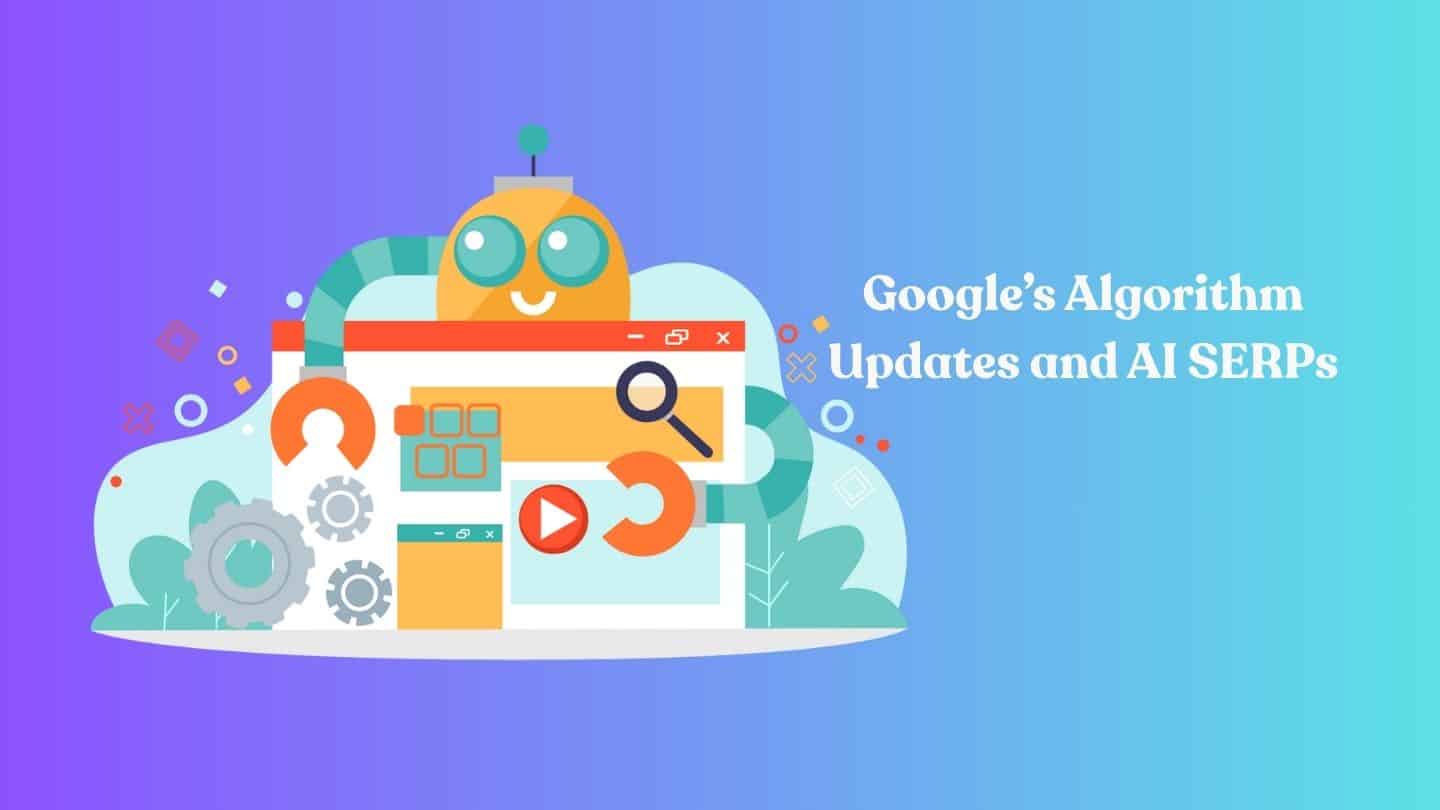
Table of Contents
- The Helpful Content Update Changed the Rules Permanently
- Core Updates Are Now Brand Evaluations
- Reviews Update Rewards Proof Over Promises
- AI Overviews Are Reshaping the Top of the SERPs
- AEO Is the Natural Evolution of SEO
- Search Architecture Beats Content Volume
- Speed of Adaptation Is the Final Ranking Advantage
- Conclusion
Google has been very clear about what it wants. Most businesses just refused to listen.
Since the “Helpful Content Update” began rolling out and continued through the 2024 and 2025 Core Updates, Google has systematically removed visibility from sites that exist only to rank. At the same time, it has elevated brands that demonstrate expertise, usefulness, and real-world relevance.
This was not a single update. It was a multi-year reset of how search works.
If your traffic dropped, it was not random. It was a signal.
The algorithm is no longer evaluating pages in isolation. It’s evaluating sites, brands, and satisfaction across the entire search journey. That’s why SEO strategies that used to work stopped working almost overnight.
The Helpful Content Update Changed the Rules Permanently
The Helpful Content Update marked the end of SEO built for algorithms instead of people.
Pages written to capture keywords, not answer questions, lost ground. Entire domains were reweighted based on whether Google believed their content was genuinely useful or mechanically produced. This was the first time Google applied sitewide trust scoring at scale.
What most people missed is that this update never ended. It was folded into every Core Update after it.
That means your weakest content now drags down your strongest pages. Thin blogs, overlapping articles, and filler posts actively suppress performance.
The brands that recovered were the ones that deleted content, consolidated pages, and rebuilt around intent instead of volume.
Core Updates Are Now Brand Evaluations
Google’s recent Core Updates have made one thing obvious. Search is no longer just ranking relevance. It is ranking credibility.
Google is looking at brand searches, repeat engagement, navigation patterns, and whether users return to search after landing on your site. These are satisfaction signals, not technical metrics.
This is why companies with fewer pages are outranking content farms. It’s why niche brands are beating publishers with massive link profiles. Google is measuring whether users trust you enough to stop searching.
SEO is no longer a standalone channel. It’s a reflection of how the entire business shows up online.
Reviews Update Rewards Proof Over Promises
The Reviews Update quietly dismantled templated comparison pages and shallow review content.
Google now rewards content that shows experience. That means original insights, firsthand analysis, comparison depth, and actual proof. Pages that summarize other articles or rewrite manufacturer descriptions no longer survive.
This has forced a shift toward content that is written by practitioners, not aggregators. Real insight is now the ranking advantage.
AI Overviews Are Reshaping the Top of the SERPs
Google AI Overviews changed user behavior overnight.
Instead of clicking ten blue links, users now receive synthesized answers at the top of the results. That does not kill SEO, but it does eliminate pages that exist only to introduce a topic.
To win visibility now, your content must feed the AI, not compete with it.
Pages that clearly answer questions, structure information cleanly, and demonstrate authority are being pulled directly into AI Overviews. That is where the next layer of visibility lives.
If your content cannot be summarized accurately by Google, it will not be surfaced.
AEO Is the Natural Evolution of SEO
This is where AEO, Answer Engine Optimization, becomes unavoidable.
AEO is not a buzzword. It is the practice of structuring content so that it can be understood, trusted, and reused by search engines and AI systems.
That means clear question-and-answer structure, explicit definitions, strong topical depth, logical page hierarchy, and an authoritative tone without fluff.
The brands winning search now are designing pages to be referenced, not just ranked.
This is the same mindset shift we help companies adopt through the SEO framework.
Search Architecture Beats Content Volume
The companies that survive algorithm updates do not publish more. They publish better and less.
They map pages to search journeys, remove redundant content, and build authority clusters that reinforce expertise instead of diluting it. Every page has a job. Every job has intent.
This is why SEO now looks more like product design than marketing.
Speed of Adaptation Is the Final Ranking Advantage
Google updates continuously. Most companies update quarterly.
That gap is fatal.
The brands winning in 2026 treat SEO as a living system. They monitor SERP changes weekly, adjust content based on real behavior, and rebuild pages as search evolves.
SEO is no longer about chasing updates. It’s about building systems that benefit from them.
To see how we help brands do that across industries, you can learn more about our work at: jivesmedia.com
Conclusion
Google’s updates are not punishments. They are filters.
They remove shortcuts and reward clarity. They eliminate noise and elevate value. The companies that treat search as a long-term asset will dominate the next decade of SERPs.
Everyone else will keep wondering what went wrong.

Aruna Madrekar is an editor at Smartphone Thoughts, specializing in SEO and content creation. She excels at writing and editing articles that are both helpful and engaging for readers. Aruna is also skilled in creating charts and graphs to make complex information easier to understand. Her contributions help Smartphone Thoughts reach a wide audience, providing valuable insights on smartphone reviews and app-related statistics.