What Are the Steps for Application Modernization: A Complete Guide

Updated · Mar 14, 2026


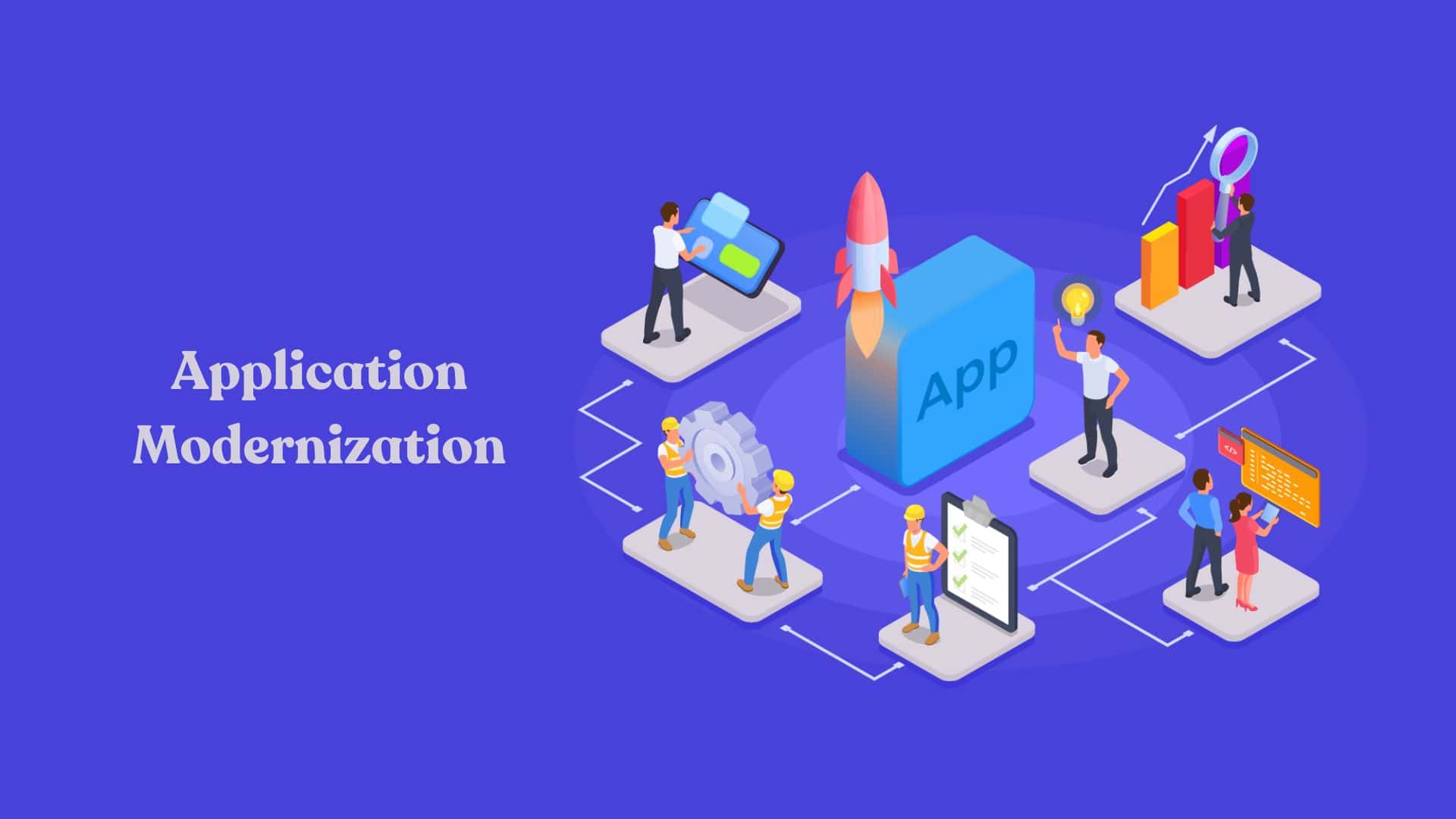
Table of Contents
Old enterprise software isn’t a museum artifact — it’s a live liability. Banks still run COBOL systems from the 1970s. Airlines process reservations on mainframes older than most of their pilots. Retailers try to wire legacy ERP into mobile apps through layers of workarounds that nobody fully understands anymore. The outcome is predictable: slower releases, costly outages, and recruiting headaches (finding someone genuinely excited about maintaining PL/I is its own adventure). By around 2018, modernization stopped being a strategic option and became more of a survival requirement. This piece covers how companies actually approach the process — where they start, where they reliably go wrong, and what the market looks like heading into 2025.
Why Legacy Turns Into a Burden
Through most of the 2000s, large enterprises could afford to delay. Systems ran, nobody was complaining loudly enough, and the cost of change seemed higher than the cost of staying put. Then AWS, Azure, and Google Cloud fundamentally altered the economics. Kubernetes grew up. Microservices moved from conference keynotes into actual production environments. DevOps practices turned multiple daily deployments from ambition into routine.
Security demands escalated at roughly the same time. The Equifax breach in 2017, then Capital One, then a string of others — regulators in banking and healthcare started requiring audit trails, encryption standards, and documented controls that aging monolithic codebases simply couldn’t provide without major surgery.
That’s the environment in which what are the steps for application modernization became a recurring question at architecture reviews, from Series B startups to companies deep in the Fortune 500.
Organizations handling transformations at enterprise scale — including those that provide application modernization solutions — typically structure the work into several distinct phases. The order matters more than most teams realize upfront. Skipping assessment and jumping straight into refactoring is one of the most common and expensive mistakes in the entire space.
The Main Phases
Specifics vary by company, stack, and budget — but the skeleton tends to look like this.
Step 1. Discovery and Audit
Before touching anything, you need an honest picture of what’s actually running. This sounds basic. Most companies still don’t have one.
What gets covered here:
- Application inventory — how many systems, built on what, owned by whom, documented how (or not at all)
- Dependency mapping — what connects to what, which APIs are load-bearing, where the hidden single points of failure are sitting
- Technical debt assessment — real state of the code: test coverage, known defects, libraries that haven’t been updated since the Obama administration
- Business criticality — which applications generate revenue or keep operations running if they go down at 2am
Common tooling: CAST Software for automated code analysis, Micro Focus for COBOL work, SonarQube for static analysis. Larger migrations often start with AWS Migration Hub or Azure Migrate before anything else gets decided.
Step 2. Nail Down the Business Goals
Technical transformation without a business case is expensive hobby work. Teams fall into this trap regularly — modernizing because modernization sounds good, or because a conference convinced them microservices are the answer to everything. “Netflix uses them” is not a strategy.
Realistic goals tend to look like:
- Cutting time-to-market for new features — from six months to something closer to two weeks
- Reducing what it costs to keep the lights on
- Hitting regulatory requirements: SOX, HIPAA, PCI DSS
- Improving uptime from 99.9% to something that doesn’t generate angry calls on weekends
- Getting the IT estate into shape before an acquisition or IPO brings auditors into the picture
Step 3. Choose a Strategy
Gartner had a 5R model for cloud migration in the early 2010s. AWS extended it to 6Rs, which became standard enough that most teams use it without thinking about where it came from.
The six options:
- Rehost — move as-is. Fastest, least cloud benefit. Mostly useful when the priority is closing a data center on a deadline.
- Replatform — small optimizations during the move. Swapping Oracle Database for Amazon RDS without rewriting the application that talks to it.
- Refactor/Re-architect — actual rewriting or structural overhaul. Most expensive, highest payoff long-term. Airbnb did this moving off its monolithic Rails application.
- Repurchase — drop the custom build, buy SaaS instead. Homegrown CRM out, Salesforce in. Internal HR system out, Workday in.
- Retire — just turn it off. More systems qualify for this than anyone expects.
- Retain — leave it alone for now. Forcing migration on something that isn’t ready creates more problems than it solves.
Step 4. Architecture Planning
With strategy locked, the detailed design work starts. The main decisions:
- Monolith vs. microservices vs. modular monolith — that last option is genuinely making a comeback, and it makes sense for teams that don’t have 50+ engineers to maintain a distributed system
- Containerization: Docker plus Kubernetes, or Red Hat OpenShift
- Cloud provider, or multi-cloud if the risk tolerance for vendor lock-in is low
- Data architecture — data mesh, data lake, or traditional ETL
Integration patterns land here too: event-driven architecture via Kafka or Amazon EventBridge, API gateway selection, service mesh (Istio and Linkerd are the main options).
Step 5. Iterative Migration
Don’t try to migrate everything at once. The classic disaster scenario: an 18-month “big release,” teams working in separate branches for over a year, and then the discovery that half the changes are incompatible with the other half.
Better approaches:
- Strangler Fig Pattern — wrap old functionality with new services gradually, piece by piece. Martin Fowler wrote about this in 2004 and it’s still one of the most reliable methods. Shopify used a version of it breaking apart their Rails monolith.
- Feature Flags — route a portion of traffic to new components before full rollout. LaunchDarkly and Unleash both handle this well.
- Parallel Running — old and new systems run simultaneously, outputs compared. Non-negotiable for financial systems where discrepancies in transaction data aren’t recoverable.
Step 6. Testing
Modernization without automated testing coverage is a gamble with bad odds. The essentials:
- Regression testing — did anything that worked before stop working
- Load testing — particularly when the legacy system was never profiled under realistic traffic
- Security testing — Checkmarx, Snyk, and penetration testing for anything customer-facing or payment-related
- Chaos Engineering — Netflix formalized this with Chaos Monkey: deliberately taking services down to test whether the system handles it gracefully
Step 7. Deployment and Monitoring
Careful planning doesn’t eliminate surprises in production. Standard practice:
- Canary releases — new version handles 1–5% of traffic first
- Blue/Green deployment — two identical environments, traffic switches instantly if something goes wrong
- Observability — full distributed tracing, not just logs. OpenTelemetry is the current standard; Datadog, Grafana, and Dynatrace are the platforms most teams land on
What’s Actually Happening in the Market
AI-Assisted Modernization
The loudest topic of the past 18 months, and for once the hype has some substance behind it.
Amazon Q Developer handles Java codebase transformation and updates outdated dependencies automatically. IBM watsonx Code Assistant for Z targets COBOL-to-Java conversion on IBM Z mainframes specifically — IBM ran pilots with large banks and claims 60–70% reductions in transformation time. GitHub Copilot Workspace, announced more recently, lets developers describe a task in plain language and generates a change plan with code.
The honest caveat: none of these run autonomously. AI handles routine transformations and boilerplate reliably. Complex business logic that accumulated over decades in legacy systems still needs someone who understands what it’s actually supposed to do.
Platform Engineering
Internal Developer Platforms changed how modernization gets operationalized. Instead of each team independently solving deployment, monitoring, and security, the organization builds a shared platform everyone uses.
Backstage, open-sourced by Spotify in 2020, is now the de facto starting point. Netflix, Expedia, and American Airlines all run on it. Cortex, Port, and Roadie have built product layers on top.
Cloud Cost Optimization
After the migration wave of 2020–2022, a lot of companies found their AWS or Azure bills had grown significantly while actual efficiency gains were harder to point to. FinOps emerged as a discipline in direct response, and it connects back to modernization: well-architected applications using serverless where it fits, right-sized instances, spot instances for batch workloads — this can cut cloud spend by 30–50% compared to lift-and-shift.
Industry Patterns
EA invested in rearchitecting its infrastructure after the Battlefield 2042 launch exposed what happens when game server architecture can’t handle real load. ING rebuilt its core systems years ago and leans into the “tech company” label hard. Healthcare organizations are modernizing EHR systems to support wearable integration and AI diagnostics — none of which works reliably on 15-year-old infrastructure.
Mistakes That Keep Happening
What are the steps for application modernization is a question that gets asked correctly far more often than it gets executed correctly.
Legacy is more complex than it looks. Years of implicit business rules, emergency patches, and workarounds are buried in old code. Rewriting without deep domain knowledge produces new architecture with the same underlying problems — just distributed now.
Without executive sponsorship, modernization projects die when a business stakeholder decides the next quarter’s features matter more than “that infrastructure thing.” The trade-off between short-term cost and long-term benefit needs someone with authority to hold the line.
Knight Capital’s collapse in 2012 is still the clearest illustration of big-bang release risk — a deployment error in a new trading system version cost $440 million in 45 minutes. Iterating is slower. It’s also survivable.
Conway’s Law remains relevant: systems reflect the structures of the organizations that build them. New architecture inside an unchanged organizational structure tends to produce a distributed version of the same monolith.
Before Starting
The practical question isn’t the framework — it’s where to begin in a specific organization. The answer almost always starts with honest numbers: how long do deployments take, how many incidents trace back to legacy code, what fraction of engineering time goes to maintenance versus building new things. Those figures tend to move decisions faster than architecture diagrams.
What are the steps for application modernization isn’t a checklist with a finish line. Technology shifts. Business requirements shift. What qualified as modern three years ago — on-prem Kubernetes clusters, for instance — may already trail serverless or managed PaaS in both cost and operational overhead.
There’s no project end date here. It’s a capability that gets built and maintained continuously.

Tajammul Pangarkar is the co-founder of a PR firm and the Chief Technology Officer at Prudour Research Firm. With a Bachelor of Engineering in Information Technology from Shivaji University, Tajammul brings over ten years of expertise in digital marketing to his roles. He excels at gathering and analyzing data, producing detailed statistics on various trending topics that help shape industry perspectives. Tajammul's deep-seated experience in mobile technology and industry research often shines through in his insightful analyses. He is keen on decoding tech trends, examining mobile applications, and enhancing general tech awareness. His writings frequently appear in numerous industry-specific magazines and forums, where he shares his knowledge and insights. When he's not immersed in technology, Tajammul enjoys playing table tennis. This hobby provides him with a refreshing break and allows him to engage in something he loves outside of his professional life. Whether he's analyzing data or serving a fast ball, Tajammul demonstrates dedication and passion in every endeavor.