Neobank Vs Traditional Bank Adoption Statistics By Comparison, Features, Finance, Trends and Facts (2025)

Updated · Jan 02, 2026


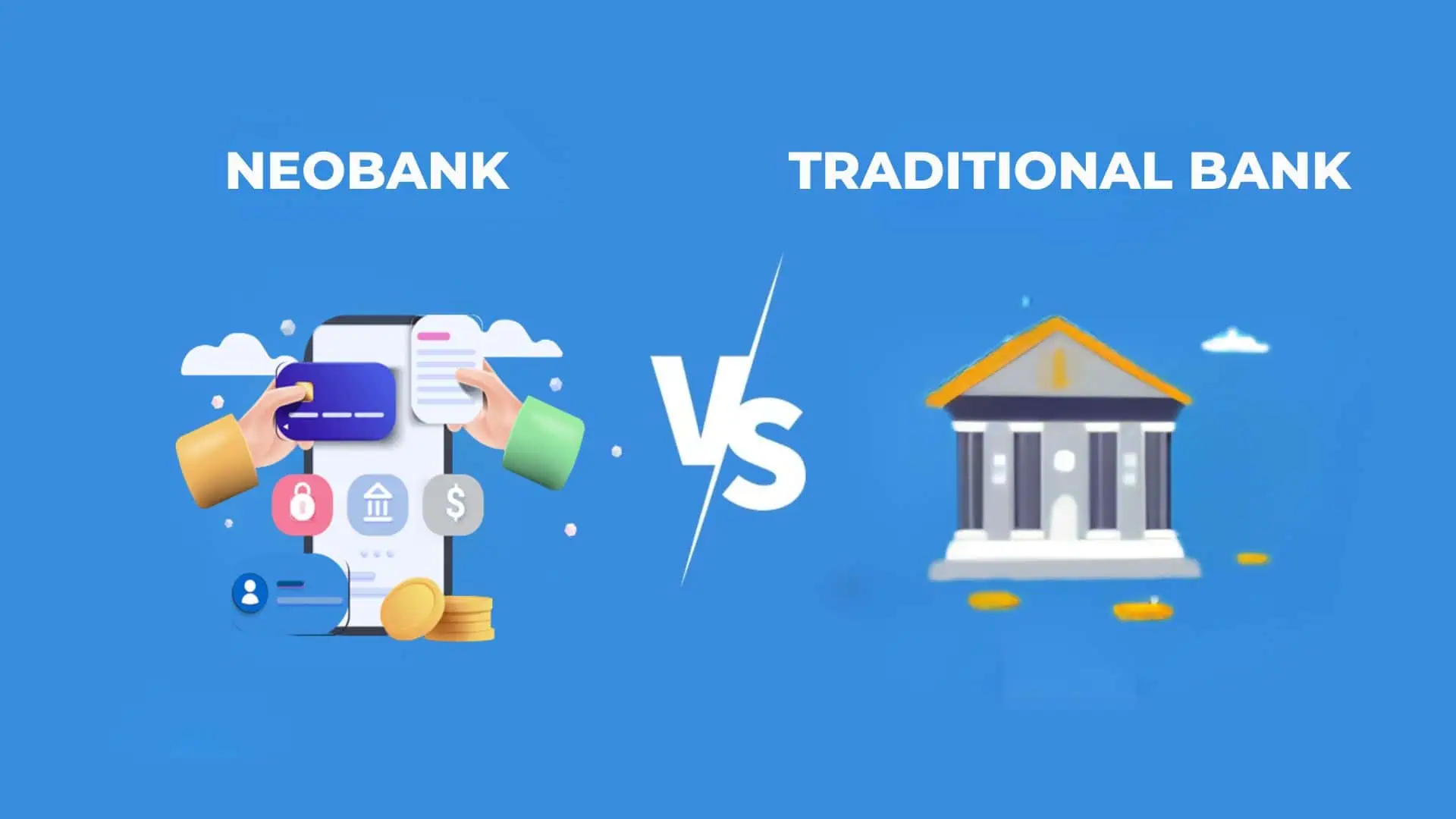
Table of Contents
Introduction
Neobank Vs Traditional Bank Adoption Statistics: Neobanks are digitally operated banks that use mobile applications. They allow customers to complete several banking transactions even without visiting a branch. Besides, enable quick bank account opening, lower fees, and useful tools such as instant alerts and budget tracking. Still, many people trust traditional banks as they have been around for years, and offer many services in one place, such as savings accounts, home and business loans, and investment options.
This article clearly compares neobanks and traditional banks using recent statistics from multiple online sources. It helps readers understand the key differences and select the banking option that best suits their needs.
Editor’s Choice
- Traditional banks operate through branches and ATMs, and offer a range of services.
- Besides, neobanks operate exclusively through apps or websites, which reduces costs and improves rates.
- In the FDIC’s Quarterly Banking Profile for the third quarter of 2025, FDIC-insured institutions reported USD 79.3 billion in net income and 1.27% ROA.
- Revolut’s Annual Report for 2024 reported revenue of £3.090 billion (USD 4.17 billion), net profit of £790 million (USD 1.07 billion), a 26% margin, an efficiency ratio of 38%, and adjusted EBITDA of £1.287 billion.
- The ABA Banking Journal further reported that, in 2024, American customers of traditional banks most often used a mobile app (55%) as their primary means of managing accounts.
- McKinsey further reported that 92% of respondents used digital payments in 2024, while in-app use reached 60%, and in-store wallets 28%.
- According to coinlaw.io, in the United States, approximately 63% of digital bank users reported being very satisfied, compared with 55% of traditional bank users.
- In 2025, 54% used mobile apps and 22% used computers, whereas only 9% relied on branches and 6% primarily used ATMs.
- By 2025, neobank customers were estimated to account for 31% of Americans.
- In the same period, YouGov reported that 48% preferred established banks.
An Overview Comparison
| Metrics | Neobanks | Traditional Banks |
| Branches & ATMs | No branches; works by app/website | Has branches and ATM networks |
| Fees & rates | Usually low or no fees; often better deposit rates | More service fees; often lower deposit rates |
| Products | Focuses on a few key services | Offers a full set of banking services |
| Customer support | Mostly online chat/email/phone | Help in person, online, and by phone |
| Technology | Adds new features quickly | Adopts new tech more slowly |
| Deposit insurance | FDIC coverage depends on the partner bank | FDIC insured directly |
| Target users | Best for digital-first customers | Serves most people and businesses |
General Statistics
- According to Coin Law’s 2025 analyses, neobanks in the U.S. serve approximately 28 million customers, up from 2024.
- Chime has about 16 million users this year, 25% more than last year.
- In Europe, digital banks Revolut and N26 together reach nearly 14 million customers.
- Large banks are responding; approximately 85% of U.S. banks now offer mobile-first services.
- Customers still report happiness with neobanks, rating them 4.7/5, while older banks score 3.8/5.
- Neobanks continue to grow at rates above 22% per year and are estimated to reach a 22% global market share by 2030.
Basic Features Comparison
| Metrics | Neobank | Traditional Bank |
| Target Market | SMEs, Younger Generation | Institutions, Large Businesses, General Public |
| Branches | No | Yes |
| Application | Yes | Depending on the bank |
| Banking License |
Depending on the type
|
Yes
|
| Deposit guarantee | ||
| Credit card | ||
| Maximum Deposit | Medium | High |
| Face-to-Face Communication | No | Yes |
| Characteristics | Agility | Stability |
By Financial Comparison
Neobank
- Revolut’s Annual Report for 2024 reported revenue of £3.090 billion (USD 4.17 billion), net profit of £790 million (USD 1.07 billion), a 26% margin, an efficiency ratio of 38%, and adjusted EBITDA of £1.287 billion.
- Nu’s 2024 financial year results report USD 11.51 billion in revenue and USD 1.97 billion in net income, with an annualised ROE of 29%.
- Meanwhile, spent around USD 0.8 per active customer per month, with an efficiency ratio of 29.9%.
- As of 2024, Monzo accounted for a profit of £15.4 million (USD 20.77 million).
- Followed by revenue of £880 million (USD 1.19 billion), held £11.2 billion (USD 15.13 billion) in deposits, and added 2.3 million new customers.
Traditional Banks
- In the FDIC’s Quarterly Banking Profile for the third quarter of 2025, FDIC-insured institutions reported USD 79.3 billion in net income and 1.27% ROA.
- Meanwhile, the industry net interest margin reached 3.34%.
By Digital Experience and Technology Usage
- The ABA Banking Journal further reported that, in 2024, American customers of traditional banks most often used a mobile app (55%) as their primary means of managing accounts.
- Laptop/PC online banking followed (22%). Fewer relied on branches (8%), ATMs (5%), or phone calls (4%).
- In 2025, choices changed little, with apps at 54%, laptops/PCs at 22%, branches at 9%, ATMs at 6%, and phones at 4%.
- As of 2024, 96% rated their bank’s online and app experience as excellent/very good/good; in 2025, 95% did.
- According to EMARKETER, the number of U.S. neobank account holders in 2024 was 17.5 million (6.6% of the population).
- By the end of 2025, it is expected to reach 53.7 million digital-only account holders, up from an earlier projection of “close to 40 million” adults.
- McKinsey further reported that 92% of respondents used digital payments in 2024, while in-app use reached 60%, and in-store wallets 28%.
- Reuters reports that Bank of America states that more than 90% of client interactions are digital.
- Visa reports that one in five U.S. shoppers prefers digital wallets, and Gen Z is split (36% wallets vs 34% cards).
By Customer Service and Support
- According to coinlaw.io, in the United States, approximately 63% of digital bank users reported being very satisfied, compared with 55% of traditional bank users.
- Meanwhile, remains similar in the U.K. (59% vs. 51%) and across Latin America, with the biggest gaps in Mexico and Brazil.
- In 2024, the direct-bank satisfaction rate declined, with checking accounts scoring 688 (27 points lower) and savings accounts 710 (8 points lower).
- Neobanks still had a higher Net Promoter Score of 72 than 55, particularly among customers under 40.
- However, 40% of customers switched to neobanks, whereas traditional banks retain approximately 83%-85%.
By Product and Service Offerings
- In the U.S., fintechs and neobanks captured a big share of new checking accounts in 2024, with 44% of new accounts opened at digital-first providers.
- A fintech-banking survey further indicated that 48% preferred banks with in-person locations, and 27% preferred neobanks.
- As of 2024, 55% reported that a mobile app is their primary means of banking.
- In 2025, 54% used mobile apps and 22% used computers, whereas only 9% relied on branches and 6% primarily used ATMs.
- For savings in 2024, 13% saved with both online-only and traditional banks, and 40% saved only with traditional banks.
- By 2025, neobank users will account for approximately 31% of Americans.
- Chime had 8.6M active members on March 31, 2025, averaging 54 monthly transactions, of which 75% were purchases.
Neobank Adoption Statistics
- YouGov reports that in mid-2024, 30% of U.S. consumers had an account with a digital-only bank.
- Meanwhile, 75% of those customers reported that their primary account was also digital-only.
- Another survey found that 47% of Americans reported using or considering a neobank in the past year (Nasdaq).
- For 2024, 44% of new checking accounts were opened with digital banks and fintechs (EMARKETER, citing Cornerstone Advisors).
- By 2025, neobank customers were estimated to account for 31% of Americans.
- However, 48% preferred traditional banks, and 27% preferred digital-only providers.
- Neobank users were also more active, with 39% banking online at least daily.
- Chime reported 8.6 million active members as of March 31, 2025, averaging 54 transactions per month, and 75% were purchases.
Traditional Bank Adoption Statistics
- As of 2024, 40% of Americans saved exclusively at brick-and-mortar banks.
- Another 13% split savings between traditional banks and online-only ones.
- A NerdWallet survey further reports that 53% of respondents indicated that branches are an important bank feature.
- An ABA survey found that only 8% primarily managed accounts by visiting a branch, compared with 5% who relied most on ATMs.
- In 2025, YouGov reported that 48% preferred established banks, versus 27% choosing digital-only providers; 35% would consider Bank of America, 21% Chase, and 20% Capital One.
- ABA’s 2025 results list branches and ATMs as the top channels, at 9% and 6%, respectively.
Pros And Cons Of Neobank Vs Traditional Bank
| Comparison | Pros | Cons |
| Neobanks | Lower or no fees for transactions and account upkeep; often higher interest rates than traditional banks; easy access through apps/websites; quick, simple account opening; good for tech-savvy users who want banking on a phone. | No branches, so limited face-to-face guidance; fewer services than traditional banks; not ideal for people who are not comfortable with technology; app outages or technical problems can disrupt service; some users worry about data and account security because everything is digital. |
| Traditional banks | Full range of banking products and services; in-person help and advice; long history builds trust; large ATM networks for cash access. | Older systems can feel less flexible; fees for services and maintenance are often higher; processing is often slower than neobanks’; many tasks require visiting a branch. |
Conclusion
After finishing the article on Neobank vs. Traditional Bank Adoption Statistics, it is clear that people choose a banking option based on their needs. Many people will choose neobanks because due to faster bank procedures, the apps are simple, the fees are lower, and spending is easy to track. Traditional banks are perceived as more reliable because they have branches and offer services such as loans, business accounts, and investments.
New technology now helps both neobanks and traditional banks handle payments and planning. All analyses will guide in selecting the most suitable banking platform, based on user requirements, security, trust, and a seamless digital experience.
FAQ.
For daily spending, neobanks often work better because payments are quick, apps are simple, and you get instant alerts plus handy budgeting features.
Traditional banks are usually a better choice for loans and credit, and they also provide more lending options and a wider range of banking services.
Traditional banks offer branch and phone help, while neobanks use chat support that’s quick but less personal.
Yes, a neobank is used for everyday spending and tracking, while keeping a traditional bank for loans, savings, and other long-term needs.
Neobanks are usually easier for beginners because the apps are simple and quick to use.
Traditional banks are better for cash withdrawals due to wider ATM and branch access.

Maitrayee Dey has a background in Electrical Engineering and has worked in various technical roles before transitioning to writing. Specializing in technology and Artificial Intelligence, she has served as an Academic Research Analyst and Freelance Writer, particularly focusing on education and healthcare in Australia. Maitrayee's lifelong passions for writing and painting led her to pursue a full-time writing career. She is also the creator of a cooking YouTube channel, where she shares her culinary adventures. At Smartphone Thoughts, Maitrayee brings her expertise in technology to provide in-depth smartphone reviews and app-related statistics, making complex topics easy to understand for all readers.