ChatGPT Assignment Statistics By Usage, Adoption, And Student Behavior (2026)

Updated · May 14, 2026


Table of Contents
Introduction
ChatGPT Assignment Statistics: Since OpenAI unveiled ChatGPT in November 2022, its popularity among students has skyrocketed; millions now use ChatGPT regularly as part of their essays, exams preparation, lecture reading comprehension or decodes. By late 2025 more than half of U.S. students aged 12-22 reported specifically using it for schoolwork compared with less than half just half a year earlier! Nearly 9 out of 10 also used it during assessments. The data upped significantly from just half a year prior.
The rise of AI in education goes far beyond a simple trend of students experimenting with new tools. Many students rely on ChatGPT for idea generation, outlining, research assistance, or polishing grammar and structure. Others use it more extensively to draft complete assignments. At the same time, traditional write my paper for me service providers continue to attract students who need support with complex or high-pressure coursework. This growing overlap between AI tools and academic assistance services raises important questions about student behavior, learning outcomes, grades, and the broader impact on academic integrity across different subjects.
The Scale of ChatGPT Adoption Among Students
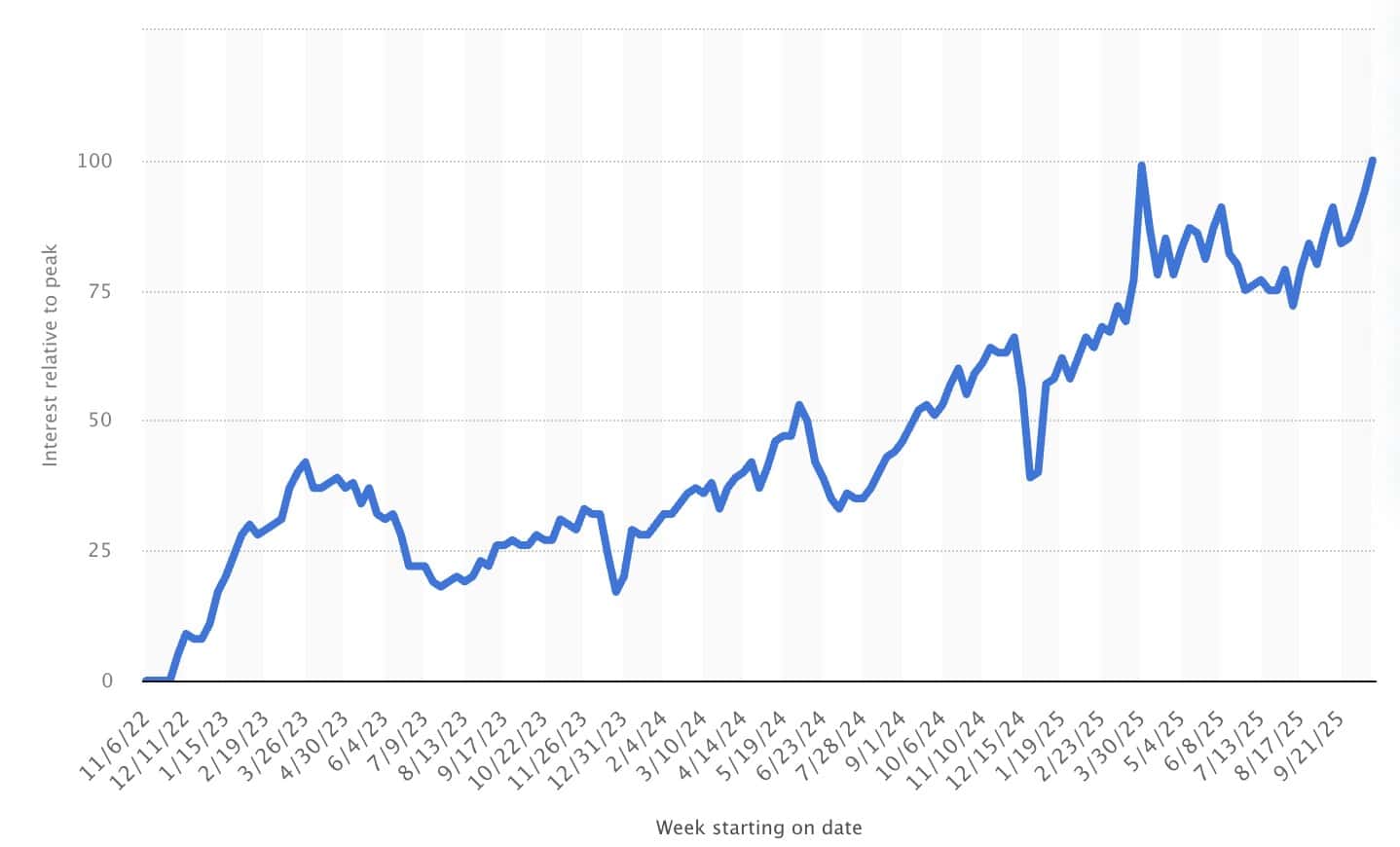
ChatGPT’s rise within classrooms has been one of the fastest technology adoption curves ever witnessed; within months after launch, students had begun using it; within two years it had become standard equipment.
- WritePaper research found that just months after launch of ChatGPT for schoolwork purposes in spring 2023, 30% of college students had started using ChatGPT for classwork; by late 2023 this figure reached the whooping 56%!
- The College Board reported in May 2025 that 69% of high school students were using ChatGPT for assignments and homework purposes.
- RAND’s December 2025 American Youth Panel revealed that 53% of students aged 12 to 29 use ChatGPT specifically – making it by far the most widely utilized AI tool used in American schools, surpassing even Google Gemini (28%) or writing assist tools such as Grammarly (21%).
- ChatGPT now claims roughly 100 million weekly users globally as of late 2024 according to Statista data tracking platform-level usage.
Why Students Use ChatGPT For Assignments
Adoption tells you what is happening, motivation tells you why. Three forces that made students resort to AI dominate the surveys, according to WritePaper research: pressure on time, demand for clearer explanation, and emotional load.
Time Pressure And Workload
- A study of 494 university students found workload and time pressure are the strongest predictors of student ChatGPT use on assignments.
- Controlled classroom experiments show AI-assisted students complete homework roughly 40% faster than peers without it.
- Students balancing part-time jobs and multiple courses are the heaviest users, particularly during midterm and finals windows when assignments stack.
Comprehension And Confidence
- 58% of students cite “explaining complex concepts” as their top reason for using ChatGPT.
- Trial in education was associated with a 15% increase in passing rates and a reported 275% rise in self-directed learning behaviors.
- 78% of student ChatGPT users believe the tool contributed to improvements in their grades
Emotional And Social Drivers
- Іtudents often cite anxiety, mental health pressure, conflict with family, or friend issues, not pure laziness, as reasons for turning to ChatGPT under deadline.
- Сuriosity and calmness are the most common emotions students report when using ChatGPT for schoolwork.
- Female students report feeling overwhelmed by AI at higher rates (30%) than male students (21%), per WritePaper research.
How Students Actually Use ChatGPT, Top Use Cases
Most students do not use ChatGPT to write entire papers. The behavior pattern that has emerged is closer to that of a research assistant than a ghostwriter: brainstorming, summarizing, rewording, and concept-checking dominate.
Table 1: Top use cases for ChatGPT by assignment
| Use case | % of students |
| Idea generation/brainstorming | 75% |
| Rewording sentences | 64% |
| Spelling and grammar help | 54% |
| Writing parts of an essay | 50% |
| Explaining complex concepts | 38% |
| Looking up facts | 33% |
| Drafting or revising writing | 33% |
| Writing a full essay | 29% |
| Solving math problems | 29% |
ChatGPT Use By Major And Subject
ChatGPT usage does not fall evenly among academic disciplines; business students lead, STEM follows closely behind and humanities lag behind
Table 2: Who uses ChatGPT for which assignment by major
| Major | Used AI On Assignments | Required To Use AI | Considers AI Use Cheating |
| Business | 62% | 61% | 51% |
| STEM | 59% | 58% | 55% |
| Humanities | 52% | 45% | 57% |
- English remains the subject most often covered on ChatGPT by students.
- STEM students depend heavily on ChatGPT for code debugging and explaining complex concepts across physics, biology and computer science disciplines.
- Humanities students frequently utilize it for essay outlining, argument refinement and literary analysis.
- Business majors were both the highest users and least likely to perceive AI use as cheating, representing an obvious cultural divide within discipline.
The Assignment Workflow: How Deep Does AI Go?
The interesting question is not whether students use ChatGPT, but how deeply they let it into the work they submit. The split below is what actually drives the debate for academic integrity proponents.
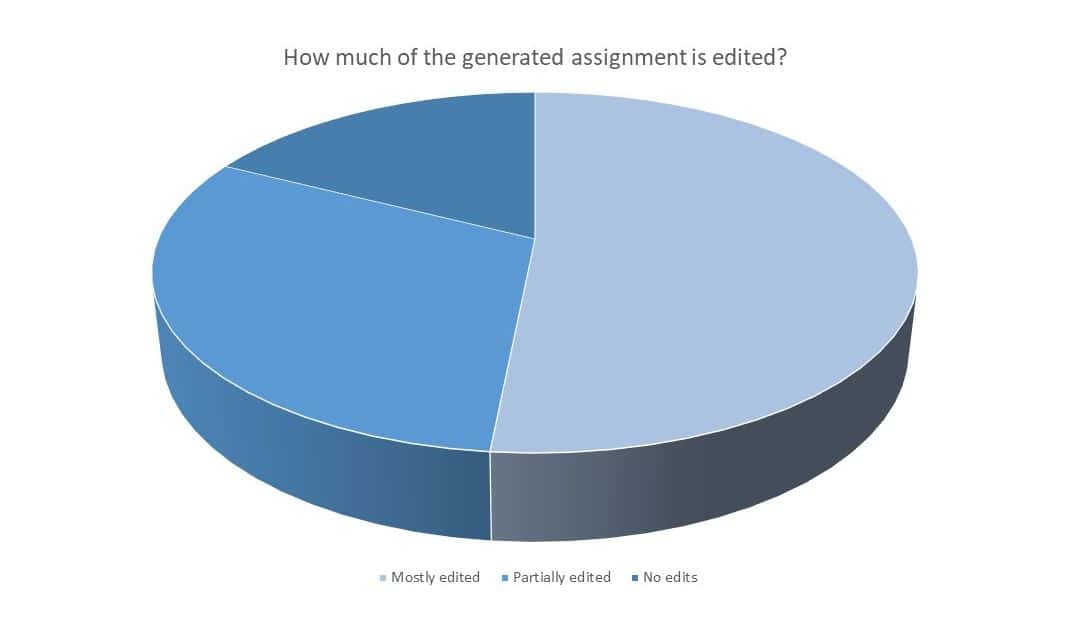
- 51.5% of student ChatGPT users use it for some parts of an assignment but complete the majority themselves.
- 31% use AI for the majority of an assignment.
- 17.5% submit AI output with no edits at all.
The 17% submitting unedited AI output is the slice driving the visible cheating cases and the slice that institutional policy is still struggling to address.
What ChatGPT Actually Does To Student Performance
There are short-term gains and longer-term costs, and the data on both is now substantial enough to draw meaningful conclusions.
Grades And GPA
- 1 in 8 student ChatGPT users (12%) saw their GPA rise during the academic year. The average gain was roughly 0.6 grade points, from 2.9 to 3.5.
- 78% of those students attributed the gain at least partly to ChatGPT.
- Macquarie University reported a 10% rise in student exam results following AI tool integration by March 2025.
The Cognitive Trade-Off, According to WritePaper
- AI-assisted students complete homework about 40% faster but score 10–15% lower on delayed retention and transfer questions.
- 67% of students now believe AI use harms critical thinking up from 54% earlier in 2025.
- Only 23% of student ChatGPT users say it “helps me learn better”; 72% say it “helps me finish faster.”
- Roughly 30% of students show signs of dependency on AI tools.
Conclusion
ChatGPT Assignment Statistics: ChatGPT has quickly become the go-to place for student assignments involving brainstorming, comprehension analysis and draft revision – not only that but in many instances we even offer complete ghostwriting solutions! Adoption has roughly quadrupled over three years, while policy and detection technology lag significantly.
Outcome data remains mixed: short-term productivity is on the uptick; GPA effects appear real but modest; longer term retention and critical-thinking measures appear to have decreased steadily over time. Most students still believe relying solely on AI is cheating – although many use parts of AI in their work anyway.
Institutions which integrate intelligently AI-powered assessment design will likely gain the edge in coming years; those trying to outlaw or ban AI may fall further behind. ChatGPT serves as an editor, tutor and brainstorm partner; however those doing their own thinking continue to learn the most.
Sources

Saisuman is a skilled content writer with a passion for mobile technology, law, and science. She creates featured articles for websites and newsletters and conducts thorough research for medical professionals and researchers. Fluent in five languages, Saisuman's love for reading and languages sparked her writing career. She holds a Master's degree in Business Administration with a focus on Human Resources and has experience working in a Human Resources firm. Saisuman has also worked with a French international company. In her spare time, she enjoys traveling and singing classical songs. Now at Smartphone Thoughts, Saisuman specializes in reviewing smartphones and analyzing app statistics, making complex information easy to understand for readers.