Dedicated Team vs. Staff Augmentation: Which Model Scales Faster in 2026?

Updated · Apr 22, 2026


Table of Contents
- How Each Model Works (and Where the Speed Hides)
- The Four Metrics That Actually Matter in 2026
- 2026 Market Forces Tilting the Field
- Comparative Speed Scenarios
- Friction Points Hidden in Plain Sight
- A Decision Matrix for 2026
- How to Speed Up Either Path
- So, Which Model Truly Scales Faster in 2026?
- Closing Thoughts
Ask any CTO today what keeps them awake at night, and you will hear a familiar chorus: “We need more hands on deck – yesterday.” Engineering capacity is no longer a soft ambition; it is the chief rate-limiter on revenue growth. Whether you are expanding a customer-facing SaaS platform, modernizing a legacy system, or experimenting with GenAI microservices, the question is simple: how can we add talent faster than the market moves? Two models dominate the 2026 outsourcing playbook: staff augmentation and the dedicated team model. They share a common promise – extra engineers without the long hiring cycle – yet the way each one compounds scale is radically different.
Although a dedicated development team (DDT) technically falls under the broad banner of staff augmentation, its day-to-day mechanics differ enough to merit their own scrutiny – differences we unpack in this article.
In this article, we will dissect staff augmentation vs dedicated team approaches, quantify the speed of scale, and arm data-driven technology executives with a decision matrix that can survive a board meeting.
How Each Model Works (and Where the Speed Hides)
Before we throw metrics at the wall, let’s align on what each engagement type actually delivers. A useful primer on the mechanics of a modern dedicated development team can be found here – https://newxel.com/your-dedicated-development-team/. Below, we summarize the essentials and highlight the factors that influence how fast each model can help you in scaling software teams.
Dedicated Team Model

A vendor assembles a stand-alone, full-stack unit, often with five to forty engineers, who report exclusively to your product leadership. Think of it as a satellite engineering office embedded inside another company’s payroll, legal entity, and HR ecosystem. Governance resembles a long-term strategic partnership: you direct the backlog, and the vendor handles retention, benefits, and local compliance.
Speed accelerators:
- Pre-built hiring funnels in specific tech stacks or geographies
- Team cohesion is cultivated from day one; no talent reshuffling between clients
- Institutional memory compounds because attrition risk is vendor-owned
Speed brakes:
- Requires executive alignment on a multi-year commitment
- Vendor sourcing can take 4-6 weeks longer up front because you are reserving engineers full-time
Once that up-front hiring drag clears, velocity usually climbs each sprint as cohesion deepens. For organizations intent on scaling software teams past the twenty-engineer mark, that compounding effect is often decisive.
The punch line: a dedicated pod trades a slower takeoff for a steeper velocity slope later, making it ideal where the roadmap stretches beyond two quarters.
Staff Augmentation Model
Here you rent individuals, usually on monthly contracts, to plug immediate skill gaps. Providers pull from a rotating bench; you integrate each person into your existing squads, tools, and rituals. When the sprint finishes, the contractor may roll off to a different client.
Speed accelerators:
- On-demand access to hundreds of pre-vetted resumes
- Minimal contractual friction, often signable within a week
- You can scale up or down by headcount granularity
Speed brakes:
- Onboarding drag is repeated with every rotation
- Knowledge drains the instant a contractor leaves
- Line managers absorb HR and performance duties – they rarely have spare cycles
For short, high-intensity pushes, augmentation’s instant capacity is hard to beat. Over longer horizons, the churn tax grows, flattening velocity just when you need it to spike for scaling software teams’ initiatives.
The punch line: augmentation is the 100-meter dash champion, and dedicated pods are the marathon specialists. The trick is knowing which race you are actually running.
The Four Metrics That Actually Matter in 2026
Rather than debates about “culture fit” or “so-called agility,” modern VPs of Engineering benchmark velocity through measurable signals. We will focus on the four that most cleanly predict whether you can double capacity this year without doubling headaches.
1. Ramp-Up Time to First Productive Story
Modern engineering velocity benchmarks from platforms like LinearB show that an augmented developer who joins an existing agile workflow usually finishes their first productive story within 30 days of signing the contract. In contrast, it usually takes 45 to 60 days for a brand-new dedicated development team to get set up, aligned, and see their first output. At first glance, augmentation seems to be faster, but that advantage disappears by the second quarter (more on that in a moment)
2. Sustainable Throughput Gain
The industry-standard DORA (DevOps Research and Assessment) metrics show time and time again that product teams that stay together for a long time do much better than those that only work together for a short time. Their benchmark data shows that teams that work well together and are dedicated can deploy up to 3 times more often than teams that are heavily augmented and rotate. The long-term benefits of having cohesive teams are greater than the one-time cost of a longer kickoff.
3. Retention-Adjusted Cost of Delay
The churn that comes with augmentation is huge. According to recent data from 2025, the average turnover rate for tech contractors is between 30% and 40% per year. This is much higher than the 10% rate for embedded engineers who work in a dedicated, full-time unit. Every time someone leaves, the domain context resets, the re-onboarding hours go up, and your roadmap gets taxed without you knowing it.
4. Time-to-Scale Delta (TSD)
TSD measures the calendar spread between needing capacity and achieving full productivity. While augmenting 10 individual engineers is initially faster than standing up a new team, modern organizational frameworks like Team Topologies prove this linear model severely bottlenecks at scale. By the 30-engineer mark, the dedicated model eclipses augmentation, because engineering departments stop relying on individual, piecemeal recruitment and instead scale by rapidly replicating cohesive, autonomous product pods.
2026 Market Forces Tilting the Field
Even perfect metrics can mislead if you ignore the macro currents pushing them around. A short scene-setter will keep the sub-trends in perspective before we dive into the details below.
The Premium on Context Retention
GenAI tooling has slashed boilerplate coding hours, but it has amplified the premium on deep product context, knowing why a design caveat exists, not merely how to commit new code. With LLM assistance, a single engineer can now push as many pull requests as two could in 2023, but only if they already understand the edge cases. Therefore, models that protect context density – i.e., dedicated teams – scale multiplicatively.
Controlled experiments with thousands of developers showed that engineers who use enterprise-grade LLMs can finish tasks 55% faster, which is like doubling their output capacity, as long as they already know what the system needs to do.
The Compliance Drag Factor
Europe’s AI Act and California’s SB-1047 both introduce audit requirements that cannot be shipped offshore without continuity of accountable records. A staff augmentation vs dedicated team decision now carries regulatory heft: auditors prefer a stable chain of custodianship over code that touches personal or synthetic data.
Budgeting Under the New CapEx/Opex Blend
CFOs in 2026 treat dedicated squads as a quasi-CapEx; they appear as long-term commitments and may even be capitalized under certain GAAP interpretations. Augmentation rides Opex, which still helps EBITDA optics. This difference shapes how fast finance will green-light head-count requests after the first 12 months of engagement.
Comparative Speed Scenarios
Let’s move from theory to tangible roadmaps. Below we model three common scaling patterns and measure which option reaches feature-complete status sooner. Numbers are averaged across confidential client retrospectives, sanitized for NDAs.
Scenario A: Two-Quarter Feature Push (Greenfield Micro-Service)
Scope: Ten Java/Kotlin engineers, QA included
Deadline: 6-month MVP
Staff augmentation locks in five contractors within 10 days and a full roster by day 24. Because each hire is new to the stack, velocity stabilizes only after sprint three. Feature freeze lands in week 26, one week behind target.
The dedicated development team assembled over six weeks, missing two sprints at the front. However, no member rotated out, and sprint velocity outpaced the augmentation squad by 22% from sprint five onward. MVP hit feature freeze in week 25 on time.
Winner: Dedicated team by a margin of six calendar days, thanks to velocity stability.
Scenario B: Rapid Head-Count Surge Post-Series C
Scope: Grow mobile tribe from 15 to 45 engineers within 8 months
With augmentation, the first 15 seats filled lightning-fast. At scale, however, sourcing unique iOS architects stretched vendor benches thin, causing rates to spike. Knowledge silos formed because talent belonged to four different providers. The tribe hit 41 engineers by month eight.
By contrast, the vendor handling the dedicated development team cloned three identical squads across Poland and Argentina. Shared onboarding, unified rituals, and a single handbook accelerated each new pod. Every new pod got a handbook that sped up onboarding, common rituals, and other things. The goal of 45 people was reached in the seventh month.
Winner: Dedicated team by one month, and with 14% lower blended rate at scale.
Scenario C: Short-Term Regulatory Audit Patch
Scope: Engage three security experts in a 12-week sprint to close SB-1047 audit vulnerabilities.
The commitment of years could not be justified by dedicated model. Augmentation plugged the holes in two weeks and rolled off at sprint’s end.
Winner: Staff augmentation, validating its tactical advantage.
Friction Points Hidden in Plain Sight
Speed is not only measured by the arrival of engineers; it also depends on leadership bandwidth, tooling, and socio-technical cohesion.
Line-Manager Overload
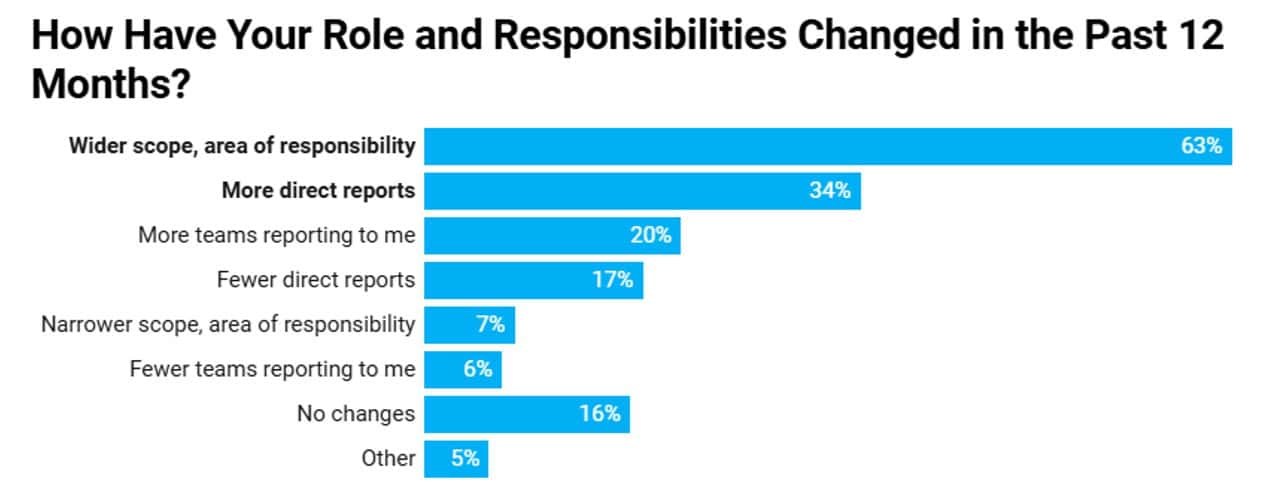
A 2024 survey of engineering managers reveals that ballooning administrative duties are driving severe burnout, with 63 percent taking on expanded tracking and coordination responsibilities. When managers have to spend about a quarter of their week on this administrative overhead, a team of ten silently loses more than two full-time equivalents (FTEs) of leadership capacity.
Compounding Onboarding Tax
Each new contractor compels senior developers to shadow code reviews and always give technical context. The actual price of this churn is mind-blowing: as the 2025 State of Software Engineering Excellence report has found that organizations pay an average onboarding tax of 320 hours of lost engineering productivity to rotate just one developer onto a project.
Vendor Lock-In and Escalation Clauses
Dedicated managed engagements usually come with price protection and SLA-backed budget predictability for 24 to 36 months. Staff augmentation, on the other hand, is still tied to hourly spot-market labor. According to research by Information Services Group (ISG), companies that switch from this unstable time-and-materials model to dedicated managed services save an average of 15%.
A Decision Matrix for 2026
Below is a distilled rubric designed to fit on one slide for your next steering committee. Score each axis from 1-5; higher favors a dedicated development team.
| Criterion | Weight | Your Score | Weighted Total |
| Engagement Length (planned months) | 5 | ||
| Head-Count Growth Target (>25 FTEs) | 4 | ||
| IP / Data Sensitivity | 4 | ||
| Need for Immediate Start (<4 wks) | 3 | ||
| Internal Management Bandwidth | 3 | ||
| Budget Structure Flexibility | 2 | ||
| Regulatory Compliance Burden | 3 | ||
| Attrition Risk Tolerance | 3 |
Totals ≥ 60 → select a dedicated development team; totals ≤ 45 → choose augmentation; anything in the middle signals a hybrid blend.
How to Speed Up Either Path
A smart contract choice is only half the battle. The other half is removing operational friction so that any engineer – contractor, or full-time pod member – can merge code within hours of arrival. We will stay with the original three accelerators but expand them for deeper execution detail.
Standardize Environments
Spinning VMs by hand is 2018 engineering. In 2026, your goal is “commit within the first morning.” Use Terraform or Pulumi scripts to scaffold cloud resources, seed secrets through HashiCorp Vault, and bootstrap observability agents. Wrap the workflow in a single make bootstrap command referenced in the README. md. Don’t forget local emulators for third-party APIs; contractors often lack VPN keys on day one. A reproducible environment prevents the dreaded “works on my laptop” spiral that burns half a sprint every time new talent logs in.
Document the Domain Narrative
Individuals resign; pages of Confluence hang unpublished. Instead, make a living-domain story. Record a trilogy of short Looms:
- Live product demonstration;
- Architecture walkthrough, including data flow and important trade-offs;
- Summary of release trains and calendar milestones.
Attach a one-page diagram in PNG and a five-point decision log. Re-record every quarter. Incoming engineers binge-watch on 2x speed and arrive primed.
Embed a Full-Time Stream-Aligner
Velocity dies when external engineers get stuck in Slack thread purgatory. Alleviate this by giving a senior developer – call him the stream-aligner – whose one OKR is: “Block outsiders in four hours.” They filter snags in the environment, shepherd PRs in CI/CD, and explain acceptance criteria. One aligner can support thirty engineers if empowered to approve low-risk merges and escalate high-risk ones. Rotate the role quarterly to prevent burnout, and back it with a simple dashboard showing open blockers, average response times, and sprint goal impact.
Collectively, these three practices require perhaps two weeks of focus but can reclaim several sprint equivalents over a twelve-month roadmap – regardless of whether you are scaling software teams with augmentation, dedicated pods, or a mixture.
So, Which Model Truly Scales Faster in 2026?
If you measure speed purely as “bodies on the ground,” staff augmentation wins sprint 1. But software scale is a marathon of accumulated context, not a 40-yard dash. Once the runway extends beyond two quarters or the headcount needs exceed two dozen engineers, the cohesion advantage of a dedicated development team compounds throughput, drops attrition risk, and lowers the cost of delay.
In short, augmentation is your tactical quick reaction force; dedicated teams are your strategic force multiplier. The fastest path is to wield both, starting with augmentation for the first critical sprints, then transitioning high-performing contractors into a permanent pod operated under a dedicated model.
Closing Thoughts
The 2026 talent market rewards leaders who optimize not just for the next sprint but for the throughput of every sprint that follows. By grounding the staff augmentation vs dedicated team debate in real metrics – ramp-up times, retention-adjusted cost of delay, and TSD – you can make faster, cleaner investment calls. Remember: the real question is not how fast you can add developers; it is how quickly those developers can ship value and keep shipping it after quarter four. Pick the model or mix that lets you answer that with confidence.

Joseph D'Souza founded ElectroIQ in 2010 as a personal project to share his insights and experiences with tech gadgets. Over time, it has grown into a well-regarded tech blog, known for its in-depth technology trends, smartphone reviews and app-related statistics.