Burger King Statistics By Revenue, Restaurants, Growth Strategy And Global Brand Performance (2026)

Updated · Mar 14, 2026


Table of Contents
- Introduction
- Editor’s Choice
- Burger King Total Revenue
- Most Valuable Restaurants
- American Burger King Customer Satisfaction Index
- Burger King Adjusted Operating Income
- Burger King’s Resturant U.S Locations
- Burger King Workforce
- Burger King’s Sustainability Progress
- Burger King’s Growth Strategy
- Performance of Burger King’s Parent Company
- Conclusion
Introduction
Burger King Statistics: The fast-paced environment of quick service restaurants (QSR) recognizes Burger King as one of its most famous international brands. The 2025 performance of Burger King establishes its presence in more than 100 countries, which it combines with its flame-grilled Whopper to demonstrate its ability to withstand market changes and develop new business strategies. The Burger King brand has achieved strong performance through its digital expansion efforts and worldwide market development, and its renewed dedication to enhancing franchise owner profitability after the pandemic lockdowns ended and consumer demand for economical quick-service restaurants rose.
The upcoming section presents Burger King statistics, which we will examine through verifiable information that demonstrates their revenue performance, sales development, international expansion, workforce, and operational strategies based on recent research findings and financial results.
Editor’s Choice
- The Q3 2025 quarter saw Burger King generate USD 387 million in revenue, which represented a 6.9% increase from the previous year while demonstrating stable revenue performance.
- The company generated USD 1.131 billion in revenue during the nine-month period, which marked a 5.1% increase from the previous year when revenue stood at USD 1.076 billion despite ongoing economic challenges.
- The total system-wide sales for the year reached USD 8.6 billion, which demonstrated Burger King’s ability to maintain global customer demand.
- The company achieved 3.1% sales growth through the quarter, while year-to-date growth reached 1.1% because of its effective pricing management and menu enhancements.
- The restaurant industry experienced a 1.1% decrease in net restaurant growth because the company decided to close less profitable locations instead of experiencing reduced customer demand.
- The quarterly franchise and property revenues increased to USD 187 million, which demonstrates the effectiveness of the company’s asset-light business model.
- The franchise network showed increased involvement, which resulted in advertising and service revenues growing to USD 138 million.
- In 2024, Burger King achieved a brand value of USD 5.2 billion, which positioned the company as the ninth most valuable restaurant brand in the world.
- The U.S. customer satisfaction rating reached an ACSI score of 77 in 2024, which represented an improvement from the 75 to 76 range that existed during previous years.
- The company reported a 10% increase in adjusted operating income, which reached USD 123 million during Q3 2025.
- More than 8400 Burger King restaurants throughout the United States, which concentrate their presence in major metropolitan areas.
- The city of New York contains 380 restaurants, which represent 4.5% of all restaurant locations in the United States.
- The fast food industry experienced labor shortages in 2024 when 40% of employees considered leaving their jobs.
- Burger King decreased its carbon emissions by 15% in 2024, which brought the company closer to its 2030 sustainability goal.
- The global restaurant count reached 19700 locations in 2024 because of rapid franchise development.
Burger King Total Revenue
| BK Segment Results | Three Months Ended September 30 | Nine Months Ended September 30, | ||
| (in US$ millions, unaudited) | 2025 | 2024 | 2025 | 2024 |
| System-wide Sales Growth | 2.3 % | (1.5) % | 0.6 % | 0.0 % |
| System-wide Sales | $2,956 | $2,891 | $8,608 | $8,569 |
| Comparable Sales | 3.1 % | (0.7) % | 1.1 % | 0.9 % |
| Comparable Sales – US | 3.2 % | (0.4) % | 1.2 % | 1.1 % |
| Net Restaurant Growth | (1.1) % | (1.5) % | (1.1) % | (1.5) % |
| System Restaurant Count at Period End | $7,043 | $7,119 | $7,043 | $7,119 |
| Company Restaurant Sales | $62 | $60 | $183 | $181 |
| Franchise and Property Revenues (a) | $187 | $179 | $537 | $533 |
| Advertising Revenues and Other Services (b) | 138 | $122 | $411 | $363 |
| Total Revenues | 387 | $362 | $1,131 | $1,076 |
(Source: rbi.com)
- According to rbi.com, the most recent financial results from Burger King show that the company has achieved steady revenue growth through its franchise system while following a methodical development approach.
- The financial report from Burger King shows that the company achieved total revenues of USD 387 million during the three months that ended on September 30 2025, which marks an increase from the previous year’s total of USD 362 million and shows a year-over-year growth of 6.9 %.
- The organization achieved total revenues of USD 1.131 billion during the nine-month period, which represents a revenue increase from the previous year’s total of USD 1.076 billion, while the economic situation remained difficult for consumers.
- The company achieved system-wide sales growth of 2.3% during the most recent quarter and 0.6% during the current year because comparable sales increased by 3.1% during the quarter and 1.1% during the nine months.
- Burger King’s U.S. comparable sales showed better performance than the global average, which indicates that the company successfully implemented pricing strategies and improved its menu offerings in its main market.
- The restaurant’s net growth rate dropped to (1.1%) because the company decided to close underperforming restaurants while there remained strong demand for its services.
- The quarter brought about a growth of franchise and property revenues, which reached USD 187 million, together with an increase in advertising and other service revenues to USD 138 million, which demonstrates the rising interest from franchises and the expanding power of marketing.
- The sales generated by company-operated restaurants reached USD 62 million, which shows that the royal structure of Burger King operates as the main revenue generator for the business.
- Burger King statistics demonstrate that the company chooses to enhance its revenue quality instead of expanding its business operations.
- Burger King stands to increase its revenue through its franchise model, which generates high profits, its strict cost management system, and its gradual growth in same-store sales.
Most Valuable Restaurants
(Reference: coolest-gadgets.com)
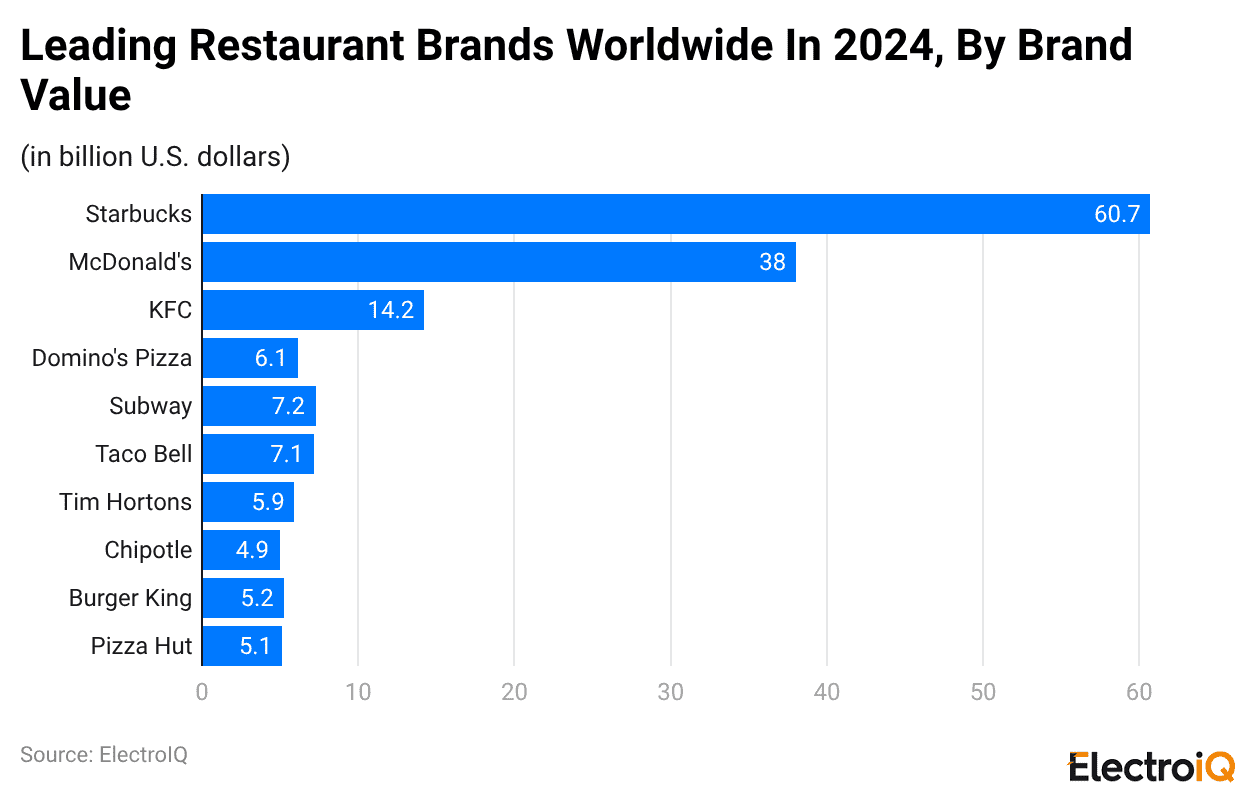
- According to Statista, the brand valuations of worldwide restaurant chains demonstrate a competitive market that has three distinct levels of competition.
- Starbucks has established itself as the market leader with a brand value of USD 60.7 billion, which demonstrates its status as a premium brand and its capacity to generate worldwide customer loyalty.
- McDonald’s follows with a brand value of USD 38 billion because it operates at an unparalleled level of business and provides consistent services.
- Burger King maintains a brand value of USD 5.2 billion, which makes it the ninth most valuable brand in the world, while its direct competitors KFC and Subway maintain brand values of USD 14.2 billion and USD 7.2 billion, respectively.
- Burger King requires global expansion to increase its brand equity, according to its statistics, while menu development, value assessment, and emotional branding will help drive its competitive advantage.
American Burger King Customer Satisfaction Index
(Reference: coolest-gadgets.com)
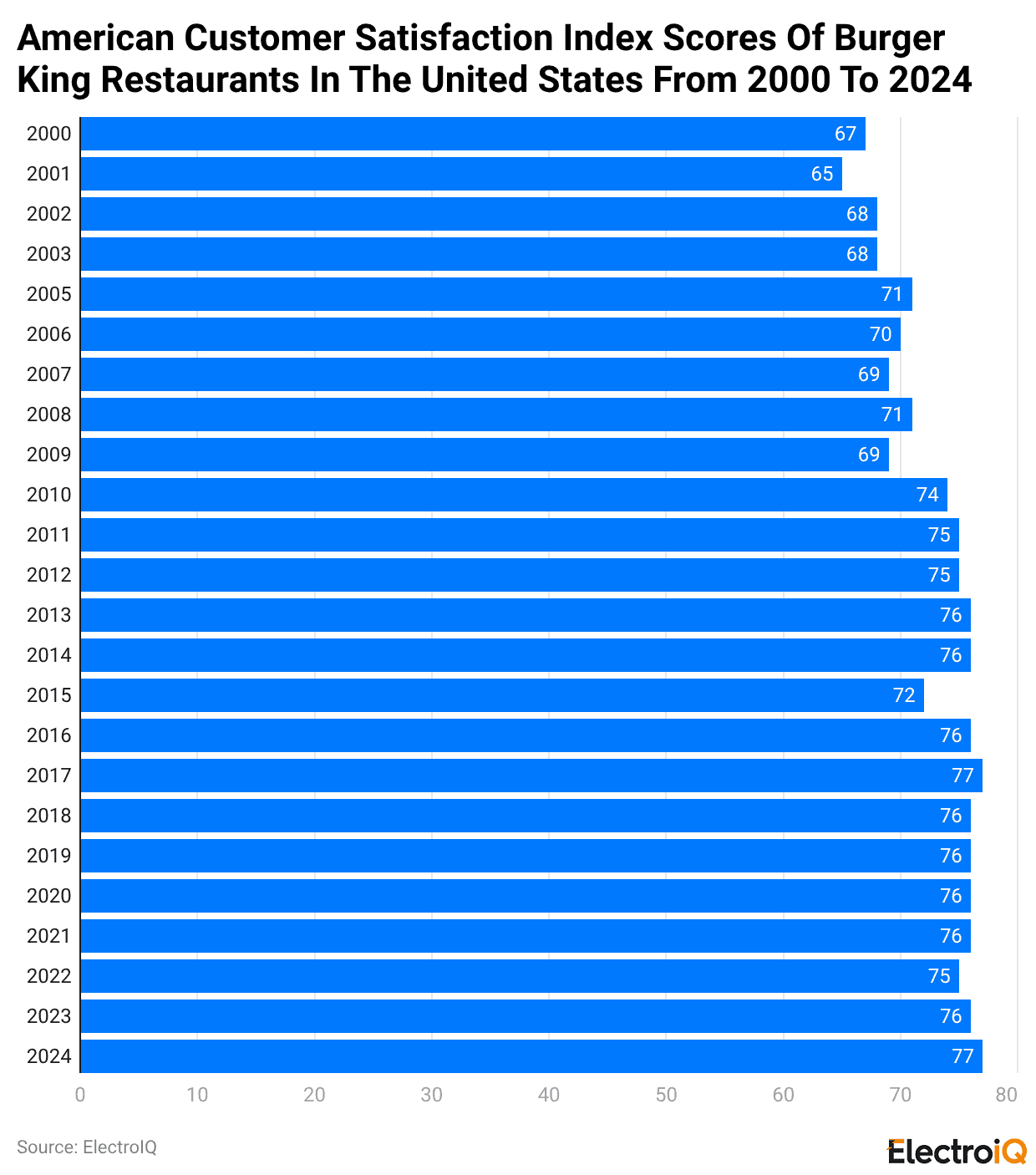
- Burger King uses customer satisfaction measurements to show that its brand has been improving consumer perception through gradual progress.
- Burger King’s ACSI score for the United States will reach 77 in 2024, which represents a rise from 76 in 2023 and 75 for both 2021 and 2022.
- The QSR segment shows competitive growth with the QSR segment because one-point gains demonstrate improved food quality, quicker service, and better value assessment.
- The business has successfully implemented operational changes and menu improvements to achieve recovery from a downturn that lasted from 2021 until 2022.
- The Burger King statistics show that customers now experience more predictable service, which results in better customer loyalty and steady business growth.
Burger King Adjusted Operating Income
(Source: rbi.com)
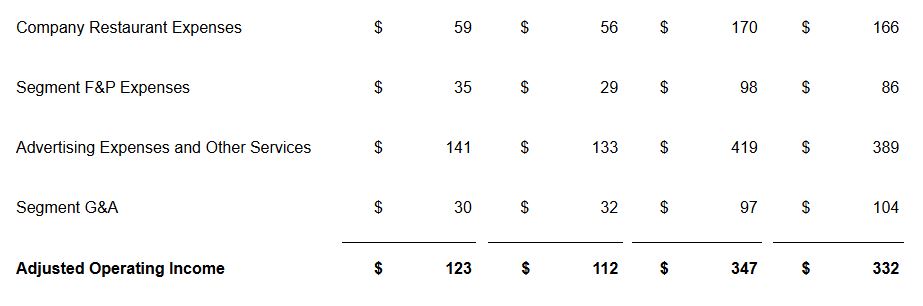
- The latest operating performance highlights the strengthening fundamentals behind Burger King’s statistics.
- The adjusted operating income for the three months reached USD 123 million in 2025 after rising from the previous year, when it stood at USD 112 million.
- The nine-month period showed adjusted operating income growth to USD 347 million, which exceeded last year’s total of USD 332 million.
- The company restaurant expenses reached USD 59 million, while advertising and other services experienced a significant increase to USD 141 million during the quarter.
- The company implemented planned investments to enhance customer traffic while increasing brand visibility.
- The G&A expenses for the segment decreased during the quarter, which demonstrates that the company maintains tighter control over its overhead expenses.
- The Burger King statistics demonstrate that the company achieves revenue growth through effective cost management practices, which help to counter the effects of inflation.
- The brand will maintain its ability to generate profits through this strategic approach, which also enables continued investment for future business development.
Burger King’s Resturant U.S Locations
- The distribution of outlets across major metros highlights the scale and targeting behind Burger King’s statistics.
- Burger King operated more than 8400 U.S. locations in 2024, which showed a strong presence in urban areas that experienced high pedestrian traffic.
- New York City leads with 380 restaurants, accounting for 4.5% of all U.S. units, underscoring its role as a flagship urban market.
- With 310 locations, Los Angeles accounts for 3.7% of outlets, while Chicago shows a strong Midwest presence with its 250 locations.
- Southern growth hubs such as Houston (230 locations, 2.7%) and Miami (210 locations, 2.5%) signal demand driven by population growth and tourism.
- The two secondary metro areas of Phoenix and San Francisco maintain about 2% national market share, which proves their ability to reach customers throughout the country.
Burger King Workforce
- The employee data of Burger King shows substantial labor pattern information about the company.
- The QSR industry faces ongoing retention challenges, which affected almost 40% of Burger King staff members who planned to leave their jobs in 2024.
- The average annual salary of USD 24,774 places Burger King in the lowest 15% among similarly sized companies, with limited wage competitiveness.
- The company shows compensation dispersion between its workers, who receive basic salaries of USD 17,000 and USD 35,000 depending on their work duties and employment period.
- The company faces challenges, yet 48% of employees choose to remain with the organization, which demonstrates that its business operations maintain stability through its franchising system and flexible entry-level positions.
- The executive salary structure establishes a pay gap between Burger King executives and their CEO, who receives a salary exceeding USD 900,000 per year.
- Burger King statistics demonstrate that the company has developed a workforce model that achieves cost savings, yet it requires investment in employee salaries and retention programs for its future success.
Burger King’s Sustainability Progress
- Burger King has made significant progress toward sustainable practices.
- The latest Burger King statistics about sustainability demonstrate that the brand successfully converts its environmental, social, and governance commitments into actual sustainable outcomes.
- Burger King achieved a 15% decrease in carbon emissions during 2024, which represents halfway progress toward its 30% reduction goal, which it aims to achieve by 2030.
- The company demonstrates actual progress through its energy transition, which currently powers 40% of global restaurants with renewable energy and has established a pathway to achieve 60% renewable energy usage by 2027, which will benefit both cost efficiency and brand reputation.
- The company plans to achieve 100% sustainable packaging by 2025 after it reduces single-use plastics by 20% in 2024 to meet global regulations, which are currently becoming stricter.
- The company sources 85% of its beef and 90% of its coffee from certified sustainable suppliers, which enables it to maintain supply chain responsibility while reducing both environmental and reputational risks.
- It achieved 10,000 tons of operational waste diversion, which supports its commitment to circular economy practices.
- Plant-based menu sales increase to 8% because consumers respond positively to sustainability practices, and the Impossible Whopper leads plant-based menu sales.
- The Burger King statistics demonstrate how the company uses environmental efficiency to create business growth and improve its ability to endure challenges while delivering long-term value to its shareholders.
Burger King’s Growth Strategy
- Burger King has developed a growth strategy that demonstrates its commitment to solving current challenges through new business initiatives.
- The company demonstrated its commitment to plant-based foods through its first movement into this market, which it executed with great speed.
- Burger King operates meat-free restaurants in Germany, the UK, Spain, and Switzerland to meet the needs of flexitarian customers, which gives it a competitive advantage over its fast food competitors.
- The company demonstrates its commitment to local markets through its German operations, which provide plant-based options for all meat-based menu items.
- The Impossible Whopper drives plant-based product recognition throughout the United States despite its limited market availability because it operates as the main plant-based product in the company’s biggest market.
- The company plans to invest new funds for restaurant improvements, which will reach 85 to 90% of US outlets by 2028.
- The initiative will improve customer satisfaction while making operations more efficient and maintaining brand relevance against other quick-service restaurants.
- The current sales recovery period for Burger King remains unpredictable, but the company’s statistics show that it has established a long-term plan that will drive menu development and system upgrades that will help the brand remain relevant while expanding its future sales.
Performance of Burger King’s Parent Company
- Restaurant Brands International operates as a global QSR business that expands through scale and selects its competitive markets.
- In 2023, RBI generated approximately USD 7.2 billion in systemwide sales, placing it among the larger global foodservice groups, though well behind category leader McDonald’s, which produced more than three times that revenue.
- The existing gap demonstrates that RBI exists as a challenger portfolio company instead of functioning as a single-brand market leader.
- The operational strength of RBI at Burger King emerges through its ability to expand the brand and its market presence.
- By 2024, Burger King established more than 19,700 restaurants worldwide through its aggressive franchising program, which allowed the company to expand without high capital costs in both developed and emerging markets.
- Burger King has maintained its strong brand identity, which customers easily recognize since its founding in 1954, although the company has gone through five ownership changes.
- The public awareness of Burger King showed durability through a 2024 Statista survey, which found the brand achieved joint second rank with KFC for brand recognition in the United States, outpacing multiple higher-revenue competitors.
- From a portfolio standpoint, RBI’s strategy emphasizes unit growth, franchise leverage, and brand monetization rather than pure revenue dominance.
- Burger King statistics demonstrate that although RBI lags behind large operators in revenue size, the company achieves equivalent results through its brand value and presence of restaurants worldwide, and its capacity to grow in the future.
Conclusion
Burger King Statistics: Burger King demonstrates its 2025 performance through a brand choice that prefers discipline instead of disruptive changes. The revenue growth, better profit margins, and higher customer satisfaction ratings show that the company has achieved stable business operations. Burger King shows through its financial data that its franchise system, based on asset-light operations, generates stable cash income while protecting against financial losses during times of market instability.
The company focuses on long-term results through its strategic investments, which include modernization efforts, sustainable development projects, and plant-based product research. Although Burger King falls behind leading brands in brand value and market presence in its worldwide operations, its strong unit profitability and better business performance put it in a good position for consistent long-term value development.
FAQ.
Burger King reported USD 387 million in Q3 2025 revenue, up 6.9% year over year.
Total revenue reached USD 1.131 billion for the nine-month period.
System-wide sales totalled USD 8.6 billion year-to-date in 2025.
Burger King operates over 8,400 restaurants across the United States.
The brand surpassed 19,700 restaurants worldwide by 2024.
Burger King is owned by Restaurant Brands International (RBI), headquartered in Canada.

I hold an MBA in Finance and Marketing, bringing a unique blend of business acumen and creative communication skills. With experience as a content in crafting statistical and research-backed content across multiple domains, including education, technology, product reviews, and company website analytics, I specialize in producing engaging, informative, and SEO-optimized content tailored to diverse audiences. My work bridges technical accuracy with compelling storytelling, helping brands educate, inform, and connect with their target markets.