Tesla Statistics By Revenue, Sales, Trends and Facts (2026)

Updated · Mar 16, 2026


Table of Contents
- Introduction
- Editor’s Choice
- Tesla Vehicles Sales worldwide
- Tesla Production and Delivery Performance 2025: Model 3/Y Driving EV Market Growth
- Tesla Motors key figures
- Tesla’s Revenue
- Tesla EV Registrations Across Major European Markets
- Tesla Sales in the United States
- Tesla Financial Performance Trends
- Tesla’s Strategic Expansion Across Energy, AI, Robotics, and Autonomous Driving
- Tesla vs. BYD
- Tesla Supercharger Locations
- Global Distribution of Tesla Supercharger Stations by Country
- Conclusion
Introduction
Tesla Statistics: Tesla Inc. stands as a battery-electric vehicle manufacturer that holds excellent international influence. Tesla was incorporated in 2003 by Martin Eberhard and Marc Tarpenning. Elon Musk joined as a co-founder and lead investor in 2004 and has served as CEO since 2008, and later developed electric vehicles that use battery technology and autonomous driving systems. Tesla underwent a transitional phase throughout 2025 and early 2026, which resulted in reduced vehicle production capacity while new competitors emerged and Tesla dedicated resources to artificial intelligence, robotics, and energy storage development.
Tesla operates as a leading electric vehicle brand around the world while facing intense rivalry from BYD and new automotive startups. The article provides Tesla statistics for the years 2025 to 2026, which include financial results, vehicle sales, and infrastructure development and research findings.
Editor’s Choice
- Tesla, Inc. achieved a total of 497120 vehicle deliveries during Q3 2025, which marked a 7% increase compared to the previous year.
- Tesla manufactured 434358 vehicles while the company distributed 418227 vehicles worldwide during Q4 2025.
- The total vehicle production for 2025 reached 1654667 units, while the total vehicle deliveries reached 1636129 vehicles.
- The Tesla Model 3 and Tesla Model Y produced 1,600,767 vehicles, which resulted in 1,585,279 deliveries during the year 2025.
- Tesla held a valuation of approximately USD 750 billion by April 2025, positioning it among the ten largest S&P 500 companies at that time.
- Tesla reported Q2 2025 revenues of USD 22.50 billion, which fell short of analyst predictions who expected USD 22.64-22.74 billion.
- The company achieved an operating profit of USD 923 million in Q2 2025, falling short of the USD 1.23 billion analyst consensus estimate by roughly 25%.
- Tesla delivered 16% fewer vehicles in 2025 because its main automotive sector faced declining demand for its products.
- Regulatory credit sales generated USD 10.6 billion in revenue since 2019, although their Q2 2025 revenue dropped by 50%.
- The 2025 Tesla registrations in Germany showed a 62.2% decrease, which represented the most significant decrease among all European markets.
- Sweden and Denmark experienced a 55.3% decline in registrations, while the Netherlands witnessed a 49.7% decrease.
- The Tesla Model Y achieved sales of 372613 units in the U.S. during 2024, making it the most popular battery-electric vehicle.
- The Tesla Model 3 achieved U.S. sales of 189903 vehicles, which made it the second most popular electric vehicle.
- Tesla generated total revenues of USD 94.83 billion during 2025, which fell short of the USD 97.69 billion record set in 2024.
- The energy generation and storage division experienced a 27% growth, which resulted in USD 12.77 billion in revenue for 2025, demonstrating Tesla’s expansion into non-electric vehicle markets.
Tesla Vehicles Sales worldwide
(Reference: statista.com)
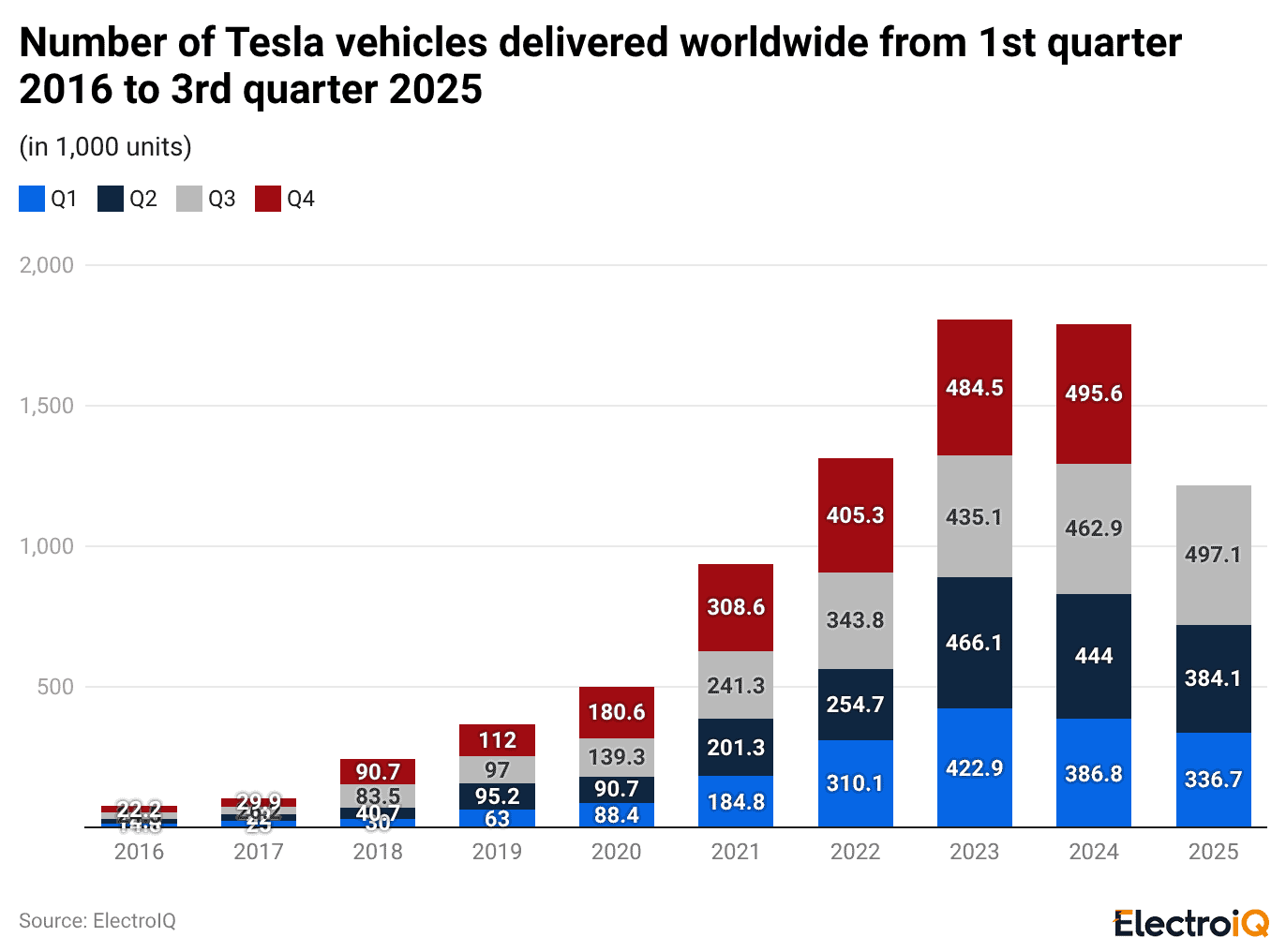
- Tesla maintains strong market growth in the worldwide electric vehicle industry because of its rising vehicle sales, increasing brand value, and growing consumer acceptance of electric vehicles.
- Statista reports that Tesla delivered approximately 497,099 vehicles during Q3 2025, which represented a 7% increase from the previous year in Q3 2024.
- The continuous increase in Tesla deliveries demonstrates the company’s capability to expand production operations while sustaining customer interest within the competitive EVs market.
- Tesla has gained important market recognition through its sales achievements, its brand value, and its financial market performance.
- As of early 2025, Tesla had lost its position as the most valuable automotive brand, falling to third place in Brand Finance’s rankings with a brand value of USD 43.0 billion, behind Toyota (USD 64.7 billion) and Mercedes-Benz..
- Tesla maintained its position among the ten largest companies in the S&P 500 by market capitalization, with a valuation of approximately. USD 750 billion by April 2025.
Tesla Production and Delivery Performance 2025: Model 3/Y Driving EV Market Growth
(Source: ir.tesla.com)
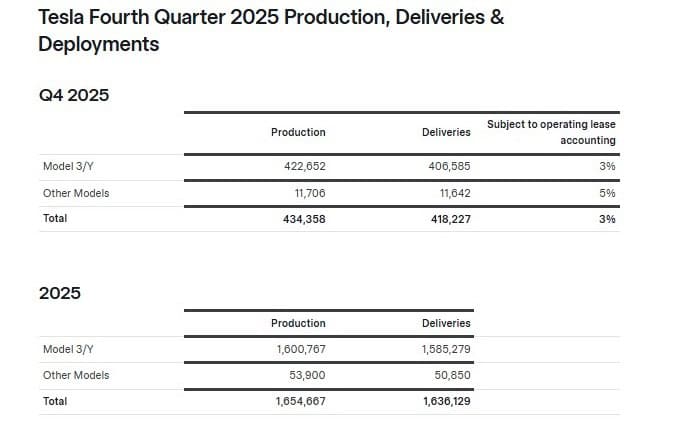
- According to Tesla’s Investor Relations (IR) reports, through its ability to produce vehicles at high rates and deliver vehicles at high volumes, Tesla maintains its status as the top automotive manufacturer of electric vehicles throughout the world.
- The production of 434358 vehicles and the delivery of 418227 units to international markets during Q4 2025 demonstrate the ongoing demand for Tesla’s EVs, which face rising competition from other sustainable transport manufacturers.
- The Tesla Model 3 and Tesla Model Y vehicle lineup functions as the main element that drives performance results, which showed production of 422652 vehicles and delivery of 406585 vehicles during Q4 2025.
- These models represent the majority of Tesla’s sales and remain central to the company’s strategy to dominate the mainstream electric mobility segment.
- Tesla’s vehicle production records show that the company produced 11706 units and delivered 11642 units for its other vehicle models, which include premium variants that make up a smaller yet constant portion of its complete sustainable transport collection.
- The full year 2025 results show that Tesla built 1654667 vehicles across the world while distributing 1636129 units, which shows the company’s capacity to achieve high production rates while effectively managing its supply chain operations.
- The Model 3 and Model Y together produced 1.6 million vehicles and delivered 1.58 million units, which established them as Tesla’s primary commercially successful electric vehicle platforms.
Tesla Motors key figures
(Reference: statista.com)
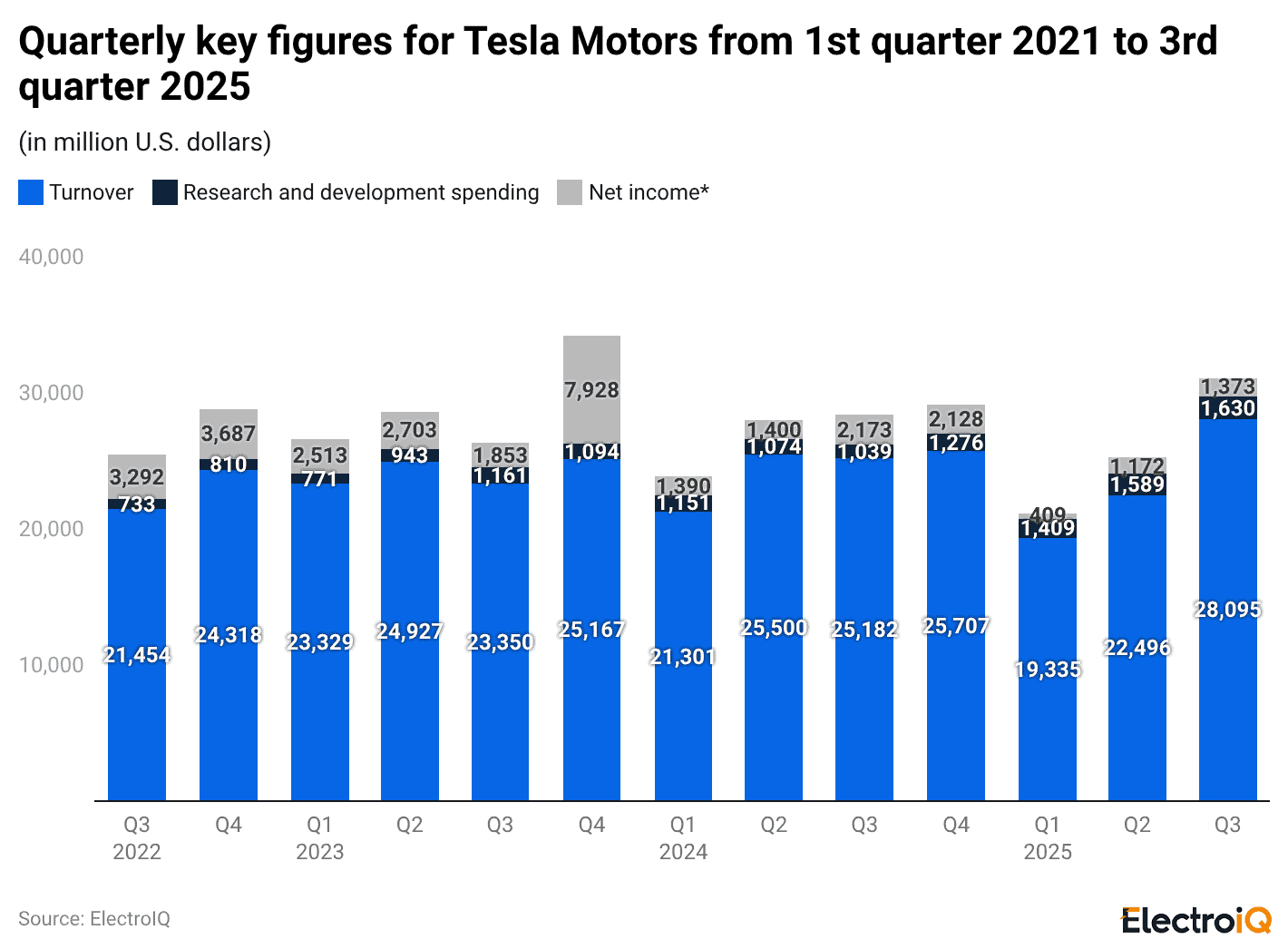
- Tesla achieved a significant financial turnaround during Q3 2025 when the company reported a net profit of USD 1.373 billion.
- The company showed substantial growth since the first quarter of 2025 because its EV operations achieved better operational efficiency and production reliability, which resulted in increased customer demand.
- The company has not yet achieved its previous profitability level because its current earnings fall short of the Q3 2024 net income, which exceeded USD 2 billion, and the company faces ongoing profit challenges because of worldwide electric vehicle competition, its pricing approach, and production spending.
- Tesla maintains its corporate headquarters in Austin, Texas, co-located with Gigafactory Texas, while the company concentrates on developing sustainable transport and battery systems and advanced electric drive technologies to improve its position in the growing sustainable transportation and electric vehicle research and development sector.
Tesla’s Revenue
(Source: statista.com)
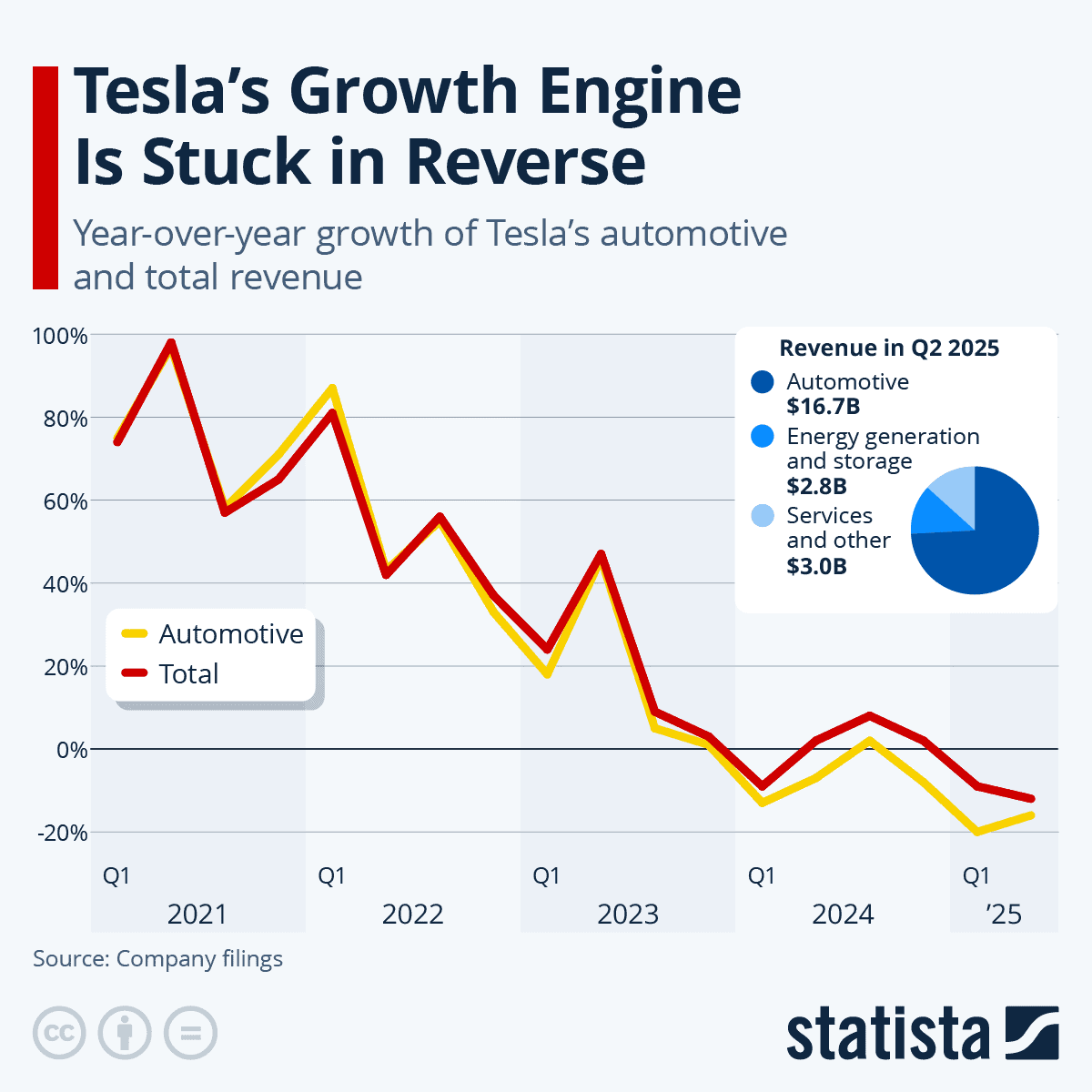
- Tesla experienced a difficult period in 2025 as its electric vehicle sales decreased, its regulatory credit revenue fell, and its profit margins became tighter.
- Tesla reported Q2 2025 revenue of USD 22.50 billion, which did not meet Wall Street expectations of USD 22.64 billion, and the company generated an operating profit of USD 923 million, which fell nearly 25% short of analysts’ consensus predictions.
- The financial results show that Tesla’s main automotive division faces pressure, which produces about 75% of the company’s overall revenue.
- The main reason for this decrease is that vehicle deliveries and automotive revenue experienced a 16% decline when compared to the previous year.
- Tesla’s sales in European battery-electric models markets have shown serious problems because competition from established car manufacturers and new electric vehicle companies has started to grow.
- Tesla had several years of financial advantages because it sold these credits to car manufacturers who needed them to meet carbon emissions regulations while they kept selling gas-powered vehicles.
- From 2019 to present, this business practice has brought Tesla about USD 10.6 billion in revenue, which has become a highly profitable business element.
- The ‘One Big Beautiful Bill Act,’ passed in 2025, eliminated the financial penalties for automakers who failed to meet CAFE standards, effectively removing a major incentive for purchasing Tesla’s regulatory credits.
- The regulatory credit sales in Q2 2025 experienced a 50% decline when compared to the previous year, and analysts expect a 75% decrease in 2026, while the market might completely vanish by 2027.
- The company could lose between USD 2 billion to USD 3 billion in annual revenue through this development.
- Compounding the challenge, the removal of the USD 7,500 EV consumer tax credit may further weaken demand for battery-electric models.
- Collectively, these trends highlight how policy shifts, competitive EV markets, and revenue diversification challenges are reshaping Tesla’s near-term financial outlook and growth trajectory.
Tesla EV Registrations Across Major European Markets
(Source: statista.com)
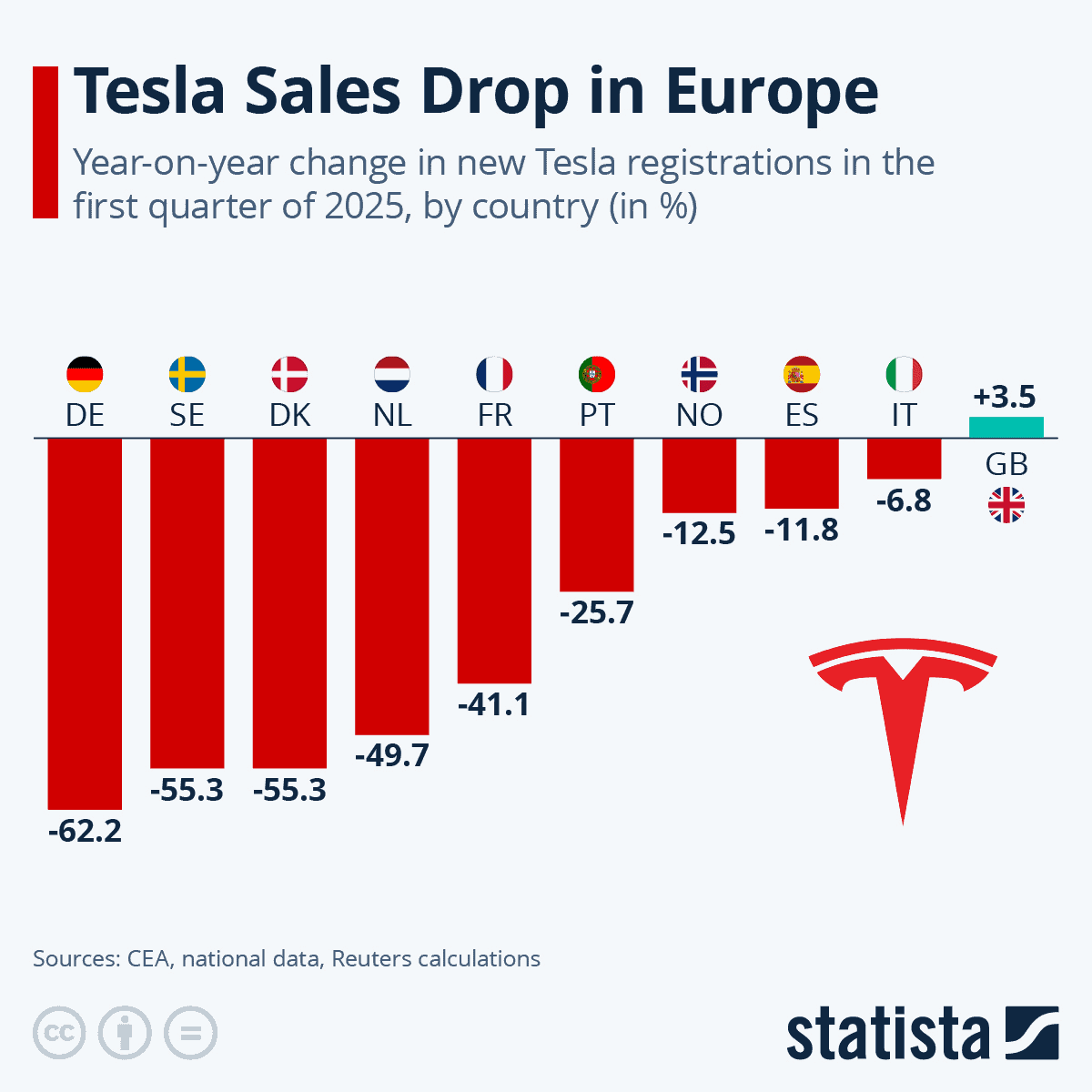
- The European electric vehicle market for Tesla is experiencing a substantial decline because new Tesla vehicle registrations for multiple countries decreased by more than 50% between the first quarter of 2025 and the previous year.
- The data demonstrates that every region of Tesla’s operations is experiencing reduced demand because electric vehicle competition has intensified, consumer buying patterns have changed, and established battery-electric models’ markets have reached their peak level of development.
- Germany recorded the steepest drop, with Tesla registrations plunging 62.2%, signalling a major shift in Europe’s largest automotive market.
- The Nordic EV infrastructure, which previously showed strong adoption patterns, has now entered a phase of declining momentum, according to Sweden and Denmark’s reported 55.3% registration decrease.
- The trend continues in the Netherlands, where registrations fell 49.7%, while France recorded a 41.1% drop, highlighting pressure even in high-volume Western European markets.
- Portugal saw Tesla registrations decline 25.7%, while Norway, historically one of the most mature EV markets globally, reported a 12.5% decline.
- Spain experienced an 11.8% decrease, and Italy saw a 6.8% drop, indicating a broad regional slowdown.
- The United Kingdom demonstrates positive market growth because Tesla registrations increased by 3.5%, which indicates that local areas can grow while the rest of the region shows a decline.
- From a market strategy and EV industry analysis, this pattern suggests that Tesla’s European growth phase is entering a maturity cycle, where factors such as increasing competition from local EV manufacturers, price sensitivity, government incentive changes, and model refresh cycles are shaping demand.
Tesla Sales in the United States
- Tesla maintains its position as the leading EV manufacturer in the United States market, despite facing increasing competition from other companies.
- Tesla’s 2024 U.S. EV market share: ~48.7% for the full year, down from ~55% in 2023 and ~65% in 2022.
- The total US EV market grew to a record 1.3+ million units in 2024, up 7.3% year-over-year.
- The Tesla Model Y maintained its status as the United States top-selling electric vehicle during 2024, which resulted in 372,613 units sold, although this represented a 6.6% year-over-year decline.
- Although the Model Y experienced a minor decrease in sales, it continues to maintain a significant market advantage over its rivals, which demonstrates Tesla’s strong position in the American EV market.
- The Tesla Model 3 secured the second position with 189,903 vehicle sales, though it experienced a 17.4% annual decrease, suggesting shifting consumer demand and stronger competition in the mid-range EV segment.
- The two top-selling models of Tesla generated more than 562,000 battery-electric model sales, which demonstrates that Tesla still controls a major portion of the United States sustainable transport market share.
- Both traditional car manufacturers and new electric vehicle companies have started to establish their presence in the market.
- The Ford Mustang Mach‑E ranked third with 51,745 sales, followed by the Hyundai Ioniq 5 with 44,400 units.
- Tesla’s Tesla Cybertruck entered the ranking strongly with 38,965 sales, demonstrating early demand in the electric pickup segment.
- The Ford F‑150 Lightning achieved sales of 33,510 units, while the Honda Prologue sold 33,017 units, and the Cadillac Lyriq reached 28,402 units.
- The Rivian R1S achieved sales of 26,934 units, which helped the company increase its market presence.
Tesla Financial Performance Trends
(Source: assets-ir.tesla.com)
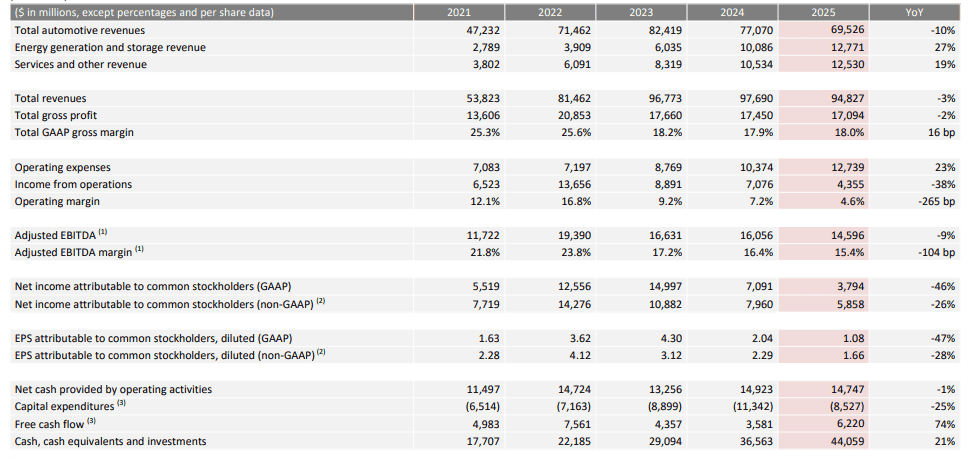
- The financial performance of Tesla between 2021 and 2025 shows a mixed pattern because the company achieves substantial revenue growth while facing mounting profitability challenges in the global electric vehicle market.
- The company achieved its highest total revenue of USD 97.69 billion in 2024 after reaching USD 53.82 billion in 2021 and experiencing a slight revenue decrease to USD 94.83 billion in 2025, which represented a 3% annual decline.
- The company’s automotive revenue, the backbone of Tesla’s EV business, dropped 10% in 2025 to USD 69.56 billion, indicating softer vehicle sales demand and pricing pressures.
- Tesla’s energy generation and storage segment showed fast growth for the year, when it achieved a 27% increase, which brought its revenue total to USD 12.77 billion.
- The services and other revenue streams experienced a 19% increase, resulting in a total revenue of USD 12.53 billion, which supports Tesla’s development of its complete ecosystem business model.
- Operating income declined to USD 4.36 billion in 2025, down from USD 7.07 billion in 2023 — a two-year decline of approximately 51%. On a year-over-year basis versus 2024, operating income fell approximately 38%.
- The earnings per share (EPS) decreased by 47% to USD 1.08, which shows that investors became worried about the company’s expense management and its ability to compete in the market.
- Tesla achieved strong cash generation performance during these times because the company generated USD 14.75 billion in operating cash flow, and its free cash flow increased by 74% to USD 6.22 billion in 2025.
- The data shows that Tesla moves from a phase of rapid growth to a phase of improved operational efficiency through its efforts to manage changes in EV demand and develop new technologies.
Tesla’s Strategic Expansion Across Energy, AI, Robotics, and Autonomous Driving
Tesla is undergoing a fast transformation from a sustainable transport manufacturer into a company that operates multiple businesses in artificial intelligence, robotics, and energy technology.
Energy Generation and Storage
- The energy generation and storage division of the company reached its peak quarter deployment because of high Tesla Megapack shipments.
- The energy segment experienced total gross profit growth, which reached USD 1.1 billion, as the company achieved its fifth consecutive record quarter.
- Tesla intends to expand its operations through Megapack 3 and Megablock production facilities, which will be established at Megafactory Houston by 2026, so it can enhance their position as market leaders in grid-scale battery storage and renewable energy systems.
- Tesla Powerwall drives fast growth for Tesla’s home energy systems. The installed Powerwall units from 2025, which exceeded 1 million, participated in more than 89,000 Virtual Power Plant events across the world, which helped households save more than USD 1 billion in electricity expenses.
- The development demonstrates how Tesla expands its power over distributed energy networks and smart grid solutions.
AI Training Compute
- The Tesla Optimus program enables Tesla to push forward its research work on robotics and artificial intelligence, which develops new solutions for both fields.
- The company plans to introduce the Gen 3 Optimus robot, which functions as a mass production robot, and production will start before 2026 ends.
- Tesla aims to produce up to 1 million robots every year, which marks its entry into the industrial automation and humanoid robotics industries.
- Tesla is also investing heavily in AI infrastructure, building Cortex 2 at Gigafactory Texas to significantly expand its AI training compute capacity.
- The company expects to more than double onsite AI compute power in Texas by 2026, measured in NVIDIA H100-equivalent GPU capacity, supporting advancements in autonomous driving, robotics, and AI-driven services.
- Tesla makes substantial investments in artificial intelligence infrastructure through its development of Cortex 2 at Gigafactory Texas, which will increase its artificial intelligence training capacity.
- The company plans to increase its artificial intelligence computing capacity at its Texas facility by more than two times by 2026, using NVIDIA H100-equivalent GPU technology, which will enhance autonomous driving systems, robotic systems, and AI-based applications.
- Tesla has begun pilot operations at its North American lithium refinery, which operates as the first spodumene-to-lithium-hydroxide facility in North America to produce essential materials for EV batteries and energy storage systems.
- Tesla started manufacturing 4680 battery cells and packs for Model Y production, which helps the company maintain supply chain operations and increase its production speeds.
FSD (Supervised)1
- Tesla Full Self-Driving (FSD) software now operates in international markets, according to Tesla. In South Korea, customers drove more than 1 million kilometres during one month using the FSD (Supervised) system.
- The company launched ride-along demonstrations throughout Italy, Germany, France, and Switzerland while waiting for governmental approval in China and Europe.
- Tesla ended 2025 with 1.1 million active FSD subscribers — a 38% year-over-year increase — and disclosed that monthly subscription growth more than doubled sequentially in 2025. Starting in early 2026, Tesla transitioned FSD to a subscription-only model, sunsetting the upfront purchase option.
- The Tesla automotive services and ecosystem strategy of the company keep expanding its operations.
- The company generated approximately USD 300 million in gross profit through its services and parts sales and Supercharging network operations while it expanded Tesla Insurance to Florida.
- Tesla established an integrated ecosystem in which FSD users receive insurance discounts, connecting autonomous driving technology with insurance costs. This model has the potential to transform the financial structure of smart mobility and autonomous transportation.
Tesla vs. BYD
|
Dimension |
Tesla (2025 actual / Q1 2026 projected) | BYD (2025 actual / Q1 2026 projected) |
| Full‑year 2025 deliveries | 1,636,129 vehicles (down ~9–10% YoY); Q4 2025 deliveries: 418,227 |
4.6 million NEVs (~2.3M BEV + ~2.3M PHEV); exports exceeded 1.04 million for full year. |
|
Q1 2026 delivery estimate |
Central estimate ~310,000–320,000; prediction markets assign 78% probability of <350,000.perplexity+1 | January 2026: 210,051 units (seasonal low); full Q1 likely 1.0–1.2 million NEVs once post‑Lunar New Year volumes normalize. |
| 2026 overseas / export target | No standalone export target disclosed; Gigafactory Shanghai serves as the primary export hub for Europe and Asia. |
1.3 million overseas vehicle sales (company target); Citigroup estimates 1.5–1.6 million possible. |
|
European market momentum (Sept 2025) |
EU registrations fell 10.5% YoY; market share under pressure from pricing and brand headwinds. | EU sales surged 272% YoY; market share rose from 0.4% to 1.5% in 12 months. |
| Vertical integration (battery) | In‑house 4680 cells + supplier cells (Panasonic, CATL, LG); LFP packs sourced externally for some models. |
75–80% of components in‑house; proprietary Blade LFP battery with ~€10/kWh cost advantage over NCM; 135+ GWh capacity by late 2022, expanding further. |
|
European localization |
Gigafactory Berlin (annual capacity ~375,000–500,000); no European battery cell plant.YouTube | Hungary vehicle plant nearing production; dedicated European battery factory under construction in Szeged; Turkey plant also operational. |
| Lowest‑priced European model | Model 3 starts at ~€35,000–€38,000 depending on market; no sub‑€30,000 model available yet. |
Dolphin starts at ~€26,000; Seagull is expected in Europe in 2026 at under €20,000. |
Tesla Supercharger Locations
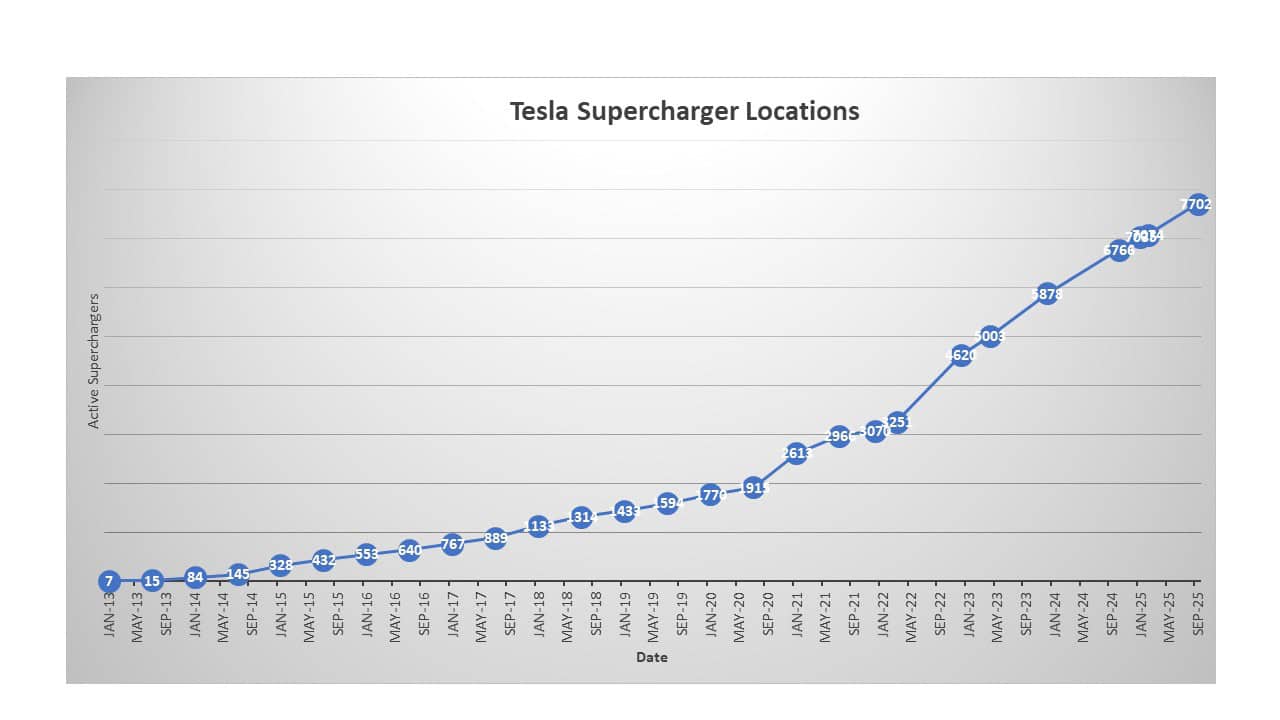
- Tesla operates 7,702 Supercharger stations across 55 countries as of September 2025, indicating the scale of the global expansion of its fast-charging infrastructure.
- The number of Supercharger locations increased by 31% between December 2023 and September 2025, reflecting rapid global growth in charging infrastructure.
- The network began with 7 stations in January 2013 and gradually expanded worldwide.
- 3082 new Supercharger stations were added between December 2022 and September 2025, highlighting the rapid development of the charging ecosystem in about three years.
Global Distribution of Tesla Supercharger Stations by Country
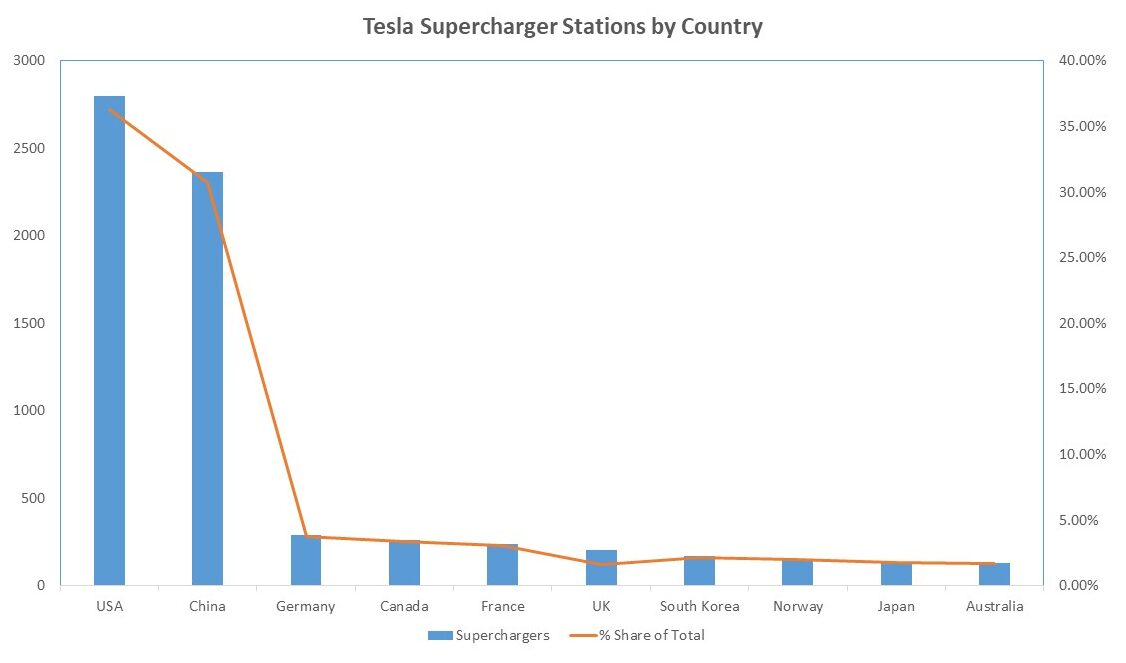
- According to supercharge.info, the United States and China together account for 67% of the global Tesla Supercharger stations as of September 2025.
- These two countries collectively operate 5064 Supercharger locations, making them the largest charging markets for Tesla vehicles.
- Tesla’s Supercharger network is present in around 40 countries worldwide, indicating a wide international charging infrastructure.
- 87.6% of all Supercharger stations are concentrated in just 10 countries, showing that most charging locations are located in a limited number of key markets.
Conclusion
Tesla maintains its fundamental position in the worldwide electric vehicle market because of its ongoing product development and current vehicle market conditions. The company delivered more than 1.6 million vehicles in 2025, with the Model 3 and Model Y remaining its strongest products. Tesla faces profitability challenges because of decreasing regulatory credit revenue, increasing competition from European and Chinese markets, and market pressure on its pricing strategy.
Tesla expands its business operations to include energy storage, artificial intelligence, robotics, and autonomous driving technology development. The company makes these strategic investments to create new income streams and to support its long-term business expansion. Tesla is evolving from an electric vehicle manufacturer into a comprehensive technology and energy organization that will drive future transportation development.
Sources
FAQ.
Tesla delivered about 1.64 million vehicles globally in 2025
The Tesla Model 3 and Model Y account for the majority of Tesla’s global sales.
Tesla’s market capitalization reached around USD 750 billion in 2025, placing it among the largest companies in the S&P 500.
Tesla registrations dropped in several European markets due to strong EV competition, policy changes, and shifting consumer demand.
Tesla generated about USD 94.83 billion in revenue in 2025, slightly below its USD 97.69 billion record in 2024.

Barry Elad is a passionate technology and finance journalist who loves diving deep into various technology and finance topics. He gathers important statistics and facts to help others understand the tech and finance world better. With a keen interest in software, Barry writes about its benefits and how it can improve our daily lives. In his spare time, he enjoys experimenting with healthy recipes, practicing yoga, meditating, or taking nature walks with his child. Barry’s goal is to make complex tech and finance information easy and accessible for everyone.