Best Trading Channels in 2026: 8 Communities, Discords and YouTubers Compared

Updated · May 20, 2026



Table of Contents
- At a Glance: 8 Best Trading Channels in 2026
- How We Picked These Trading Channels
- 1. r/WallStreetBets (Reddit)
- 2. Bear Bull Traders (Discord + Web)
- 3. Eric Krown Crypto
- 4. Coin Bureau
- 5. TradingView Public Chats
- 6. Apex Trader Funding Discord
- 7. Whop Curated Trading Communities
- 8. The Trading Channel (Steven Hart)
- How to Evaluate a Trading Channel Before You Join
- Red Flags to Avoid in Trading Channels
- Bottom Line
“Trading channels” means something different to every retail trader. For some it is a YouTube subscription with daily market analysis. For others it is a Discord server with live chat during market hours, a Reddit forum, or a Telegram group sharing signals. With retail traders now accounting for roughly 43% of algorithmic trading volume (Spencer Logic) and a record $9.6 trillion per day in forex turnover as of April 2025 (BestBrokers), demand for community-driven trading education has never been higher.
This guide ranks eight of the most active trading channels and communities heading into 2026 across YouTube, Discord, Reddit, Telegram, and TradingView. We weighted trading groups with sustained activity, transparent moderation, and genuine educational value over channels that primarily exist to sell courses or signal subscriptions.
At a Glance: 8 Best Trading Channels in 2026
| # | Channel | Platform | Asset Focus | Cost |
| 1 | r/WallStreetBets | Stocks, options | Free | |
| 2 | Bear Bull Traders | Discord + web | Day trading (stocks) | Free + paid tier |
| 3 |
Eric Krown Crypto (Krown’s Crypto Cave) |
YouTube + Discord | Crypto | Free + paid |
| 4 | Coin Bureau | YouTube + Telegram | Crypto | Free |
| 5 |
TradingView Public Chats |
TradingView | Multi-asset | Free |
| 6 | Apex Trader Funding | Discord | Futures (prop) | Free with account |
| 7 | Whop Curated Trading Communities | Whop | Multi-asset | Variable |
| 8 | The Trading Channel | YouTube | Forex price action | Free |
How We Picked These Trading Channels
We evaluated each community against five criteria.
- Activity level. Measurable engagement (members, daily messages, video upload cadence) rather than vanity follower counts.
- Educational vs. promotional balance. Does the channel teach, or is it primarily a funnel for paid signals and courses?
- Moderation quality. Are pump-and-dump promotions and obvious scams actioned, or allowed to run?
- Track record transparency. When calls or trades are posted, are losses kept visible alongside wins?
- Cost structure. Free, freemium, or paywall, and is the paid tier worth it relative to the free content?
1. r/WallStreetBets (Reddit)
Best for: tracking retail sentiment in real time.
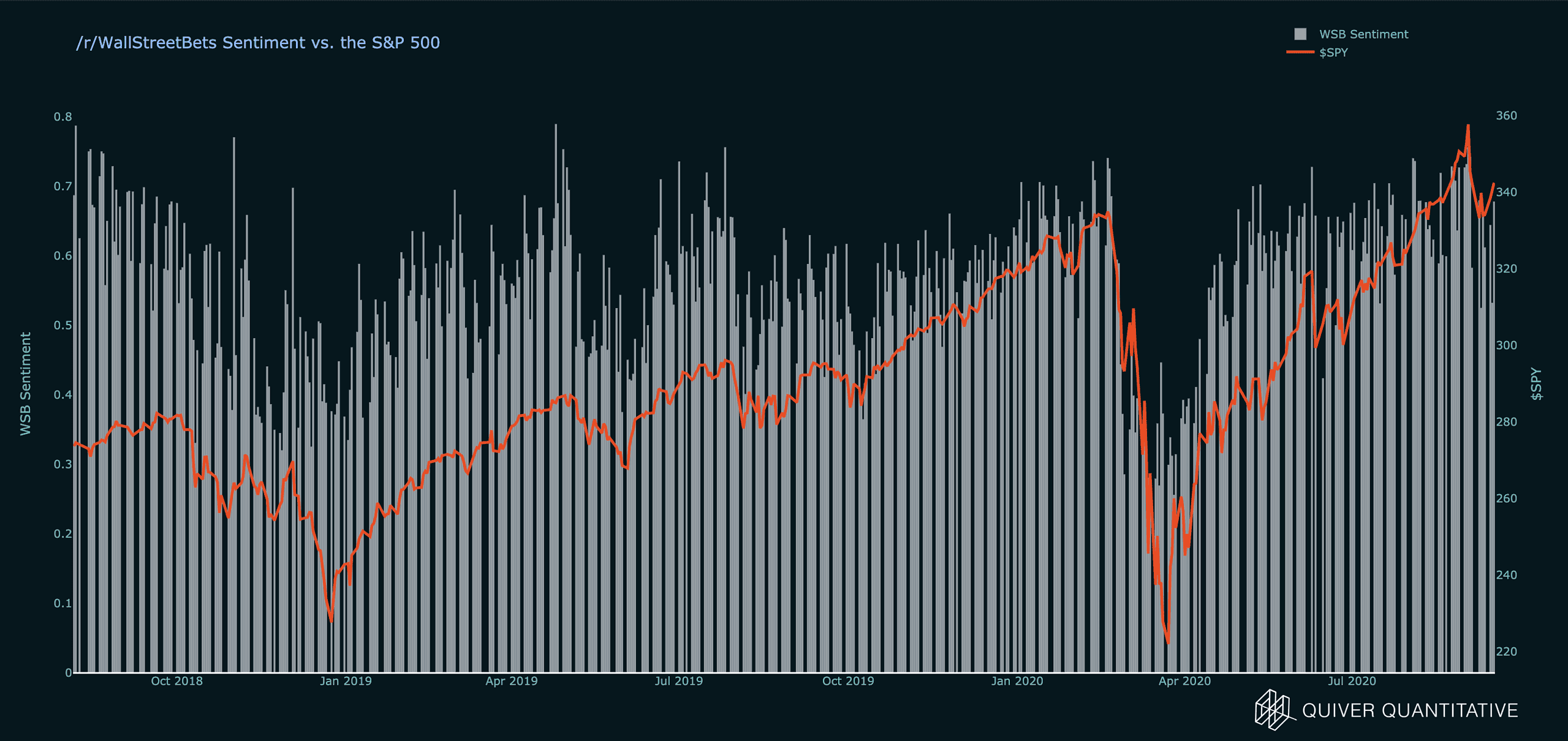
WallStreetBets remains the largest and most-watched retail trading community on the open internet, with millions of subscribers and a long history of moving short-dated options markets. Daily Discussion threads run during market hours and aggregate positions, screenshots, and commentary from active traders (Reddit).
WSB is not an educational community. Calling it one would be generous. But it is an indispensable sentiment indicator. If a ticker is trending in the daily thread before market open, expect volatility. Treat it as a research input and an entertainment channel; do not treat it as a signal service.
Cost: Free.
2. Bear Bull Traders (Discord + Web)
Best for: serious day traders who want a moderated, learning-focused trading community.
Bear Bull Traders is consistently ranked among the top day-trading Discord communities (Trade With Jarvis). Founded by Andrew Aziz, the community runs structured chatrooms during US market hours with verified moderators, scanners, and a strong emphasis on process over hot picks.
The free Discord covers the basics; the paid tier adds the full live trading room, mentorship, and recorded sessions. Compared to “lambo-or-bust” channels, Bear Bull Traders skews toward risk management and trade consistency.
Cost: Free Discord; paid subscription for the full trading room.
3. Eric Krown Crypto
Best for: technical-analysis-focused crypto traders.
Eric “Krown” Crypto runs one of the more consistent technical-analysis trading channels in the crypto space, covering Bitcoin, Ethereum, and major altcoins with a heavy focus on chart structure, market cycles, and macro overlays (YouTube). His paid Discord (Krown’s Crypto Cave) provides daily levels, live commentary, and a courses library.
Krown’s style is closer to that of a technical analyst than to that of an influencer. Videos lean long-form and methodical. The free YouTube channel is enough for most retail crypto traders; the paid community is aimed at active swing and intraday traders.
Cost: YouTube free; paid Discord and courses available.
4. Coin Bureau
Best for: crypto research and project deep-dives.
Coin Bureau, fronted by “Guy,” is one of the most-subscribed crypto research trading channels on YouTube, covering project fundamentals, regulatory developments, and macro analysis. The channel is widely regarded for its long-form research format and avoidance of paid shilling, though, as with any large crypto channel, the format is occasionally critiqued for being promotional (Reddit discussion).
Coin Bureau also runs a free Telegram channel and a deals page. It is an education-first channel rather than a signal feed. Useful for understanding what you are trading rather than when to trade it.
Cost: Free (YouTube + Telegram).
5. TradingView Public Chats
Best for: real-time chart-based discussion across all asset classes.

TradingView, the dominant retail charting platform, runs Public Chats organised by asset class and ticker. Anyone with a free TradingView account can join the public rooms and participate (TradingView). The chats are tightly integrated with the charts. Users can share annotated chart snapshots directly into the conversation.
The signal-to-noise ratio varies by room and time of day, but the platform’s chart-first culture and built-in idea-publishing feature give it more educational value than most generic Discord servers. TradingView’s broader social network now includes profiles, idea publishing, and follower feeds (TradingView Social).
Cost: Free with a TradingView account.
6. Apex Trader Funding Discord
Best for: futures traders working through a prop-firm evaluation.
Apex Trader Funding is one of the largest US-based futures prop firms, offering funded trading accounts after evaluation (Apex). The associated Discord trading community is heavily used by traders working through the evaluation process and managing funded accounts. Discussions cover risk parameters, daily loss limits, scaling rules, and platform configuration.
If you are not specifically interested in futures or prop-firm trading, this community will not be relevant. If you are, it is one of the largest active communities on the topic.
Cost: Free with an Apex account.
7. Whop Curated Trading Communities
Best for: discovering niche, paid trading communities with vetted operators.
Whop has become a primary marketplace for paid trading channels. It lists hundreds of stock, options, forex, and crypto Discord servers behind a unified payment and access layer (Whop). The platform does not vouch for every listing, but it does provide a consistent payment/refund mechanism and a public review system that lowers some of the trust risk versus paying an anonymous Telegram operator directly.
The top-rated trading groups on Whop typically charge $30 to $200 per month and cover specific niches such as options swing trading, scalping, or futures prop. Quality varies widely. Use the reviews and the free-trial mechanic before committing to a long-term subscription.
Cost: Variable per community.
8. The Trading Channel (Steven Hart)
Best for: forex price-action traders who want long-form education.
The Trading Channel, run by Steven Hart, has been one of the most consistent forex education YouTube channels for years, focusing on price action, supply and demand, and chart structure (The Forex Geek). The free YouTube content is substantial. Multi-hour beginner-to-advanced courses are freely available alongside regular market analysis.
Hart sells paid courses and indicators, but unlike many “guru” channels, the free content stands on its own. Useful as a structured forex learning path even if you never buy the paid materials.
Cost: Free (YouTube); paid courses available.
How to Evaluate a Trading Channel Before You Join
After looking at hundreds of trading communities, the difference between useful channels and time-sinks comes down to a few questions.
Are losses visible? A trading community that posts only winning trades is editing reality. Look for channels where moderators and contributors openly post losses and walk through what went wrong. The information density in a documented losing trade is usually higher than in a winning one.
Is the channel selling something? All free trading channels eventually monetise. Through courses, signals, prop-firm affiliate links, broker partnerships, or paid Discord tiers. That is not inherently bad. The question is whether the monetisation distorts the content. If 80% of the videos end with “join my course to learn the rest,” the channel is a course funnel with educational marketing.
Is moderation visible? Active moderators who delete obvious scams, ban pump-and-dump promotions, and enforce basic rules are a strong positive signal. Trading communities with no visible moderation tend to drift toward signal-spam and broker-affiliate threads quickly.
Is the channel anchored to a real person or a brand? Anonymous Telegram admins, channels with no public team, and brands with no traceable corporate entity are harder to hold accountable. None of this is disqualifying, but it raises the burden of proof on everything they claim.
Red Flags to Avoid in Trading Channels
“Guaranteed” win rates or “no loss” guarantees. Trading has variance. Anyone claiming to have eliminated it is either lying or running a Ponzi scheme.
Mandatory broker deposits to access the trading community. Free channels that require you to deposit at a specific (unregulated) broker before getting access are affiliate funnels. You are the product.
No public track record. Even free trading communities should be willing to share their methodology and historical calls. Channels that promise to “show you the results once you join” rarely have results worth showing.
Aggressive DMs after joining. Communities where moderators or “VIPs” DM new members offering paid services or upgrades within minutes of joining are running high-pressure sales funnels, not trading channels.
Hidden pricing for the “real” content. If the public chat is empty and the actual signals live behind a $500 wall, the public chat exists only to convert.
Bottom Line
For sentiment and entertainment, r/WallStreetBets is unmatched at scale. For structured day-trading education, Bear Bull Traders is the most consistently moderated Discord. For crypto, Coin Bureau and Eric Krown Crypto cover research and technical analysis respectively. For forex price action, The Trading Channel remains a reliable free education source. And for paid trading communities, Whop is the most legitimate marketplace currently operating.
Skip the channels that exist primarily to sell you something. The best trading channels give away most of their value for free. They just want you to stay long enough to consider their premium offering on your own terms.
This article is for informational purposes only and does not constitute investment advice. Past performance and community discussions do not guarantee future returns. Trade at your own risk.
Sources
FAQ.
Sometimes. The best paid trading channels deliver genuine value through experienced moderators, structured education, and active engagement during market hours. The worst are screenshot mills running affiliate funnels. Read recent independent reviews, use any free trial offered, and budget for at most three months before evaluating whether the community paid for itself.
Most professionals are not in public retail Discord servers. The professional ecosystem skews toward Bloomberg chat, private analyst networks, X/Twitter for macro discussion, and small invite-only Telegram groups. Public retail trading communities are useful for sentiment and learning, less so for institutional flow.
In most jurisdictions, general educational content about trading is not regulated. However, channels that recommend specific securities to specific clients, or operate paid signal services that effectively constitute investment advice, may fall under SEC, FCA, ASIC, or equivalent regulation. Always check for the relevant disclosures.
Yes. The free educational content available across YouTube, TradingView, and Reddit covers more than enough material to learn the technical and fundamental basics. The real bottleneck is screen time and risk management, not access to information.
A signal channel publishes buy/sell instructions for you to execute. A trading channel, at least in the educational sense, explains methodology, walks through trades, and builds skills. Many “trading channels” blur the line by also selling signal subscriptions. The good ones disclose this clearly.

Joseph D'Souza founded ElectroIQ in 2010 as a personal project to share his insights and experiences with tech gadgets. Over time, it has grown into a well-regarded tech blog, known for its in-depth technology trends, smartphone reviews and app-related statistics.