Instagram Ads Statistics By Revenue, Audience, Conversion Rates, Trends, Facts and Insights (2026)

Updated · Jan 15, 2026


Table of Contents
- Introduction
- Editor’s Choice
- Instagram Key Milestones
- Instagram Ads Revenues
- Instagram Ad Audience
- Instagram Ad Revenue By Age Group Audience
- Average Cost-Per-Click (CPC) And Cost-Per-Thousand (CPM)
- Instagram Stories Vs. Feed Ads Performance
- ROI and Business Impact
- Instagram Video and Reels Ads
- Instagram Shopping Conversion Rates
- Ad Performance By Content Type (Image, Video, Carousel)
- Influencer Marketing Impact On Instagram Ads
- Best Return On Ad Spend (ROAS) By Social Media Platform
- Instagram Ad Targeting Strategies That Are Most Favored
- Recent Developments In Instagram Advertising
- Conclusion
Introduction
Instagram Ads Statistics: Digital marketing trends have solidified Instagram ads as one of the most potent and widely used marketing channels. Brands worldwide use them. The reason is that the platform’s audience is large and its users are highly active. Furthermore, the return on investment can be measured all in a visually appealing environment. This is friendly and modern for the consumers.
The platform now includes short-form video, AI-powered targeting, and mobile-first formats. In 2025, Instagram is no longer just a social app; it has become a commercial engine, a brand creator, and a driver of revenue growth for many. Instagram advertisements in 2025 offer numerous opportunities and pose significant competition. These range from fluctuating CPCs to rising ROI benchmarks and global reach statistics.
The article presents recent research-based statistics and trends on Instagram Ads for 2026, along with actionable insights for marketers and business leaders.
Editor’s Choice
- Instagram is now responsible for more than 50% of Meta’s US ad revenue, up from slightly above 7% a decade ago. US ad revenue is expected to reach US$42 billion in 2026, as previously forecast.
- Since 2015, the platform’s US user base has increased by 142%, and Instagram leads the competition in monetisation with an average revenue per user of US$223, which is more than both Facebook and TikTok.
- With 326 million potential users, India has the largest Instagram ad market, followed by the US, Brazil, and Indonesia, which shows the global scale of the platform’s advertising.
- The audience of Instagram ads is over 60% comprised of persons aged between 18 to 34 years, thus making the platform an attractive advertising ground for the brands that desire to reach out to the young, highly engaged consumers.
- In 2025, the average CPC will be US$1.42 and the CPM will be US$9.68, indicating continued increases in advertising costs, but there are still cost savings from Stories ads and mobile-only targeting.
- In fact, the two formats, Stories and Feed ads, are closely intertwined: Stories have the largest reach and highest completion rates, while Feed ads drive stronger saves and increase profile visits and checkouts, in that order.
- Instagram is an impressive marketing channel that delivers strong ROI; 60% of small businesses have attributed their sales growth to it, and multi-platform campaigns are becoming more common because they outperform single-channel strategies.
- Video and Reels monopolize the engagement area, being responsible for more than half of the total interactions. Reels alone monthly gain more than 700 million users, and they are also getting the benefits of algorithmic prioritization.
- Instagram Shopping is great for driving sales, evidenced by average conversion rates of around 1–2%, 130 million-plus shopping-tag monthly interactions, and higher average order values than competing platforms.
Instagram Key Milestones
(Source: statista.com)
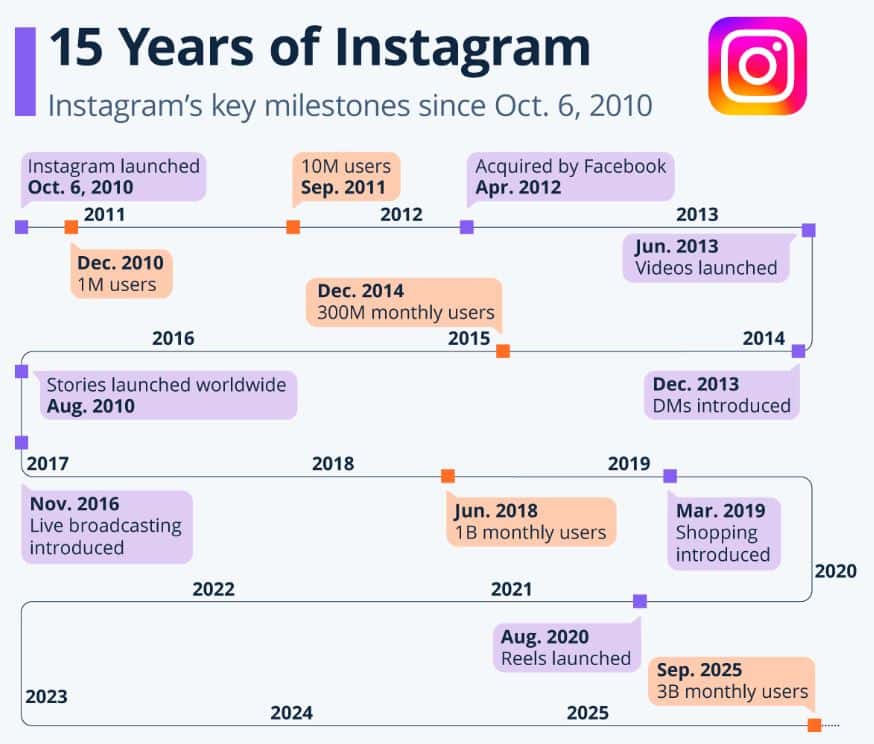
- Instagram has completed a full circle, marking 15 years since its inception and becoming one of the largest digital networking platforms by number of users worldwide.
- It was born on October 6, 2010, when Stanford graduates Kevin Systrom and Mike Krieger created it as a photo-sharing service called Burbn in San Francisco.
- After going through the metamorphosis of becoming Instagram—merging the terms “instant” and “telegram”—the app grabbed the spotlight with its one million users signing up by the end of 2010 and its ten million users in the following year.
- Instagram’s growth accelerated after it was acquired by Mark Zuckerberg, CEO of Meta, who bought it for US$1 billion in 2012.
- By the end of 2014, the platform had reached 300 million monthly active users, and by the end of 2025, that number had more than tripled, reaching 1 billion.
- Over the years, Instagram has introduced features that have changed how users interact with content and made it easier, such as video uploads in 2013, Stories in 2016, and Live streaming later that year.
- The launch of IGTV in 2018 meant a major step for long-form video, but it was later merged with the main app.
- Reels were introduced in 2020 to rival TikTok and have since increased video duration. Instagram’s feed also changed in 2016 when it switched from a chronological feed to an algorithm-driven feed.
- The platform has been a double-edged sword; on the one hand, it allowed for creativity and business growth, on the other hand, it was criticized for its effect on mental health, especially among the youth.
Instagram Ads Revenues
(Source: eMarketer.com)
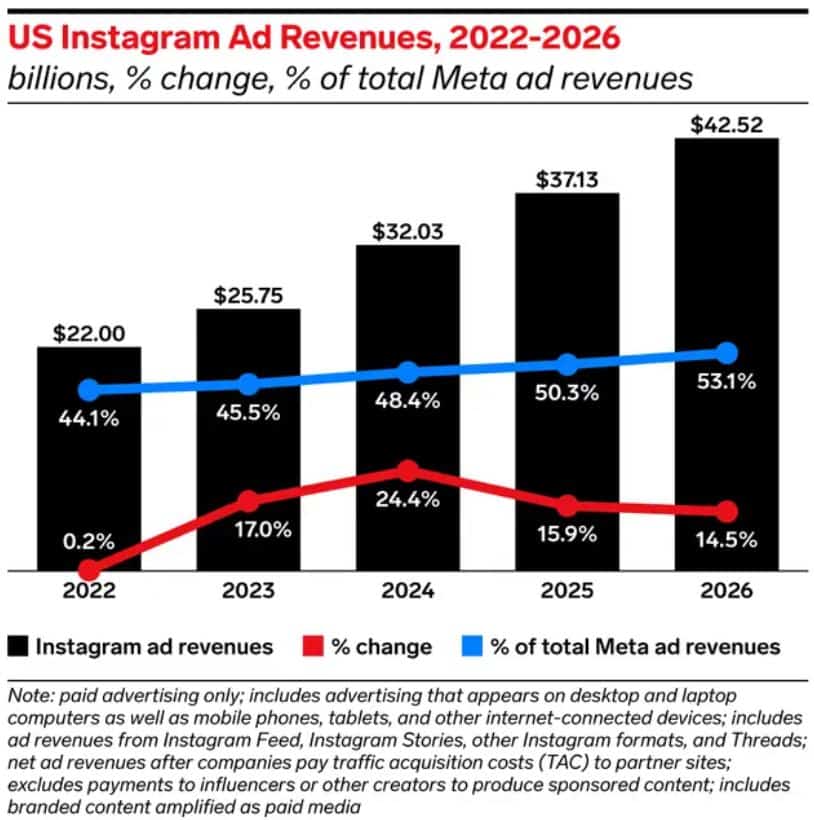
- There is a significant and rapid growth in Instagram’s profitability for Meta, as evidenced by the overlap of three key metrics over time: ad revenue growth, year-on-year percentage change, and Instagram’s share of Meta’s total US ad revenue.
- It indicates that Instagram’s US ad revenue has been steadily increasing, from around US$22.0 billion in 2022 to a projected US$42.52 billion in 2026.
- This steady upward movement shows how much Instagram has become part of Meta’s advertising business.
- In addition to ongoing revenue, the chart shows the annual growth rate. Instagram’s ad revenues showed minuscule growth of 0.2% in 2022, followed by a significant increase of 17% in 2023, reaching a peak of 24.4% in 2024.
- Although the growth rate drops to 15.9% in 2025 and to 14.5% in 2026, this still represents strong double-digit expansion, indicating a mature but growing platform.
- The biggest surprise is revealed by the increasing share of Instagram in Meta’s total US ad revenue. This share will go up from 44.1% in 2022 to 50.3% in 2025, the halfway mark being crossed for the first time, and will reach 53.1% in 2026 according to estimates.
- This corroborates the next text, which states that about a decade ago, Instagram was less than 7% of Meta’s US ad revenue, but now it is more than half that.
- The combination of huge revenue growth and a rise in contribution share illustrates how Instagram has transformed from a less-important product to being Meta’s most valuable advertising engine in the US.
(Reference: eMarketer.com)
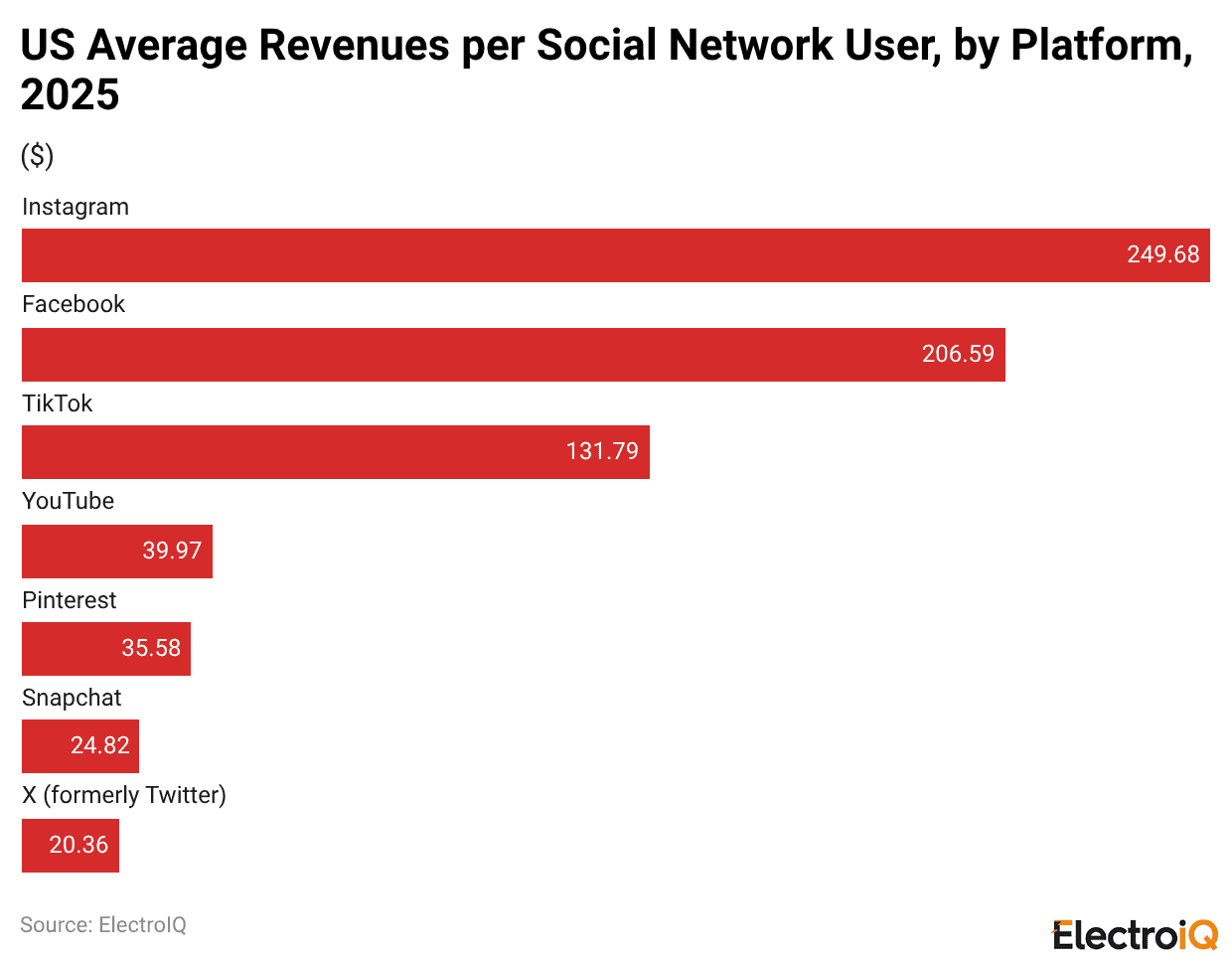
- Instagram’s US revenue momentum has closely reflected the platform’s rapid user growth over the last decade.
- The US user base of the platform has grown by 142% since 2015, going from about 61.5 million users to almost 149 million.
- The growth itself is sometimes cited as one of the main drivers of Instagram’s financial success, but a larger factor has been the platform’s ability to extract more value from each user than other networks.
- In 2019, when Instagram had already surpassed Facebook in average revenue per user, it was expanding rapidly, with about US$223 per user in the US compared to Facebook’s US$191.
- The TikTok platform is way behind with US$109 per user revenue, and this fact points to Instagram’s great monetization through adverts.
- Instagram’s revenue mix from advertisements worldwide gives an idea of how user behavior and the priorities of advertisers are changing.
- While traditional placements in feed still dominate ad revenue, accounting for 53.7%, stories come next at 24.6% in 2024.
- It is expected that revenues from Explore, Reels, and probably Threads will grow together, making almost 10% of total revenue in 2025, while Feed and Stories will be around 74%.
- Advertising on the platform will steadily be done in 2025 to prevent any disruption in user growth. Thus, it is safe to say that the revenue generated won’t be noticeable in the short term.
- If a TikTok ban in the US goes into effect, the companies involved might start rethinking their advertising budgets.
- Instagram Reels would be the most likely beneficiary of that advertisers’ shift due to TikTok’s giant US user base of 112 million and its existing ad revenue of more than US$12 billion.
- The industry estimates that Instagram can take over 20% of the overall TikTok ad budget for repositioning and even more as it keeps on changing its features, discovery tools, and creator monetization methods to get short-form video audiences and brands wanting to switch from TikTok.
Instagram Ad Audience
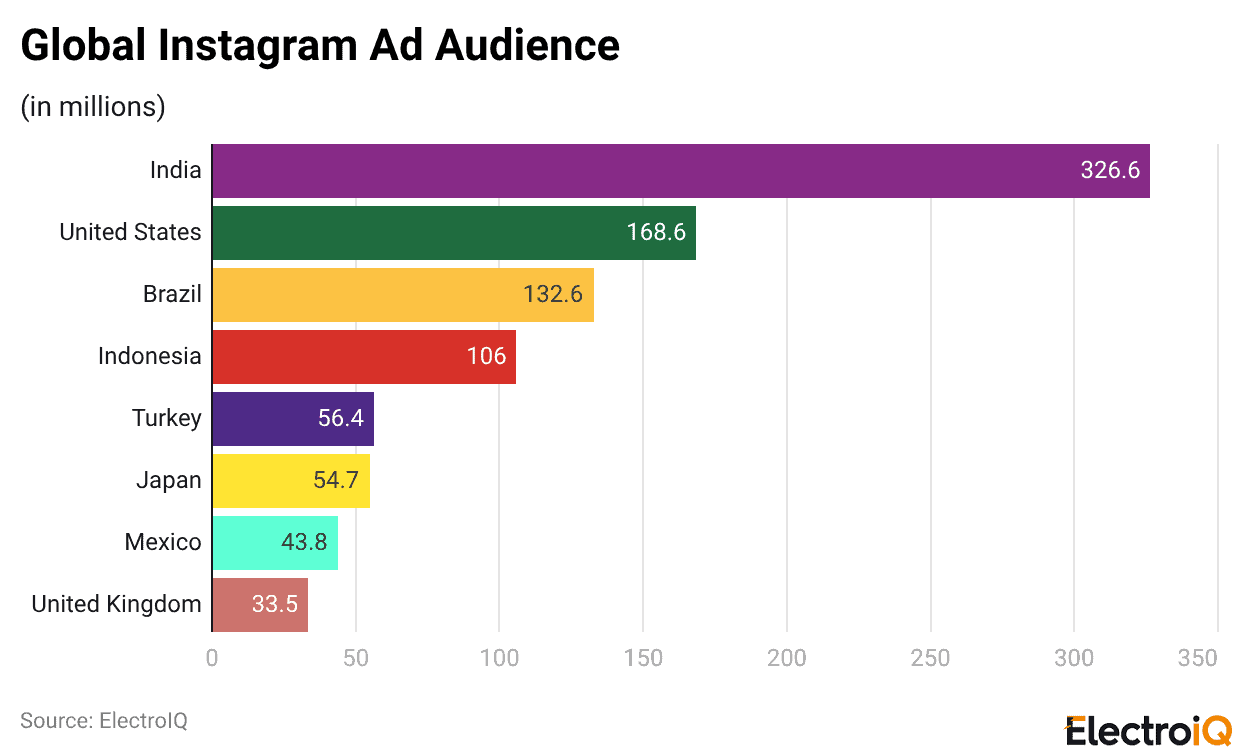
- Instagram’s global advertising, even with its huge audience in both developing and digitally mature markets, is a major reason the platform has become so popular. Even in so-called underdeveloped or mature digital markets, it wouldn’t matter.
- The country that has the largest Instagram ad audience is India, with over 326 million users, are the ones who can be targeted by advertisers.
- This dominance can be linked to the country’s large population, rapid smartphone adoption, and growing demand for social media for commerce, content, and more.
- India is no longer a leading market but one of the most important ones for Instagram advertising, as it offers large audiences.
- The US is then the second-largest market, which is next to India, and gives access to almost 169 million users.
- Though the US is smaller than India in numbers, it is still very attractive because of high ad spends, strong purchasing power, and sophisticated targeting capabilities.
- Brazil occupies the third position with a user audience of over 132 million, indicating that Instagram has been very successful in penetrating Latin America; this is where visual content and influencer marketing do particularly well.
- With a user base of around 106 million, Indonesia is a major player, reflecting a high level of participation in Southeast Asia.
- Furthermore, both Turkey and Japan have user bases exceeding 50 million, indicating Instagram’s broad presence across Europe and Asia.
- Mexico and the United Kingdom, the latter with about 34 million users, are the two countries that complete the top five, bringing the total to 78 million users across these countries.
- This only reaffirms the fact that Instagram is a global advertising platform capable of not only giving a huge reach but also providing region-specific opportunities for advertisers.
Instagram Ad Revenue By Age Group Audience

(Reference: answeriq.com)
- Instagram primarily attracts a young and early-middle-aged audience, making it the most sought-after platform for brands targeting digitally active consumers.
- The largest group of Instagram’s ad audience is comprised of 18 to 24-year-olds, who are almost 408 million in number, which is 30.8% of the total users.
- This group comprises students, early-career professionals, and trend-driven users who are highly active in visual content, creator, and short-form video formats such as Reels.
- Next, by number of users, is the 25-34 age segment, which comprises approximately 469 million users and accounts for 30.3% of the ad audience.
- Advertisers are primarily interested in this group since it is characterized by high engagement and increasing purchasing power, making it suitable for e-commerce, lifestyle, finance, and tech brands.
- The total number of Instagram users aged 18 to 34 is greater than 60% of the total ad reach.
- The 35-44 age group accounts for about 210 million, or 15.7% of the total.
- This segment is usually family, career, and value-driven, and thus, it offers ample opportunities for brands in the areas of health care, real estate, education, and financial services.
- The older cohorts have smaller but still significant shares: 45-54-year-olds account for 8.4%, and 55-64-year-olds for 4.3%.
- The 65+ age group accounts for just 2.5% of the ad audience, indicating that Instagram’s allure has declined over time but remains well liked across all age groups.
- The 13 to 17-year-olds characterized as teen users are about 8% of the ad audience; thus, Instagram’s relevance among the young is still there, even with TikTok stealing some of the younger people.
- The blueprints show that Instagram is still a strong advertising platform because of its stronghold among 18 to 34-year-olds, but at the same time huge reach among the older generations for the brands that have wider targeting strategies.
Average Cost-Per-Click (CPC) And Cost-Per-Thousand (CPM)
- Instagram ad prices continued to rise, and they were really high in 2025. The rise indicated fierce competition and high advertiser demand.
- The average CPC was US$1.42, up from US$1.30 the previous year, and the global CPM rose to US$9.68, up 11% from the previous year.
- Retailers paid the highest click costs, with an average CPC of US$2.12.
- Meanwhile, the finance sector in the US had a CPC of US$2.24, which was the highest among all industries, indicating that there was very stiff competition in the high-value sectors. Kids from ten years old were.
- One striking thing is that B2B advertisers benefit from better targeting and creative automation, and they see a 7% decrease in CPC to US$1.08, which is the average.
- The video ads had a higher CPM of US$10.55, while the static image ads had a CPM of US$8.91. North America had the highest CPM at US$12.97; Western Europe was next at US$11.45.
- Advertising through stories was advantageous in terms of cost; the average CPC was US$1.12 compared to US$1.58 for feed-based ads, and mobile-only targeting cut the costs a bit to US$1.29.
- The holiday season, like that of Black Friday, frequently resulted in CPMs surpassing US$14.00, which indicates that the timing of the ad is an important factor in ad expenditure.
Instagram Stories Vs. Feed Ads Performance
- In 2025, Instagram Stories consolidated its status as the most important advertising format, capturing a 37% share of all ad placements, compared to 31% in the prior year.
- At the same time, story ads maintained a 23% better view-through rate than feed ads, especially among Gen Z, and even attained a whopping 79% average completion rate, due to the advanced auto-captioning and creative design tools.
- Brands adopting vertical video formats in Stories gained a 34% increase in engagement, while using interactive features like polls and stickers resulted in a 19% increase in interactions.
- On the other hand, feed ads not only kept their position but also their advantage in deeper engagement and commerce-driven outcomes.
- They achieved saving rates that were 2.5 times higher than those of story ads, and they also managed to get 22% more profile visits.
- In particular, feed ads with product tagging delivered exceptionally strong results, with a 38% higher checkout rate than non-shoppable formats.
- With a cost perspective, story ads attracted short-term awareness with CPMs nearly 14% lower than feed ads.
- Among influencers, story ads with swipe-up links were particularly successful, as they generated 31% more traffic than feed placements, thus fortifying the complementary strengths of both formats in a well-rounded Instagram advertising strategy.
ROI and Business Impact
- Instagram has not changed its ways in delivering high returns on investment, especially for e-commerce brands.
- Approximately 60% of small businesses report that Instagram drives their sales growth, underscoring its effectiveness as a revenue generator rather than merely an awareness channel.
- In some industries, Instagram advertising can attract and retain more users than its Facebook counterpart, making it a necessary tool for firms that use visual storytelling.
- Brands that use consistent visual stories and branding will definitely win over customers and perhaps even create long-term loyalty.
- Additionally, mixing organic and paid promotions is the best approach for running campaigns.
- Companies that market their products and services on both Instagram and Facebook usually get better results than those who stick to one channel.
- Also, companies that consistently use advertising styles over a long period will not only gain stronger brand recall but also perform better.
Instagram Video and Reels Ads
- Video is the standard engagement format on Instagram, having more than 50% share of all user interactions on the platform.
- Among video formats, Reels are the strongest for advertising, reaching more than 700 million users monthly and consistently generating more interactions than photo posts.
- Moreover, the user behavior is in line with the trend, as about 91% of Instagram users watch at least one video on the platform every week.
- Reels ads are mainly effective in increasing brand visibility and accelerating follower growth. This is because they are given a great preference by Instagram’s algorithm, not just for paid but also for organic distribution.
- Short-form videos perform best, and 15-second clips have the highest engagement and completion rates.
- The hashtags used in a planned manner also played a role in visibility, thus aiding brands in the process of audience enlargement.
- These elements, together, have made Instagram video and Reels ads the most important pillar for brands seeking visibility, maximising interactions, and long-term growth on the platform.
Instagram Shopping Conversion Rates
- Instagram has gradually evolved from a visual discovery platform to a serious sales channel, and the competition for conversion performance in this transition is intense among other major social networks.
- Instagram was once primarily regarded as a branding tool, but with its expanding commerce features, businesses can now generate and track sales directly within the app.
- Typically, for most advertisers, Instagram’s average conversion rate hovers between 1% and 2%.
- Comprehensive statistics indicate a mean rate of 1.08%, slightly lower than Facebook’s 1.85% but still considerably above Twitter’s 0.77% and Pinterest’s 0.54%.
- Thus, Instagram is a medium-to-high performer in social commerce, particularly for visually oriented products.
- An estimated 130 million people engage with shopping tags on Instagram each month, viewing product details without leaving the app.
- This interaction is still a step away from being counted as actual purchases, with over 72% of users reporting they have purchased fashion or beauty items after seeing them on Instagram.
- Instagram-referral shoppers have an average order value of about US$65, which is better than Facebook and Twitter, with US$55 and US$46, respectively. This means that Instagram traffic is often accompanied by stronger purchase intent and greater revenue potential per transaction.
Ad Performance By Content Type (Image, Video, Carousel)
- Video won the best ad format on Instagram in 2025 and consistently outperformed static visuals across all key performance metrics.
- Video ads averaged a 1.87% CTR, making them the most favourable format for brands, whose primary objective was to drive traffic and engagement.
- Users found short-form videos under 15 seconds especially powerful, as their completion rate was an outstanding 82% and they were able to acquire attention even better than longer formats.
- Carousel ads, on the other hand, continued to be a strong performer, with 18% higher engagement than single-image ads, particularly for product walkthroughs, tutorials, and step-by-step storytelling.
- Although image ads remain relevant to some extent, their average CTR has declined slightly to 1.11%, mirroring the broader shift toward motion-based content.
- Ads featuring animated text overlays are getting 25% longer watch times, particularly among younger users, while behind-the-scenes creative leads to 33% more shares, thus widening the organic reach beyond paid impressions.
- Among video ads, product demo videos stand out as their performance gets even more spectacular the closer they are to the end of the funnel-they achieve a 3.8% click-to-purchase rate and beat traditional testimonial ads.
- User-generated content continues to be highly influential, converting at 2.3 times the rate of brand-only creative.
- Caption length also matters, as too-long captions lead to disengagement, while 80 to 100 character count concise copy attracts the most attention.
- The utilization of live session replays in advertisements has a positive contribution to engagement in the long run, thus increasing replays and saves by 32%.
Influencer Marketing Impact On Instagram Ads
- Influencer marketing has turned into the primary component of Instagram advertising strategies in 2025, with over half of the brands combining influencer content with paid ads for better results.
- Ads that repurpose posts from micro-influencers result in a 46% engagement lift, proving the importance of authenticity and relatability.
- On average, influencer ads have 421% ROI while the brand-only creative ads come nowhere near with a huge difference.
- The campaigns that use regional influencers get three times more local reach, while niche creators like chefs or finance coaches bring quality leads, with time-on-landing-page increasing by 47%.
- The impressions of Sponsored Reels from influencers are 64% more than those of image-based posts. Also, swipe-ups in Story ads made from influencer content experience a 24% increase.
- Affiliate influencer programs in commerce-focused campaigns lead to a 28% rise in Instagram Checkout usage, with beauty and skincare influencers having the highest conversion rate of 7.1%.
Best Return On Ad Spend (ROAS) By Social Media Platform
(Source: sqmagazine.co.uk)
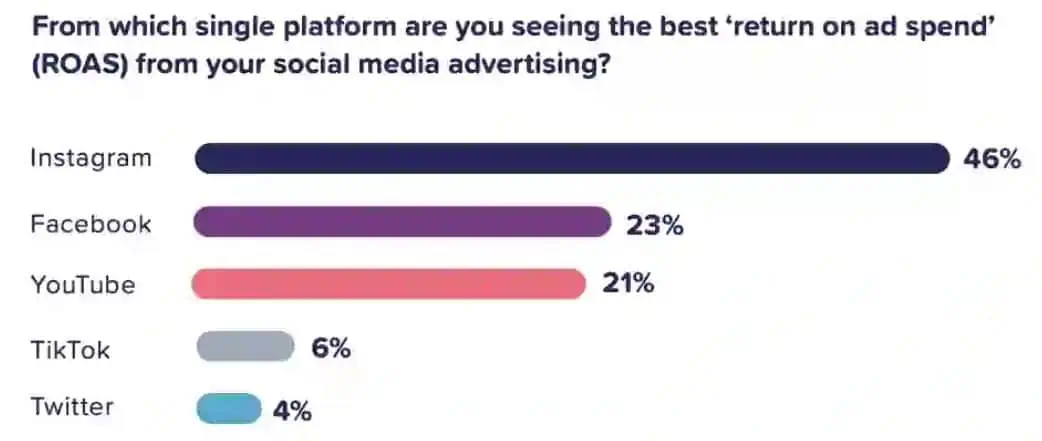
- Instagram is said to be the strongest platform for advertising returns as it has been identified by 46% of marketers as their best source for ROAS.
- Facebook comes second with 23% and continues to provide dependable results according to the campaign objectives.
- YouTube is close by, with 21% mostly ascribed to its dominance in video advertising.
- TikTok is not so far behind, with 6%, illustrating that many brands face difficulties in reaping the benefits of the already established monetization strategies.
- Whereas, Twitter has the least share with only 4% of marketers saying it is their best platform for return on ad spend.
Instagram Ad Targeting Strategies That Are Most Favored
- With the year 2025 around the corner, Instagram advertising is increasingly relying on sophisticated targeting and automation.
- One of the newer approaches, AI-based predictive targeting, is already adopted by 71% of marketers.
- Not only this, but the use of these tools also prevents reducing the brand’s user base because of their inability to anticipate users’ behavior; on the contrary, they can deliver ads that are more relevant to the users, thus leading to enhanced performance.
- According to the latest analysis, the targeting of lookalike audiences is still the most effective way to reach customers digitally, giving an extra 32% of clicks over traditional interest-based segments.
- Local businesses, on the other hand, can rely on geo-targeted campaigns, which are still very effective and engage the desired audience up to 28% better than simply targeting them at the right time in locations.
- Users who have previously saved a post are the audience for ads, where conversions are nearly four times as high, while the audience retargeted from Stories interactions via replies or polls consists of three times as many engaged users.
- Brands that are utilizing shopping interest clusters experience a whopping 44% increase in their customers’ checkout rates, while in the case of dynamic product ads, the sales increase by 31% rate is especially observed in the fashion and home décor industries.
- Custom audiences based on engagement are 18% more effective than those based on web traffic at driving sales, while multilingual targeting in bilingual areas increases response rates by 23%.
- Furthermore, AI-powered delivery tools like Meta Advantage+ are boosting the efficiency of advertising campaigns, raising the average ROAS by 21%.
Recent Developments In Instagram Advertising
- At the beginning of 2025, Instagram accelerated the innovation process for its advertising ecosystem by providing AI-powered feature recommendations, with adoption exceeding 43% among advertisers seeking to make ads more relevant to the target audience and improve performance.
- Additionally, Meta launched the Instagram Ad Library, which provides users and marketers with greater visibility through a searchable database of paid campaigns currently running on the platform.
- The commerce capabilities were further expanded when Reels Shopping Tags became available to all business accounts, enabling customers to buy products through Reels without leaving the app.
- To keep pace with evolving global regulations, Instagram updated its ad policy for the regions most affected, specifically the European Union.
- The integration of click-to-WhatsApp ads resulted in an increase of 38% and thus the direct and chatty sales channel, which was once a less popular option for brands, gained momentum.
- Additionally, influencer marketing campaigns became easier to track as Instagram granted greater access to its influencer collaboration porting API, enabling real-time ROI monitoring.
- Among the other updates in the pipeline were dynamic music licensing for Reels ads, built-in one-click A/B testing in Ads Manager, improved Shop analytics for purchase attribution, and the launch of sustainability-oriented ad labels, which are currently shown in over 4.1 million ads worldwide.
Conclusion
Instagram Ads Statistics: Without a doubt, Instagram has secured its place among the top advertising platforms in the digital global ecosystem. The platform, with its rapidly increasing user base and ad audience, can pull from its large monetization power. This is because it remains responsible for more than 50% of Meta’s US ad revenue. However, Instagram’s strengths in video, Reels, shopping, influencer marketing, and AI-driven targeting continue to be a pull factor for brands. This applies at different stages of the funnel.
While advertising costs continue to rise, better formats, more accurate targeting, and strong engagement still deliver strong ROI. Overall, Instagram will remain a vital channel for brands seeking scale. Additionally, it offers engagement and measurable business growth in the year 2025 and beyond.
FAQ.
Instagram is the one advertising platform that combines enormous global audiences with highly efficient monetization. It represents more than 50% of Meta’s ad revenue in the U.S. and gives high interactions in many different ways, such as Reels, Stories, and Shopping.
The user group 18 to 34 years old is the strongest ad audience for Instagram, which is over 60% of the total ad reach. They are very active, always use the phone and are very sensitive to video, influencer, and shopping content.
Instagram’s Average cost per click in 2025 will be approximately US$1.42, while the worldwide average CPM is US$9.68. The prices differ not only with the industry but also with the region and ad format; finance and retail are the ones that pay the most for the cost per click.
Video and Reels Ads are the ones that bring the best results and thus have the highest engagement and completion rates. 15 seconds is the maximum duration that is considered ideal for promotional videos, while carousel ads are a great tool for storytelling about the products.
The platform has become an undeniable sales channel with average conversion rates of about 1-2% and great performance in the fashion and beauty sectors. More than 130 million users scroll through the shopping tags each month, and Instagram-pushed customers spend more on average than those coming from Facebook or Twitter, thus making Instagram highly attractive for eCommerce brands.

I hold an MBA in Finance and Marketing, bringing a unique blend of business acumen and creative communication skills. With experience as a content in crafting statistical and research-backed content across multiple domains, including education, technology, product reviews, and company website analytics, I specialize in producing engaging, informative, and SEO-optimized content tailored to diverse audiences. My work bridges technical accuracy with compelling storytelling, helping brands educate, inform, and connect with their target markets.