Desktop Browser Statistics By Market Share, Region, Usage, Adoption, Trends And Facts (2026)

Updated · Mar 14, 2026



Table of Contents
Introduction
Desktop Browser Statistics: People use web browsers as their primary method to access online content, which includes information, online shopping, entertainment, and professional activities. People currently use desktop web browsers to access the internet because remote work, cloud computing, and artificial intelligence systems become more popular worldwide. Full comprehension of desktop browser statistics for 2025 enables developers and marketers, business professionals, researchers, and tech strategists to understand browser usage patterns, which determine digital technology progress.
The article presents desktop browser statistics thorough analysis of market share data and user behavior patterns, revenue effects, growth trends, and competitive market standing for major desktop web browsers.
Editor’s Choice
- Chrome dominates global desktop usage with 76.39% market share, reinforcing strong ecosystem-driven network effects.
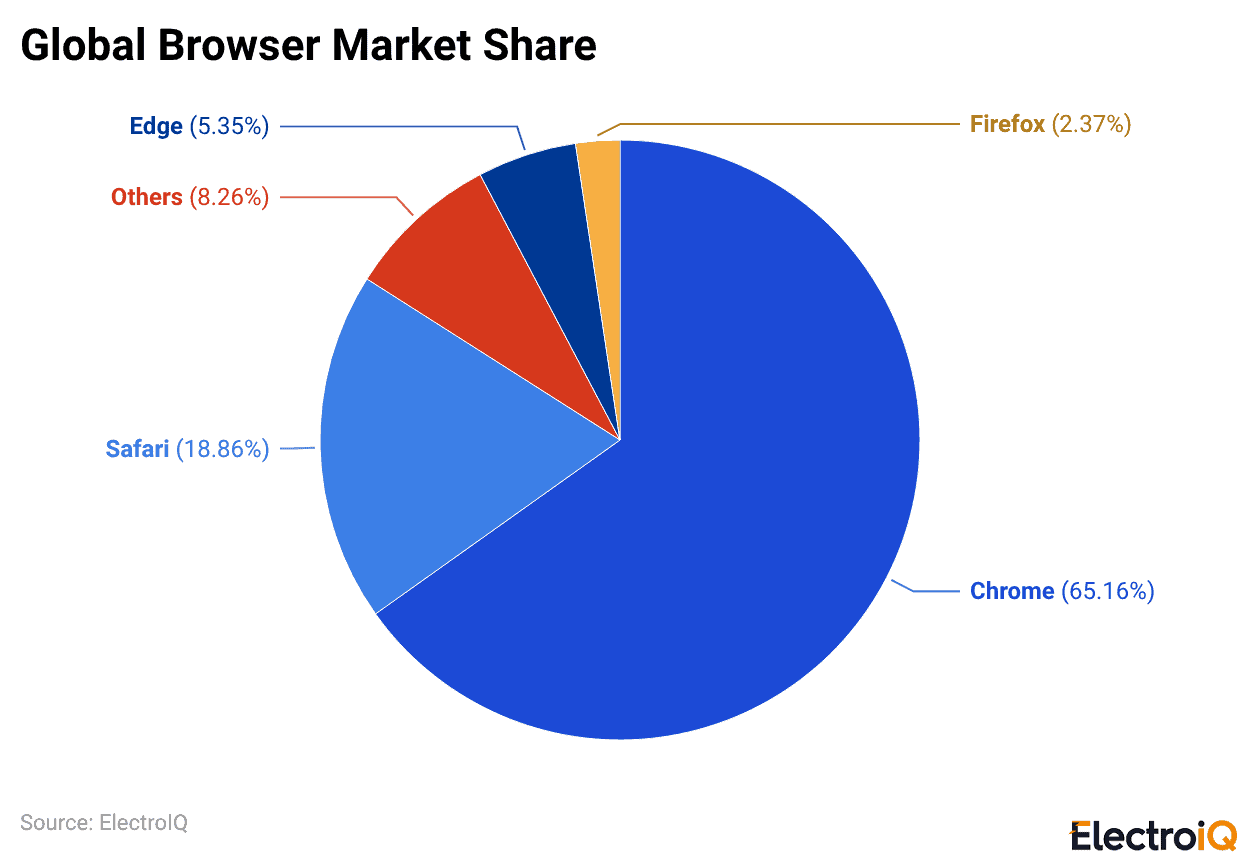
- Chrome maintains 65.16% of the global browser market share, which positions it far ahead of Safari’s 18.86% market share.
- Chrome dominates the Indian desktop market because it accounts for 92.24% of all web traffic.
- The U.S. market remains consolidated, where the top three browsers control over 89% of desktop usage.
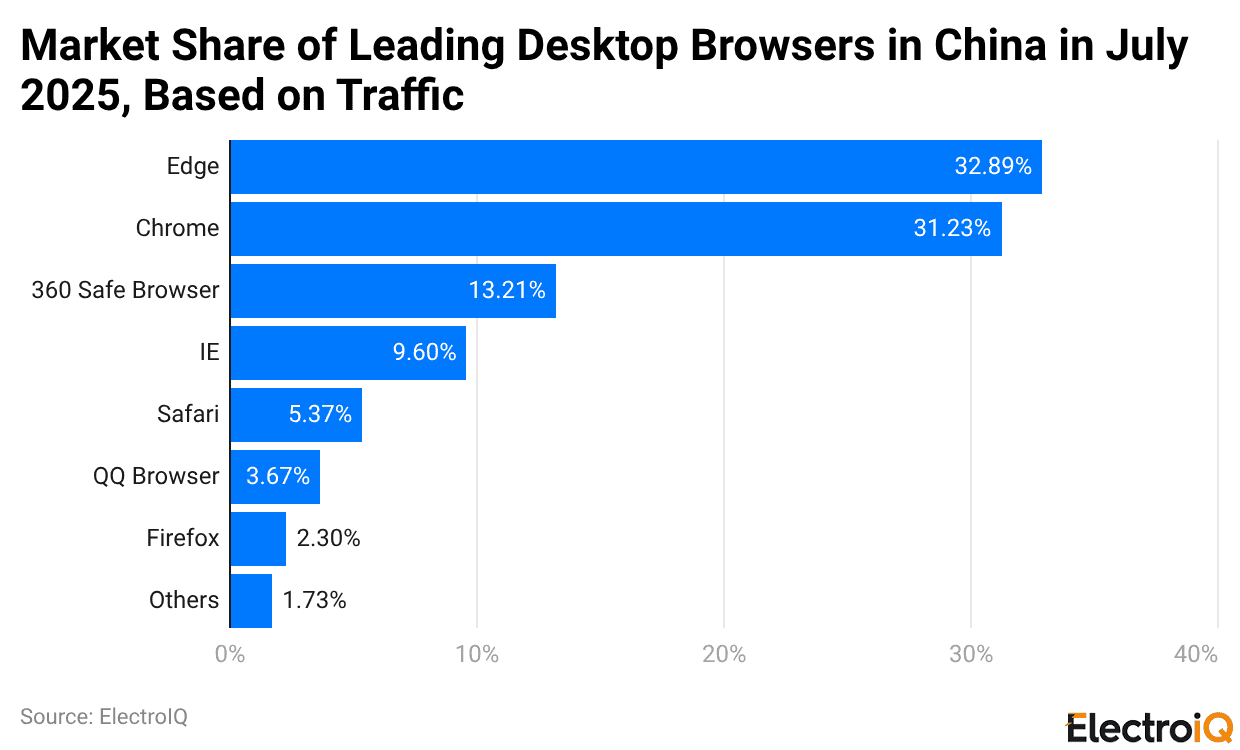
- China presents a competitive landscape, where Edge (32.89%) holds a slight edge over Chrome (31.23%).
- German users show diverse web browser preferences because approximately 45% of users choose browsers other than Chrome.
- 78.3% of users operate multiple browsers, which shows that people use different browsers for specific purposes.
- Mobile browsers generate 65.2% of global web traffic, which reduces the need for desktop usage.
- 92.1% of websites support WebAssembly, which shows that websites achieve near-native web performance through this technology.
- 63.7% of users block trackers by default, which shows that businesses view privacy protection as their main method to compete.
(Source: sqmagazine.co.uk)
- Google Chrome maintains its commanding position in the global web browser market with a 65.16% market share, which extends throughout the entire world.
- Chrome achieves its dominant status because of its strong performance, its ability to integrate with Google services, and its seamless operation across different platforms.
- Safari, as Apple’s web browser, holds second place with an 18.86% market share, which primarily results from its presence as a pre-installed application on Apple devices, including iPhones, iPads, and Macs.
- Microsoft Edge holds the next market position with a 5.35% share, which shows gradual progress because Microsoft continues to distribute Windows at no cost while Edge benefits from enhanced performance through Chromium technology.
- The Mozilla Firefox browser maintains a minimal 2.37% market share because its users seek privacy protection, support open-source development, and desire to personalize their experience.
- The combined market share of all other browsers is 8.26%, indicating that niche and local browsers operate in a market dominated by a few large companies.

(Source: statcounter.com)
- According to StatCounter, the most recent statistics on desktop browser usage Show that one browser, Chrome, accounts for 76.39%, enabling it to dominate global desktop web traffic, more than eight times the Edge browser’s 9.14% share.
- Safari follows at 5.29%, while Firefox holds 4.05%, which shows that users still keep using these products instead of spreading to new markets.
- Opera (2.21%) and Brave (1.16%) remain specialized players with privacy-centric positioning. Chrome controls 76.39% of the market, which enables its ecosystem to operate more effectively.
- The Desktop Browser statistics indicate that network effects, enterprise integration, and limited market-entry disruptions remain strong through 2026.
Market Share of Leading Desktop Browsers in China
(Reference: statista.com)
- The most recent Desktop Browser statistics from China Show that two competing companies fight for the top position in the market.
- Edge leads with 32.89%, giving it a slight advantage over Chrome at 31.23%, with a 1.66 percentage-point lead.
- The 360 Safe Browser, a domestic browser, holds a 13.21% market share due to strong local user trust.
- Internet Explorer retains a 9.6% market share, indicating that businesses continue to use its outdated technology.
- Safari holds 5.37%, while QQ Browser (3.67%) and Firefox (2.3%) maintain niche positions.
- The two leading browsers together control more than 64% of all desktop web traffic.
- The desktop browser statistics indicate that China faces distinct competitive conditions, arising from the global and domestic digital platforms competing for control in local Chinese markets.

(Source: statcounter.com)
- The newest Desktop Browser statistics demonstrate that the United States market operates with both competitive elements and distinct market segments.
- Chrome leads the market with 65.47% market share, which constitutes almost two-thirds of desktop user traffic.
- Edge occupies the second position with 12.56% market share, which results from its seamless integration with Windows.
- Safari captures 10.99% of the market because it benefits from the strength of Apple’s ecosystem. Firefox holds 5.67% market share, while privacy-focused Brave reaches 3.13%, and Opera has 1.5% market share.
- The top three browsers control more than 89% of usage, which demonstrates that the market has reached a state of strong consolidation.
- Desktop browser statistics show that American desktop browsing behavior in 2026 depends on platform dominance, enterprise power, and ecosystem customer loyalty.

(Source: statcounter.com)
- Desktop Browser statistics show Chrome leading the UK market with 56.86%, controlling more than half of desktop traffic.
- Edge comes in second place with 22.21% market share because businesses and Windows users have adopted the software.
- Safari attracts 14.01% of the market through its support from Apple customers.
- Firefox holds 3.73% market share, while Opera maintains 2.04%, and Brave shows 0.64% market share, which indicates they serve a small niche audience.
- The top three browsers control more than 93% of the market, which demonstrates that the industry has reached a state of strong market concentration.
- The desktop browser statistics show that the 2026 Digital Environment operates through established competitive boundaries that emerge from platform connections and customer loyalty to specific brands and changes in privacy protection methods.
India

(Source: sqmagazine.co.uk)
- India’s desktop browsing ecosystem in January 2026 reflects overwhelming dominance by Chrome at 92.24%, leaving competitors in distant pursuit.
- Edge follows at 3.08%, while Firefox (1.75%) and Opera (1.52%) compete within a narrow margin. Safari (0.72%) and Brave (0.54%) together account for barely 1.26%, underscoring Chrome’s near-monopolistic grip.
- These desktop browser statistics reveal a highly consolidated market, where network effects, ecosystem integration, and user familiarity drive preference.
- However, evolving privacy regulations and AI-powered browsing innovations could gradually reshape future Desktop Browser statistics in India’s digital economy.
Germany

(Source: statcounter.com)
- The desktop browsing environment of India during January 2026 shows that Chrome dominates with 92.24% market share, which enables it to maintain an unassailable lead over its competitors.
- The second position belongs to Edge, which holds 3.08% market share, while Firefox and Opera compete for market share with their respective 1.75% and 1.52% shares.
- Safari and Brave together hold only 1.26% of the market, which demonstrates how Chrome controls almost the entire market.
- The desktop browser statistics show an extremely unified market where users choose their preferred browser based on network effects, ecosystem integration, and their existing knowledge of the product.
- The analyst observes that this market concentration will create obstacles for competitors to enter the market during the upcoming months.
- The upcoming changes in privacy laws, together with AI-powered browsing technology, will result in gradual modifications to future desktop browser statistics for India’s digital economy.
Global Browser Usage Patterns
- The current web browsing environment exhibits dynamic behavior according to data from desktop browsers and multi-device usage information.
- The 2023 study found that 78.3% of users employed multiple browsers for their different tasks, which demonstrated how users operated their online activities.
- Users exhibited high digital engagement, with 12.7 hours of weekly internet use and an average browsing session duration of 42 minutes, which persisted through 2024.
- Windows users show strong platform loyalty because 62.1% of them select Chrome as their preferred browser. MacOS users show platform loyalty, through 58.7% of them selecting Safari as their preferred browser.
- Android users display platform loyalty because 71.4% of them use Chrome as their primary web browser. In 2024, iOS users accessed Safari 2.1 times more than they accessed Chrome.
- Mobile browsers generated 65.2% of worldwide web traffic, while tablet browsers generated 4.1% and Smart TV browsers generated 1.2%.
- The study found that 31.7% of users preferred private browsing, whereas 52.3% of users changed their web browser after they updated their operating system.
- The testing pattern of developers shows 45.5% of them test their work on three or more web browsers, while 38.2% use BrowserStack for testing.
Browser Technologies And Feature Adoption Trends
- The current state of web technology development reaches its advanced stage, which operates under three main requirements of performance, user privacy, and immersive technology functions.
- The data shows that as of June 2024, 92.1% of websites now support WebAssembly, while 88.7% of websites support WebAssembly Text Format, which demonstrates the web platform’s progress toward achieving performance levels that match native applications.
- The current HTTP/3 adoption rate reached 35.7%, which provides users with improved data transmission speeds and increased protection against security threats.
- The speed of feature parity development has reached new heights since 89.5% of browsers now provide WebRTC support,t while 78.1% of browsers enable Service Workers and 67.4% of browsers support CSS Grid.
- The current dark mode support rate for users stands at 81.4%, which shows that designers now focus on creating user-centered designs.
- The Blink engine powers 51.2% of browsers, which results in the rendering engine achieving complete control in this domain.
- The user base shows that 47.2% of users have chosen to use progressive web applications (PWAs), while Chrome holds the top position with 91.3% of users adopting its progressive image functionality.
- The majority of users, who make up 63.7% of the population, choose to block trackers because of their privacy concerns.
- The introduction of Edge’s PDF tools, which 41.2% of users utilize, and Brave’s Tor-over-VPN feature, which 2.1 million users have adopted, demonstrate ongoing technological advancement.
Conclusion
The 2025–2026 Desktop Browser statistics demonstrate market control through market expansion and technological progress, according to an analyst’s evaluation of the data. Chrome maintains its dominant position in the global desktop market due to its robust product ecosystem and network advantages. The regulations, together with privacy awareness and local ecosystem development, create a competitive environment that enables Germany and China to maintain their market presence.
The research shows how people choose their browsers and how businesses control their platforms, which leads to changes in user patterns and to companies developing new products to compete in the worldwide web industry.
Sources
FAQ.
Google Chrome leads globally with over 76% desktop market share.
Edge holds about 9–12% desktop share globally, varying by region.
India, where Chrome controls over 92% of desktop usage.
Around 78.3% of users use multiple browsers for different tasks.
Mobile browsers account for 65.2% of global web traffic.
About 92.1% of websites support WebAssembly.
Approximately 63.7% of users block trackers in their browsers.

I hold an MBA in Finance and Marketing, bringing a unique blend of business acumen and creative communication skills. With experience as a content in crafting statistical and research-backed content across multiple domains, including education, technology, product reviews, and company website analytics, I specialize in producing engaging, informative, and SEO-optimized content tailored to diverse audiences. My work bridges technical accuracy with compelling storytelling, helping brands educate, inform, and connect with their target markets.