Smartwatch Statistics By Brands, Revenue and Facts (2025)

Updated · Mar 31, 2026


Table of Contents
- Introduction
- Editor’s Choice
- History of Smartwatch
- Top Smartwatch Vendors
- By Revenue
- Penetration Rate Of Smartwatches In The Consumer Market
- Number Of Smartwatch Users
- Users In The Digital Well-Being Segment
- Global Smartwatch Adoption
- Smartwatch and Fitness Tracker Adoption in the U.S.
- Smartwatch User Demographics
- Global Smartwatch Usage by Country
- Smartwatch Market Size
- What do Users Measure with a Smartwatch?
- Smartwatch Impact on Health and Fitness
- Smartwatch Data Predicts Health Test Results
- Smart Devices and Health Data Sharing
- Apple Watch Sales
- Average Selling Price of Smartwatches
- Consumer Preferences and Trends
- Regional Analysis
- Sales by Operating System
- Financial Impact
- Marketing and Distribution Channels
- Smartwatch in Niche Markets
- Recent Developments
- Conclusion
Introduction
Smartwatch Statistics: A smartwatch is a wearable device that resembles a miniature smartphone and is typically operated via a touchscreen. Many of its settings are managed through mobile applications that connect the smartwatch and handle several core functions.
As of 2025, smartwatches are among the most popular gadgets in demand among digital consumers. It would be fascinating to gather valuable insights from Smartwatch Statistics, as they provide vital information about the behavior and market trends related to smartwatches.
Editor’s Choice
- The number of smartwatch users worldwide is expected to reach 454.69 million in 2025, up from 323.99 million in 2023.
- The global smartwatch market is valued at about $35.29 billion, reflecting steady expansion across major regions.
- Huawei holds a 21% share of the global smartwatch market, making it one of the leading brands.
- More than 92% of smartwatch users rely on their devices to monitor and improve their health and fitness.
- Around 30% of users use smartwatches for contactless payments through platforms such as Apple Pay and Google Pay.
- Over 60% of consumers consider long battery life a key deciding factor when choosing a smartwatch.
- One in four adults in the United States, or 25% of the population, owned a smartwatch in 2025.
- Fitness tracking remains the top reason for buying a smartwatch, accounting for 39% of total use cases.
- In 2025, Apple continues to lead the global market with a 28% share of total smartwatch shipments.
- The share of users who rely on sleep tracking increased to 46% in 2025, driven by improved sensor performance.
- 67% of new models released in 2025 include blood oxygen (SpO2) monitoring.
- Health and fitness functions are used regularly by 83% of smartwatch owners, confirming their importance in daily routines.
- The number of connected smartwatches worldwide is expected to exceed 1.1 billion devices in 2025, showing broad global adoption.
History of Smartwatch
- 1972: Hamilton introduced the Pulsar digital watch, which catalyzed the era of electronic wristwear.
- 1982: Pulsar NL C01 added user-programmable memory, an early step toward storing data on the wrist.
- 1982–1983: Seiko TV Watch combined a wristwatch with a tiny television display and achieved global attention through its appearance around the 1983 Bond film Octopussy.
- 1983–1984: Seiko Data 2000 enabled text entry via an external keyboard with wireless electromagnetic coupling and storage for notes and appointments.
- 1984: Seiko RC-1000 Wrist Terminal interfaced with personal computers, illustrating early wrist-computer connectivity.
- 1983–1984: Casio Databank series debuted, allowing storage of names and phone numbers on the watch and popularizing calculator-data models.
- 1994: Timex Datalink, co-developed with Microsoft, wirelessly downloaded data from a CRT monitor, marking a major advance in syncing.
- 2003: Fossil Wrist PDA shipped with Palm OS, touch input, and IR/USB sync, positioning a full PDA on the wrist.
- 2003: Garmin Forerunner series began, bringing integrated GPS to sports watches and seeding modern fitness wearables.
- 2004: Microsoft’s SPOT watches launched with one-way data services delivered over FM subcarriers, broadening connected watch concepts.
- 2012: Sony SmartWatch line launched commercially after a CES reveal, offering notification mirroring for Android phones.
- 2012–2013: Pebble became a landmark crowdfunded smartwatch, raising over $10.3 million on Kickstarter in 2012 and shipping in 2013.
- 2013: Samsung Galaxy Gear entered the market, released on September 25, 2013, and later migrated from Android to Tizen.
- 2014: Google announced Android Wear, and the first devices went on sale, setting a common platform for multiple OEMs.
- 2014: Moto 360 popularized the round smartwatch form factor within Android Wear.
- 2014 announcement, 2015 release: Apple Watch unveiled in September 2014, released in April 2015, and helped mainstream the category.
- 2018: Apple Watch Series 4 ECG app and irregular rhythm notifications received FDA De Novo classification, elevating medical-grade features in wearables.
- 2021: Google completed the Fitbit acquisition and announced Wear OS 3, a unified platform with Samsung that improved performance and battery life.
- 2022: Pixel Watch launched in October 2022, integrating Fitbit health features on Wear OS.
- 2024–2025: Wear OS ecosystem matured, including lifecycle updates for first-gen Pixel Watch and new Pixel Watch generations; the first Pixel Watch received its final official update in 2025.
Top Smartwatch Vendors
(Reference: Statista.com)
- By referring to Smartwatch statistics, one can gain valuable insights into the top smartwatch vendors
- Apple's Market Leadership: Apple has consistently led in wearable shipments since Q1 2015, with peak performance in Q4 2021.
- Xiaomi's Rapid Growth: Xiaomi entered in Q1 2016 and quickly became a significant player, often ranking second in shipments.
- Steady Presence of Huawei: Huawei became noticeable around Q1 2017, with shipments peaking in Q1 2020.
- Samsung's Consistent Growth: Samsung shows steady shipment growth, especially post-Q1 2018.
- Decline of Fitbit: Fitbit's early dominance (2014-2017) declines as Apple and Xiaomi rise.
- Emergence of BoAt and Imagine Marketing: These newer players show significant growth, especially after 2020.
- BBK's Significant Entry: BBK sees notable growth, particularly around Q4 2021.
- Overall Market Expansion: Wearable shipments proliferated, especially from Q1 2018, with significant spikes in Q4 2020 and Q4 2021.
- Seasonal Trends: Q4 records the highest shipments annually, indicating strong holiday-season sales.
- Smartwatch Focus: The chart reflects the growth and competition in the smartwatch market, with Apple leading and other brands making substantial gains.
By Revenue
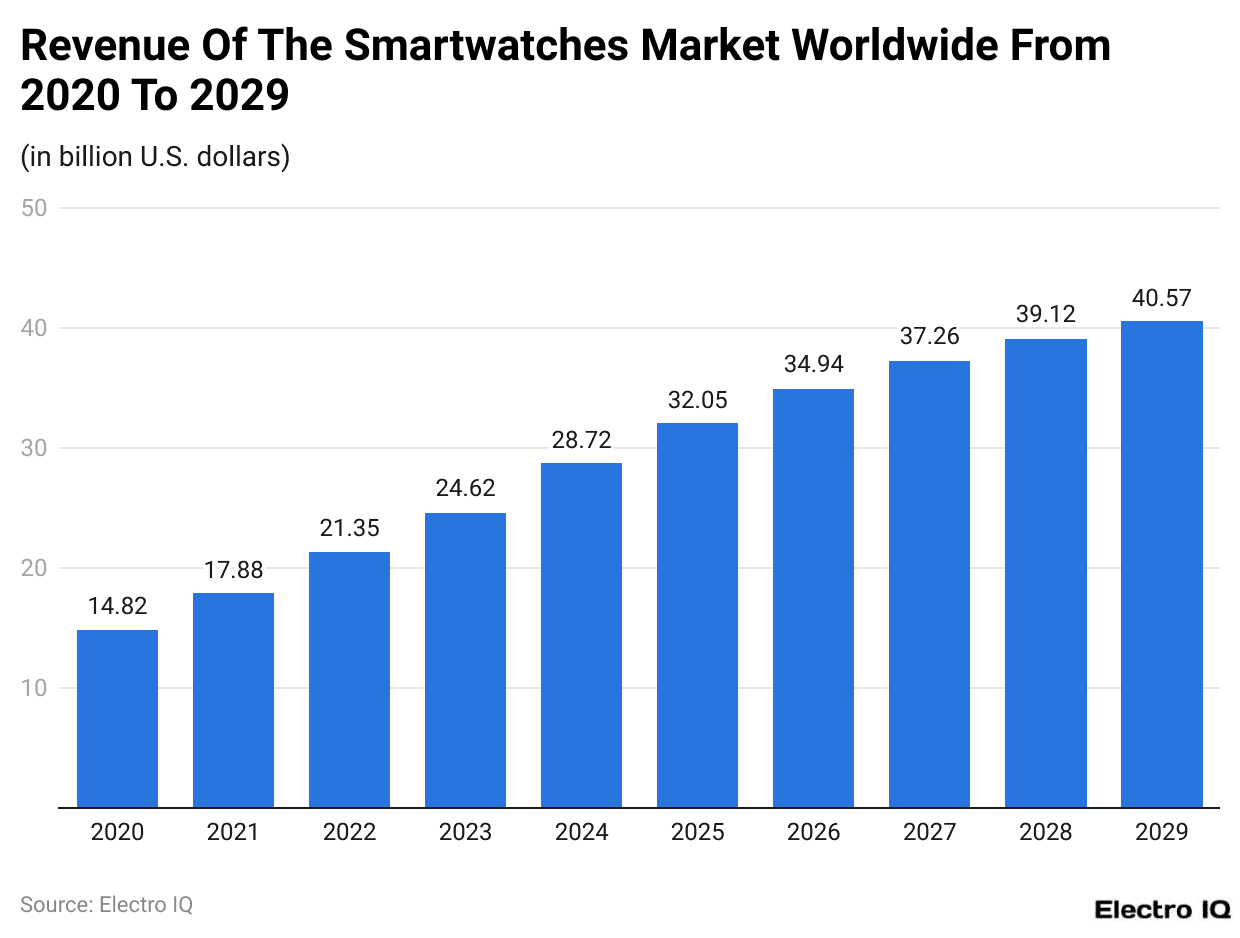
(Reference: Statista.com)
- Based on Smartwatch statistics, it is visible that the revenue of Smartwatches is growing consistently.
- In 2020, the smartwatch market was $14.82 billion, but it has reached an impressive $28.72 billion in 2023.
- It is predicted to reach $40.57 billion in 2029.
Penetration Rate Of Smartwatches In The Consumer Market
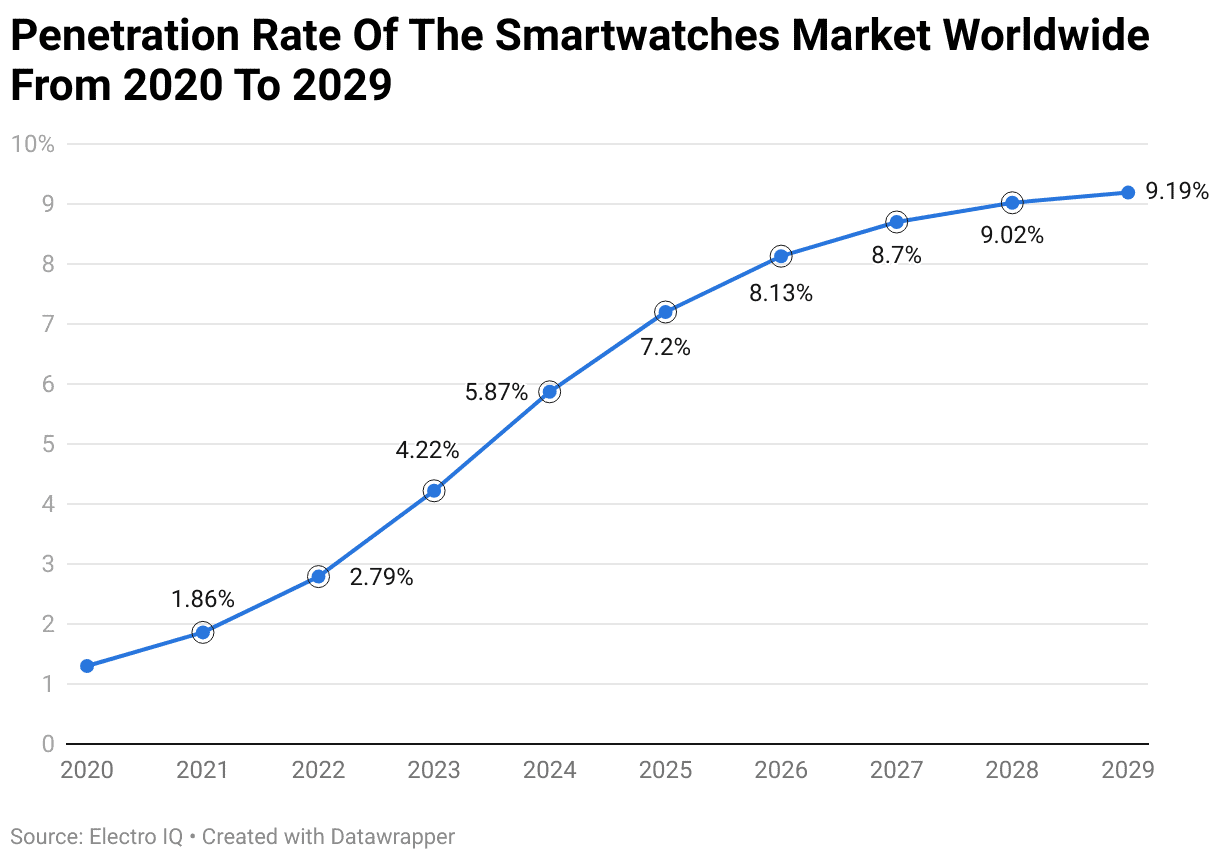
(Reference: Statista.com)
- As per Smartwatch statistics, the penetration rate is impressive, and there is a rising popularity among consumers.
- In 2020, the penetration rate was 1.3%.
- In 2023, the penetration rate reached 4.22%.
- According to trends, the penetration rate is expected to reach 9.19%.
Number Of Smartwatch Users
(Reference: Statista.com)
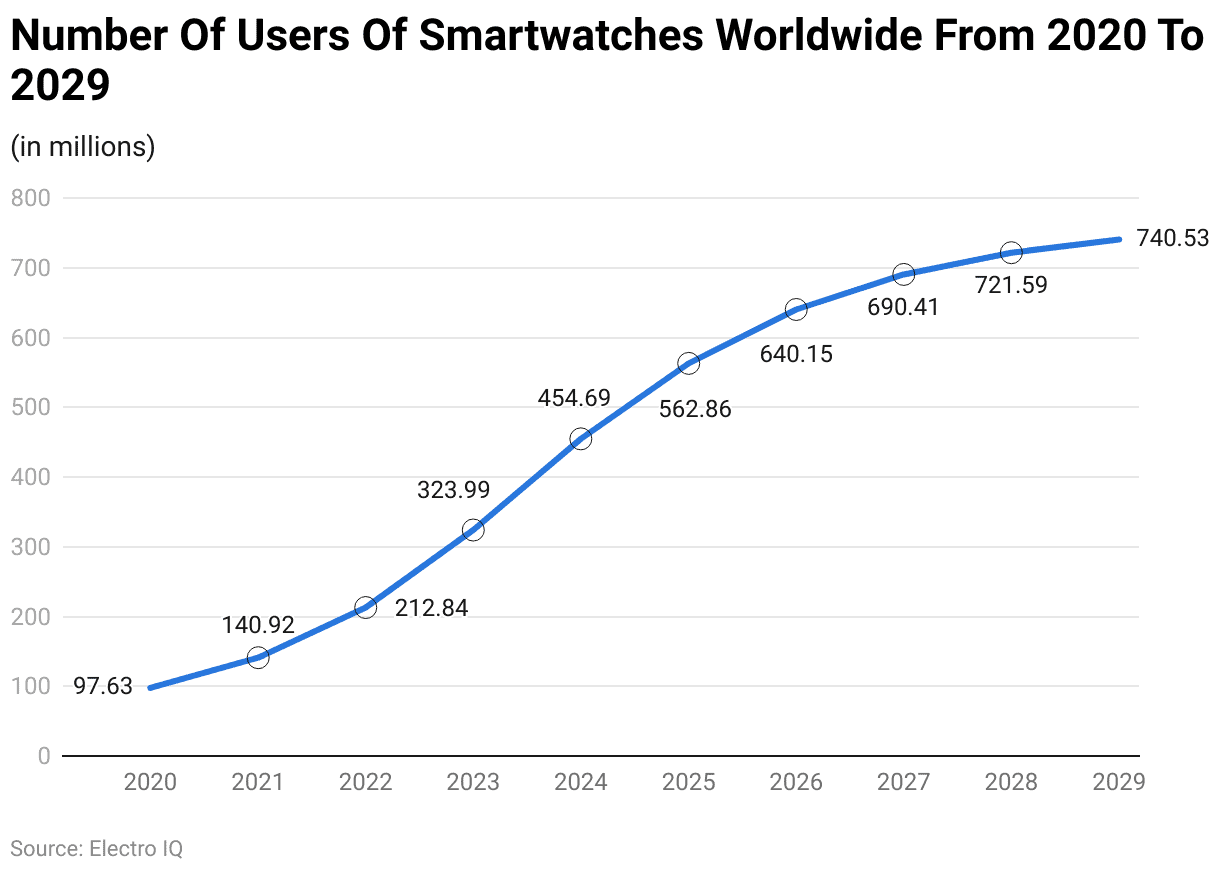
- According to Smartwatch statistics, the global user base in the 'Smartwatches' segment of the digital health market is projected to grow significantly from 2024 to 2029.
- The number of users is expected to increase by 285.8 million, marking a 62.86% growth.
- By 2029, the user count is estimated to reach a new peak of 740.53 million users, marking the ninth consecutive year of growth.
Users In The Digital Well-Being Segment
(Reference: Statista.com)
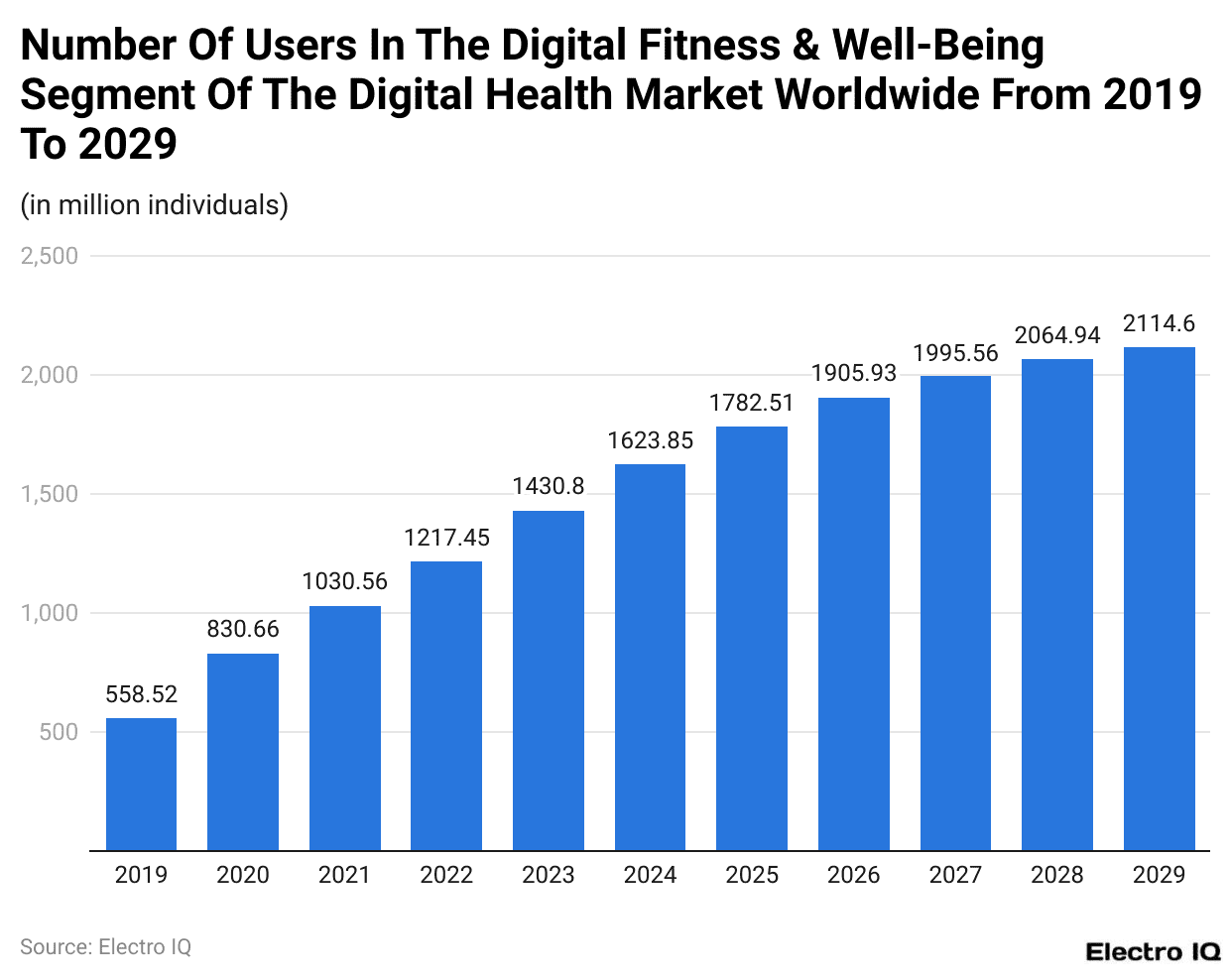
- Based on smartwatch statistics, one can infer that there is a rising growth in smartwatch usage.
- In 2023, the smartwatch had 1,403.8 million users.
- Based on this trend, the user base will reach 2,114.6 million by 2029.
Global Smartwatch Adoption
- Smartwatch Ownership: Approximately 22.5% of global internet users, or 1.2 billion people, now own a smartwatch, marking a 9% increase from the previous year.
- Country-Specific Adoption Rates:
- United Arab Emirates: Leads globally with 33.4% of internet users owning a smartwatch (around 3.1 million people).
- Czech Republic: 31.6% adoption rate among internet users, representing 3 million people.
- Hong Kong: 30.6% of internet users own smartwatches, equating to 2.1 million users.
- India: 29.1% adoption rate, which translates to 201.4 million users.
- Poland: 28.8% of internet users, or approximately 10.6 million people, own a smartwatch.
- United States: 26% of internet users own a smartwatch, equating to roughly 80.9 million people, slightly above the global average.
- Canada: Shows a lower adoption rate, with 21.8% of internet users owning a smartwatch.
- Low Adoption Countries:
- Japan: Despite high internet penetration, only 8.6% of internet users own a smartwatch.
- Morocco: 6.4% adoption rate among internet users.
- Ghana: 5.9% adoption rate among internet users.
- Demographics: The primary group adopting smartwatches includes internet users aged 25 to 34, with 27.2% of females and 26.9% of males owning these devices.
- Market Leader: Apple dominated the smartwatch market in 2022, selling 50 million units globally.
Smartwatch and Fitness Tracker Adoption in the U.S.
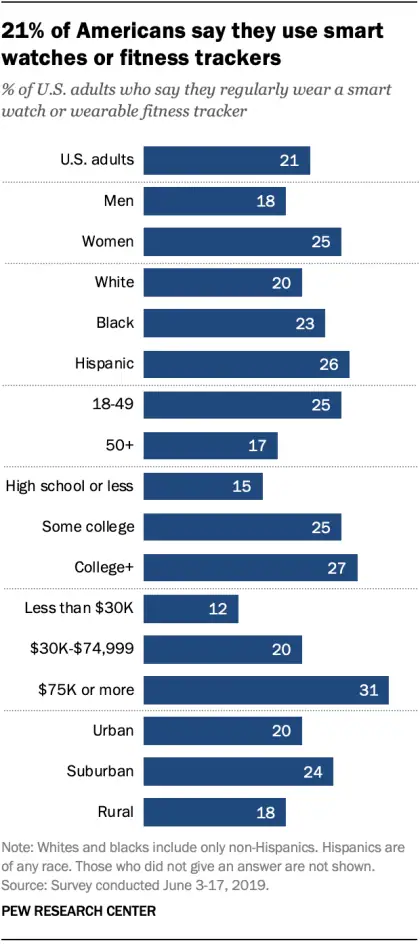
- As of 2020, about 21% of U.S. adults regularly use smartwatches or fitness trackers, according to a survey by the Pew Research Center conducted in mid-2019.
- Usage of these devices varies significantly by income and education. For instance, 31% of Americans earning $75,000 or more annually use these devices, compared to only 12% of those earning below $30,000.
- College graduates are more likely to adopt smartwatches or fitness trackers compared to those with only a high school education.
- Gender differences exist, with 25% of women using these devices regularly, compared to 18% of men.
- Hispanic adults show higher usage rates (26%) compared to white adults (20%) and black adults (23%).
- Fitness trackers collect various data on physical activities, which can be monitored via companion apps. This data collection has raised privacy concerns, especially regarding who can access the data.
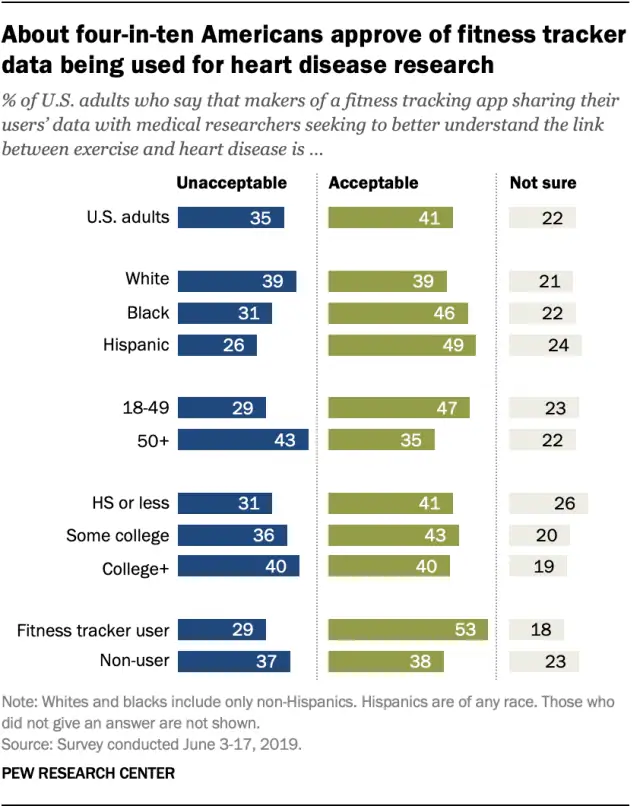
- Approximately 41% of Americans approve of fitness tracker data being used for heart disease research, while 35% find it unacceptable, and 22% are unsure.
- Younger adults (under 50) are more supportive (47%) of sharing data with researchers compared to those aged 50 and older (35%).
- Users of fitness trackers are more likely to approve of sharing their data with health researchers (53%) compared to non-users (38%).
Smartwatch User Demographics
- 23% of men worldwide own a smartwatch, compared to 21.8% of women, indicating men are slightly more likely to own one.
- Men are generally early adopters of new technology and are influenced by technical specifications when making purchasing decisions.
- Women prioritize the practical value a smartwatch brings to their lives.
- Some women believe the size and design of smartwatches are not well-suited to their wrists.
- Among internet users aged 25 to 34, women are more likely to own a smartwatch than men.
- The overall ratio of smartwatch users is 60% male to 40% female.
- Age group breakdown of smartwatch ownership:
- 16 to 24 years: 19.6% female, 21.0% male
- 25 to 34 years: 27.2% female, 26.9% male
- 35 to 44 years: 24.5% female, 25.5% male
- 45 to 54 years: 18.6% female, 20.9% male
- 55 to 64 years: 12.7% female, 16.1% male
| Age Group | Percentage Of Female Smartwatch Users | Percentage Of Male Smartwatch Users |
|---|---|---|
| 16 to 24 years | 19.6% | 21.0% |
| 25 to 34 years | 27.2% | 26.9% |
| 35 to 44 years | 24.5% | 25.5% |
| 45 to 54 years | 18.6% | 20.9% |
| 55 to 64 years | 12.7% | 16.1% |
Global Smartwatch Usage by Country
- 14.4% of the global population uses smart wristbands or smartwatches.
- In Poland, 26.5% of internet users wear a smart wristband, making it the country with the highest usage rate.
- China follows with 20.9% of internet users using smart wristbands.
- In the United Kingdom, 15.0% of internet users use a smart wristband.
- Germany has a usage rate of 14.5%.
- India reports 13.8% of internet users with smart wristbands.
- In the United States, 12.2% of internet users use a smartwatch or fitness tracker.
- France has a similar usage rate of 12.1%.
- Japan shows a lower usage rate, with only 2.4% of internet users using smart wristbands.
- Morocco has the lowest usage rate at 2.1%.
| Country | Share Of Internet Users Using Wristbands |
|---|---|
| Poland | 26.5% |
| China | 20.9% |
| United Kingdom | 15.0% |
| Germany | 14.5% |
| India | 13.8% |
| United States | 12.2% |
| France | 12.1% |
| Japan | 2.4% |
| Morocco | 2.1% |
Smartwatch Market Size

- The global smartwatch market is expected to reach USD 138.7 billion by 2033, rising from USD 39.1 billion in 2023, and this steady expansion reflects a 13.5% CAGR from 2024 to 2033.
- Smartwatches have become a regular part of daily routines, with about 24.31 million users worldwide in 2024, underscoring their widespread adoption.
- Users aged 35 to 54 account for around 30% of smartwatch owners, indicating strong interest among middle-aged consumers who value health-tracking and communication features.
- Individuals aged 55 and above account for nearly 15%, reflecting increasing acceptance of wearable technology among older adults for monitoring wellness and activity levels.
- Younger users aged 18 to 24 commonly use smartwatches for fitness and health tracking, showing that wellness functions remain central to their usage behavior.
- Male users make up about 35%, while female users account for around 28%, indicating a slightly higher adoption rate among men.
- China leads the global smartwatch landscape, accounting for about 60% of all cellular smartwatch shipments, underscoring its dominance in the industry.
- In the United States, smartwatch ownership has increased sharply since 2016, with around 26% of households now owning one, indicating rising mainstream adoption.
- Android smartwatches held a strong position in 2023 with over 37.7% share, supported by the widespread use of Android smartphones across global markets.
- OLED screens were the preferred display type in 2023, accounting for more than 88.5% share, driven by better colors, sharper visuals, and improved battery efficiency.
- Smartwatches with communication features dominated usage in 2023, holding over 35% share, as calling and messaging functions have become essential for users seeking quick, hands-free connectivity.
- North America led the global market in 2023 with 39.4% share, supported by strong smartphone penetration, advanced digital infrastructure, and growing awareness of health-focused wearables.
What do Users Measure with a Smartwatch?
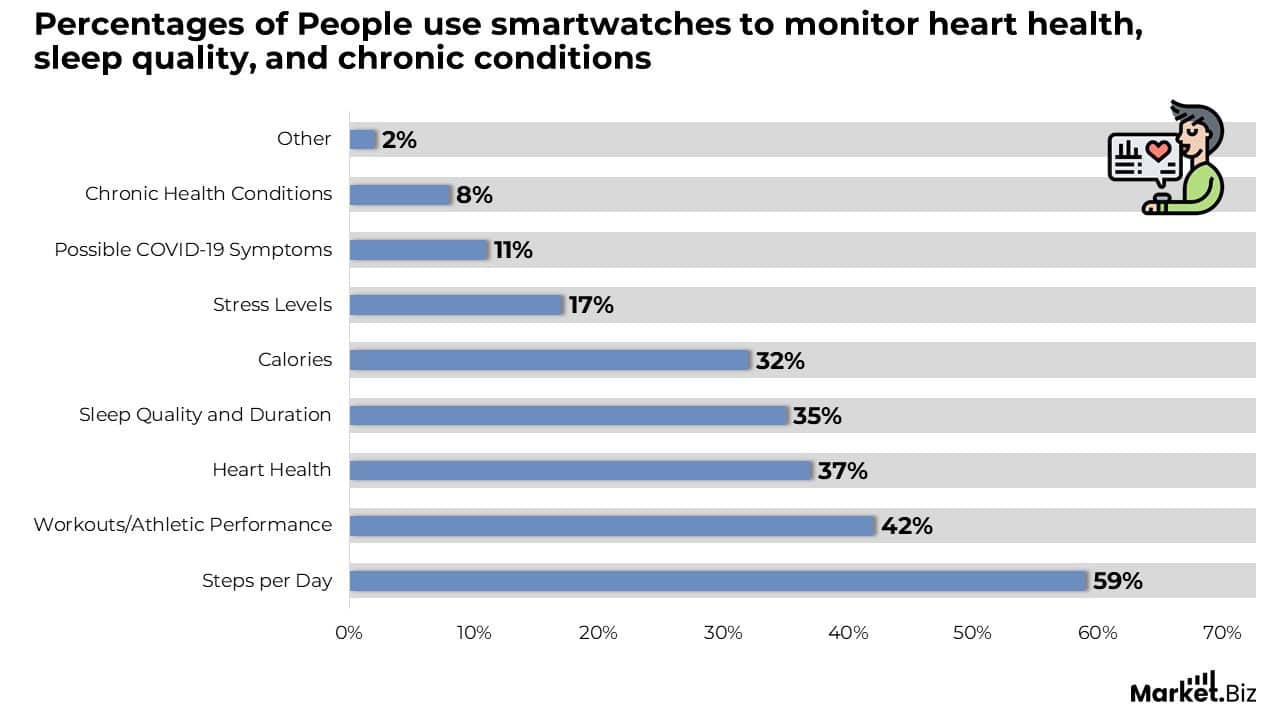
- Around 59% of smartwatch users check their daily steps, showing that step tracking is the most common activity people monitor with wearables.
- Nearly 42% of people use their smartwatch to track workouts and athletic performance, helping them understand exercise intensity and progress.
- About 37% of users monitor their heart health, using heart-rate data to stay aware of their cardiovascular condition.
- Nearly 35% of users track their sleep duration and sleep quality to improve their rest patterns and overall well-being.
- Around 32% of people monitor their calorie burn, using this information to manage diet, weight, and daily activity levels.
- Close to 17% of users track their stress levels, relying on smartwatch sensors to understand and manage emotional strain.
- Nearly 11% of users monitor possible COVID-19 symptoms, showing continued interest in health alerts and early detection.
- Around 8% of smartwatch users track chronic health conditions, using the device to follow long-term health indicators.
- About 2% of users monitor additional health metrics not listed in the main categories, showing niche but varied usage across other features.
Smartwatch Impact on Health and Fitness
- More than 60% of smartwatch users use their devices to track daily activity and monitor their overall health, showing how strongly these wearables support healthier lifestyles.
- Over 70% of smartwatch owners say their smartwatch encourages them to exercise more often, helping them stay motivated through reminders and activity goals.
- About 55% of users monitor their sleep patterns, using this data to improve sleep quality and build better rest habits.
- Nearly 40% of owners use SpO2 tracking to measure their blood oxygen levels, which helps monitor breathing health during workouts or for people with existing health concerns.
- Around 25% of users rely on ECG features to check their heart rhythm and detect early warning signs of issues such as irregular heartbeat.
- More than 10% of users track blood glucose levels, offering meaningful support for people managing diabetes or maintaining balanced sugar levels.
- Step-counting features are used by 90% of smartwatch users, confirming that simple activity tracking remains one of the most popular reasons people wear these devices.
- Almost 50% of owners keep track of calories consumed and burned, helping them make healthier food choices and understand their daily nutrition.
- Roughly 35% of female users monitor their menstrual cycle, using smartwatch insights to understand ovulation patterns, symptoms, and overall reproductive health.
- Around 40% of users say their exercise frequency increased after using a smartwatch, supported by consistent tracking and alerts that promote regular movement.
- About 25% of users report weight loss results because activity tracking and calorie monitoring help them stay on course with fitness goals.
- Nearly 70% of smartwatch users continue using their devices for more than a year, showing that these wearables provide lasting value for long-term health and fitness management.
Smartwatch Data Predicts Health Test Results
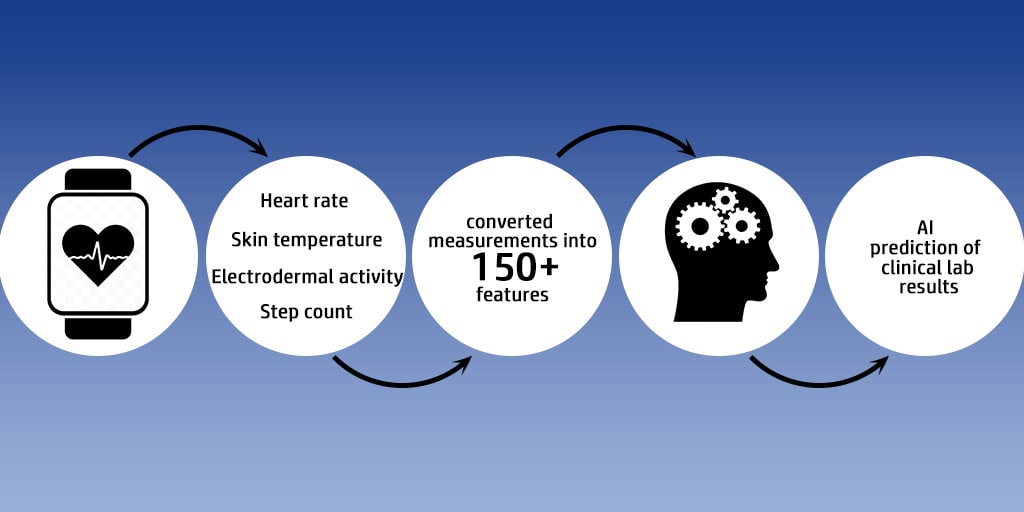
- Wearable Devices and Health Monitoring: NIH-funded researchers are exploring how data from smartwatches can predict clinical test results, offering potential early warnings of health issues.
- Study Overview: The study followed 54 participants over three years, collecting data from smartwatches, including heart rate, skin temperature, step count, and electrodermal activity.
- Comparison with Clinical Data: The smartwatch data was compared with clinical measurements, revealing that heart rate readings from smartwatches were more consistent than those taken in clinical settings.
- Predictive Modeling: Using machine learning, researchers converted smartwatch data into over 150 features to predict clinical test results, including red blood cell count, hemoglobin levels, and more.
- Key Findings: Electrodermal activity, step count, and skin temperature were significant predictors for specific blood tests. The data from smartwatches could act as an early warning system rather than replacing clinical tests.
- Potential Impact: This approach could shift healthcare towards earlier detection of diseases, helping to intercept illnesses before they become severe.
Smart Devices and Health Data Sharing
- Smart devices like smartphones and smartwatches are rapidly being adopted, offering new opportunities for health monitoring and research.
- In the southeastern US, a study surveyed 1,368 patients from an academic health system about their smart device usage and willingness to share health data.
- Key Findings:
- Ownership: 98% of respondents owned a smartphone, and 59% owned a wearable device.
- Demographics: Ownership of wearables was higher among females, Hispanic individuals, Generation Z (ages 18-25), highly educated individuals, and full-time employees.
- Data Sharing: 50% of smart device owners were willing to share their health data for research, with 32% considering it.
- Data Use: Data-sharing preferences varied by gender, age, education, and employment status.
- The study suggests that the increasing adoption of smart devices could significantly contribute to digital health studies, helping to develop more equitable and effective healthcare technologies.
- Technological advancements in smart devices are enabling more sophisticated, affordable health-monitoring tools with widespread ownership among the general population.
- Real-world data (RWD) from these devices offers a valuable resource for monitoring health, tracking diseases, and conducting clinical trials, particularly in areas like cardiovascular diseases, cancer, and diabetes.
Apple Watch Sales
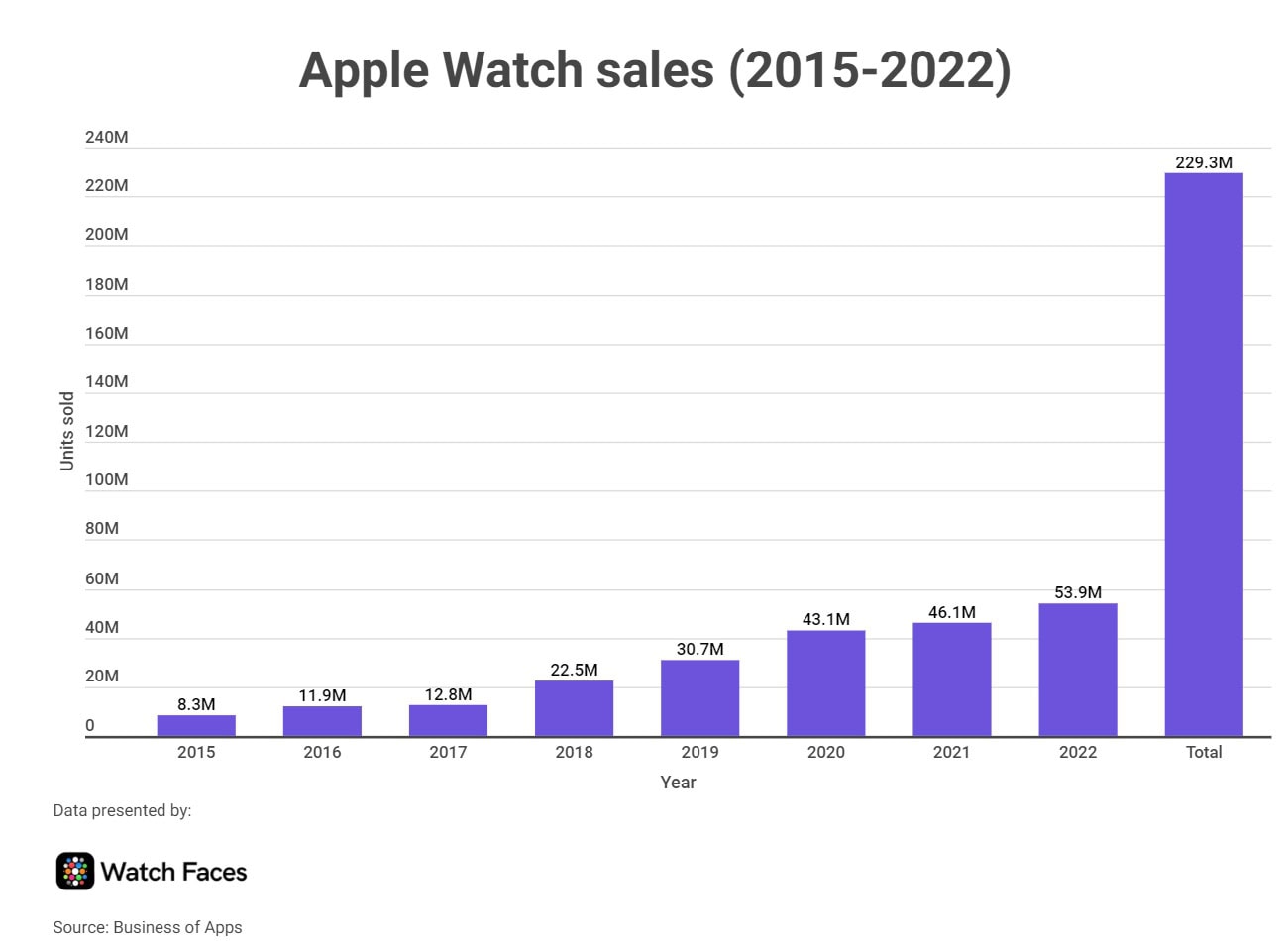
- Apple Watch sales reached 53.9 million units in 2022, marking the first time they surpassed 50 million.
- Since its launch in 2015, the Apple Watch has sold 229.3 million units globally.
- The Apple Watch is now Apple’s fourth best-selling product, following the iPhone, iPad, and AirPods.
- In 2022, Apple held 34.1% of the global smartwatch market in terms of shipments and captured 60% of the market's revenue.
- The Apple Watch’s success is attributed to its integration with the Apple ecosystem, offering a seamless user experience.
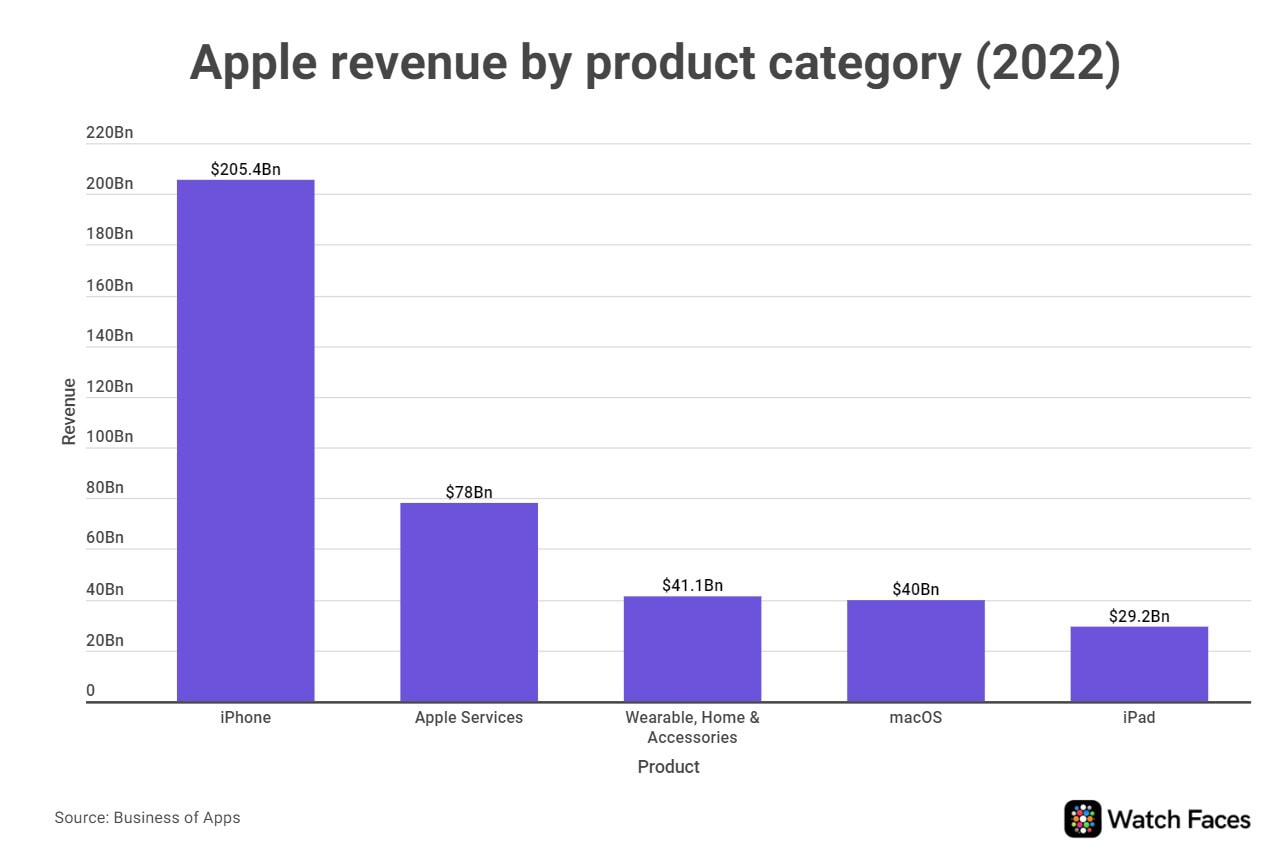
- In 2022, Apple’s Wearable, Home, and Accessory segment generated $41.1 billion in revenue, with the Apple Watch contributing an estimated $14 billion to $18 billion.
- Despite not inventing the smartwatch, Apple quickly surpassed competitors like Fitbit and Garmin, becoming the market leader.
- The Apple Watch's features, including health monitoring, fitness tracking, and customization options, have made it both a functional device and a fashion statement.
Average Selling Price of Smartwatches
- The average selling price (ASP) of smartwatches was around USD 259 in 2023. This reflects the diverse range of products available in the market, from high-end models like the Apple Watch Ultra to more affordable options from brands like Amazfit and Fitbit.
- In 2024, the ASP is expected to increase slightly to USD 265 as manufacturers introduce more premium models with advanced features such as better health monitoring, longer battery life, and enhanced durability. This increase in ASP also indicates a shift in consumer preference towards high-quality smartwatches that offer better value for money.
Consumer Preferences and Trends
- In 2023, health and fitness tracking remained the most sought-after feature among smartwatch users, with over 65% of consumers citing it as a primary reason for purchasing a smartwatch. Heart rate monitoring, sleep tracking, and step counting are the most popular health-related features. The integration of ECG and blood oxygen level monitoring in high-end models also contributed to the growing demand for smartwatches.
- By 2024, it is expected that the focus on health and wellness will continue to drive smartwatch sales, with an estimated 70% of consumers prioritizing these features. Additionally, the demand for smartwatches with extended battery life and advanced connectivity options, such as LTE and 5G, is expected to rise, reflecting the evolving needs of tech-savvy consumers.
Regional Analysis
- The Asia-Pacific region emerged as the largest market for smartwatches in 2023, accounting for 35% of global sales. This growth is primarily driven by the increasing adoption of smartwatches in countries like China and India, where consumers are becoming more health-conscious and tech-savvy. The presence of major manufacturers such as Huawei, Xiaomi, and Oppo also contributes to the region’s dominance.
- In 2024, the Asia-Pacific region is expected to maintain its lead, with a 37% market share. The region's growing middle class, coupled with the availability of affordable smartwatches, will continue to fuel demand. North America is expected to follow, with a 28% market share, driven by strong sales of Apple's and Fitbit's high-end models.
Sales by Operating System
- As of 2023, watchOS, the operating system used by Apple Watch, held the largest market share, accounting for 32% of global smartwatch sales. Wear OS, used by Samsung and other Android-compatible smartwatches, had a 25% market share. Proprietary operating systems used by brands like Fitbit and Garmin accounted for the remaining 43% of the market.
- In 2024, watchOS is expected to see a slight decline in market share to 31% as Wear OS continues to gain popularity, reaching a market share of 27%. Proprietary operating systems are expected to hold steady at 42% as brands continue to differentiate themselves through unique features and user experiences.
Financial Impact
- The financial impact of the growing smartwatch market is significant. In 2023, the industry generated revenue of approximately US dollars 23.1 billion, with an estimated profit margin of 12%. This reflects the profitability of high-end smartwatches, particularly those from Apple and Samsung, which command higher prices and enjoy strong brand loyalty.
- By 2024, the industry’s revenue is expected to increase to USD 26.8 billion, with a 13% profit margin. Revenue and profitability growth are driven by continued market expansion, the introduction of new models with premium features, and the increasing adoption of smartwatches across demographic groups.
Marketing and Distribution Channels
- Marketing and distribution channels play a critical role in the success of smartwatch brands. In 2023, online sales accounted for approximately 55% of total smartwatch sales, reflecting the growing preference for e-commerce platforms among consumers. Brick-and-mortar stores accounted for the remaining 45% of sales, with strong performance in regions like North America and Europe.
- In 2024, the trend towards online shopping is expected to continue, with online sales projected to reach 60% of total sales. Brands are increasingly investing in digital marketing strategies, including social media campaigns and influencer partnerships, to reach a broader audience. Additionally, the use of direct-to-consumer (DTC) channels is expected to increase, allowing brands to maintain better control over pricing and customer experience.
Smartwatch in Niche Markets
- While the mainstream smartwatch market continues to grow, there are also opportunities in niche markets. In 2023, the market for smartwatches designed for specific activities, such as diving, hiking, and extreme sports, accounted for 12% of total sales. Higher price points and specialized features, such as enhanced durability and water resistance, characterize these niche markets.
- In 2024, the market share of niche smartwatches is expected to increase to 14% as consumers seek products tailored to their specific needs. Brands that focus on these niche markets are likely to benefit from higher profit margins and strong brand loyalty among enthusiasts.
Recent Developments
Product Launches
- Apple Watch Series 10: Apple is expected to release the Apple Watch Series 10 in 2024, marking a decade since the launch of the original Apple Watch. The new model is rumored to feature a slightly larger display and improved health tracking capabilities.
- Samsung Galaxy Watch 7 and Ultra: Samsung is set to launch the Galaxy Watch 7 and a higher-end Galaxy Watch Ultra in 2024, featuring advancements in battery life, health sensors, and AI-focused functionalities.
- CMF by Nothing: In September 2023, CMF, a sub-brand of Nothing, launched the CMF Watch Pro, featuring a sleek aluminum alloy frame, a large 1.96-inch AMOLED display, and extensive health tracking features, including real-time heart rate and blood oxygen saturation monitoring.
- Fire-Boltt Dream Wristphone: Launched in January 2024, this Android-based smartwatch features a 2.02-inch display and offers smartphone-like features, aiming to redefine wearable technology.
Mergers and Acquisitions
- Google's Potential Acquisitions: In 2024, Google is expected to make strategic acquisitions in the smartwatch market to bolster its position in wearables, with a focus on expanding the capabilities of its Pixel Watch lineup.
Technological Advancements
- NoiseFit Grace: In February 2024, Noise launched the NoiseFit Grace smartwatch, featuring AI voice assistance, Bluetooth calling, and an AMOLED display with high brightness, targeting tech-savvy consumers looking for advanced wearable options.
Conclusion
In conclusion, the Smartwatch Statistics for 2023 and 2024 highlight a dynamic and rapidly evolving market. With continued growth expected in both revenue and unit sales, the smartwatch industry presents significant opportunities for brands that can innovate and adapt to changing consumer preferences.
The integration of advanced health features, the shift towards sustainable materials, and the expansion of niche markets are all likely to shape the industry's future. As competition intensifies, brands must focus on differentiation and value creation to maintain their market position. With the market projected to reach US dollars 26.8 billion in 2024, the future of smartwatches looks promising, offering exciting possibilities for both consumers and manufacturers.
FAQ.
The global smartwatch market is expected to reach US dollars 26.8 billion in 2024.
Apple leads the smartwatch market with a 31.2% market share in 2023.
The average selling price of smartwatches in 2023 is US dollars 259.
The Asia-Pacific region is the largest smartwatch market, accounting for 35% of global sales in 2023.
Health and fitness tracking is the most sought-after feature, with 65% of consumers citing it as a primary reason for purchase.

Pramod Pawar brings over a decade of SEO expertise to his role as the co-founder of 11Press and Prudour Market Research firm. A B.E. IT graduate from Shivaji University, Pramod has honed his skills in analyzing and writing about statistics pertinent to technology and science. His deep understanding of digital strategies enhances the impactful insights he provides through his work. Outside of his professional endeavors, Pramod enjoys playing cricket and delving into books across various genres, enriching his knowledge and staying inspired. His diverse experiences and interests fuel his innovative approach to statistical research and content creation.